When planning your next trip, understanding the difference between a carry-on and a personal item is crucial. Did you know that airlines often impose strict guidelines on what you can bring onboard? Misinterpreting these rules could lead to unnecessary stress at the check-in counter or boarding gate. A backpack can sometimes cross the line between these categories, leaving travelers confused about whether they can stow it above or fit it under the seat. In this guide, we’ll clarify what distinguishes a backpack as a carry-on or a personal item and provide practical tips to ensure you pack smartly for your journey. By knowing the rules, you’ll travel with confidence and avoid last-minute surprises. Let’s dive into the details you need to navigate travel regulations effectively!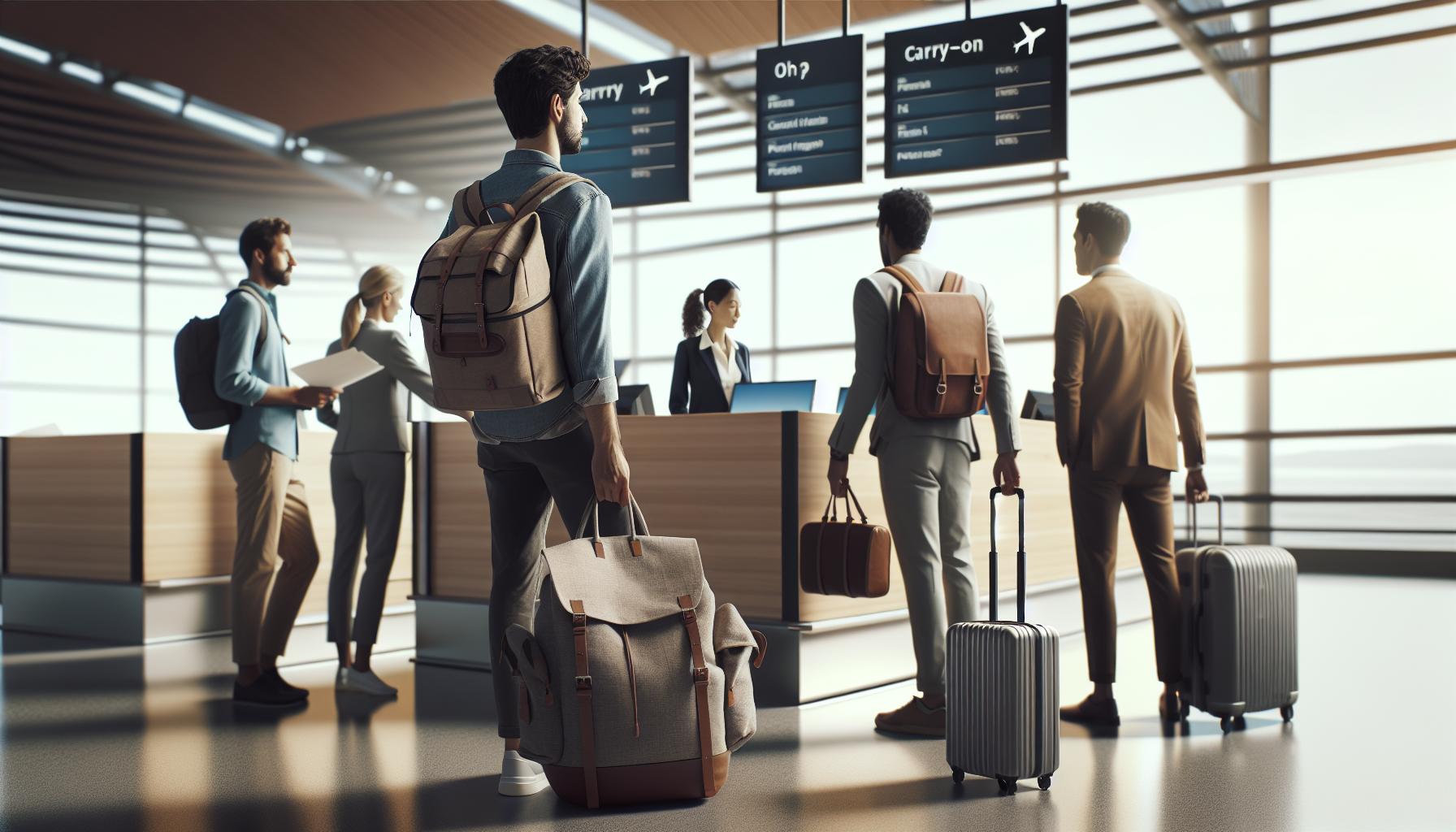
Is a Backpack a Carry-On or Personal Item?
Traveling often raises the question of whether a backpack qualifies as a carry-on or a personal item. To clarify, a carry-on is typically a larger bag stored in the overhead compartment, while a personal item is usually smaller and must fit beneath the seat in front of you. Most airlines allow one of each per passenger, but definitions can vary. For example, many travelers use backpacks as personal items due to their convenient size, but under certain conditions, they can also be classified as carry-ons.
When determining how your backpack fits into these categories, it’s essential to consider its dimensions and contents. Airlines often specify size limits for both carry-ons and personal items. A standard personal item dimension usually hovers around 18 x 14 x 8 inches, while carry-ons often max out at 22 x 14 x 9 inches. Therefore, if your backpack is within the dimensions for a personal item, it’s generally safe to use it in that capacity. However, if it exceeds these dimensions, it may be treated as a carry-on, subjecting you to potential additional fees if you’re flying with budget airlines that are stricter with their policies.
Size and Measurement Tips
To ensure compliance, measure your backpack before travel. Use a soft tape measure, capturing its height, width, and depth, and include all external pockets. If your backpack has compression straps, it’s wise to measure it uncompressed, as airlines consider maximum dimensions rather than the average size. When packing, focus on keeping your personal items lightweight and essential-this approach not only complies with airline policies but also makes your travel more comfortable.
Incorporating these distinctions into your travel plans helps avoid last-minute hassles at the airport. Whether your backpack serves as a personal item or a carry-on mainly depends on its size and the airline’s specific rules, so being informed is key to stress-free flying.
Key Definitions: Carry-On vs. Personal Item
When planning for air travel, understanding the differences between a carry-on and a personal item can significantly influence your travel experience. A carry-on bag is typically a larger piece of luggage that you store in the overhead compartment, allowing for more extensive packing and organization. In contrast, a personal item is smaller and must fit under the seat in front of you, often comprising essentials you may need during the flight, like a laptop, medications, or a change of clothes. While most airlines permit each passenger to bring one of each, the specifications can vary, making knowledge of these distinctions crucial for a smooth journey.
The dimensions of each category are typically defined by airlines, shaping how you choose and pack your backpack. For instance, personal items usually adhere to a standard measurement of about 18 x 14 x 8 inches, whereas carry-ons can be larger-often up to 22 x 14 x 9 inches. Understanding these limits helps ensure your backpack complies with airline policies and avoids surprises such as excess baggage fees. It’s not uncommon for travelers to utilize backpacks for both roles. When traveling light or for short distances, opting for a backpack as a personal item is often the most efficient choice, leveraging its compact design without sacrificing accessibility.
Practical Considerations
Choosing the right type of luggage can maximize your travel comfort and versatility. If you plan to travel with a backpack, consider the following aspects:
- Accessibility: A backpack allows for easy access to your essentials while remaining compact enough to fit under the seat.
- Weight Distribution: Unlike traditional carry-ons, a well-designed backpack can distribute weight evenly across your body, enhancing comfort during transit.
- Versatility: Many backpacks come with compartments designed for electronics, quick access pockets, and even hidden storage options that can help keep your items organized and secure.
Ultimately, recognizing whether your backpack should be classified as a carry-on or personal item not only aids in compliance with airline regulations but also enhances your travel efficiency. Every ounce counts in travel, and making informed decisions about your luggage can lead to a more enjoyable journey.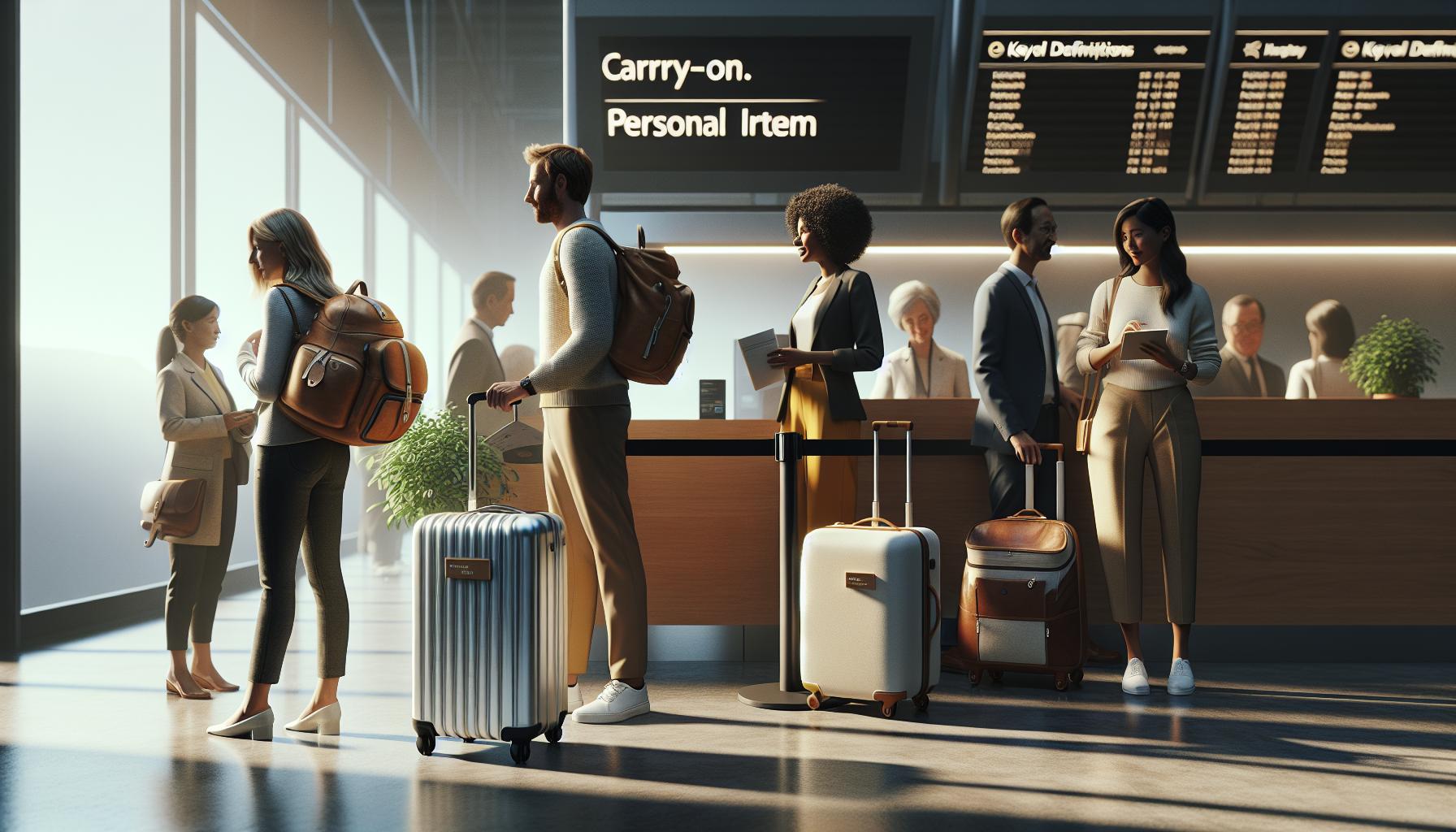
Airline Policies on Backpacks and Personal Items
Navigating airline policies regarding backpacks can often feel like deciphering a puzzle. Many travelers assume that a standard-sized backpack easily qualifies as either a carry-on or personal item, but this can vary greatly depending on the airline. For example, while some carriers allow the same backpack to serve dual purposes, others are more rigid in their definitions. Always check your airline’s specific guidelines before packing, as understanding these nuances can save you from unwanted fees or headaches at the gate.
Airlines typically categorize luggage into two main types: carry-ons and personal items. A carry-on bag must fit within certain dimensional limits and is usually stored in the overhead bin, while a personal item is smaller and must fit under the seat in front of you. For instance, a personal item is often limited to dimensions around 18 x 14 x 8 inches-common enough for smaller backpacks. In contrast, carry-ons are typically allowed to be larger, such as up to 22 x 14 x 9 inches. These size restrictions emphasize the importance of measuring your backpack before you travel, as exceeding these limits may result in additional charges.
While most airlines permit one of each type of baggage per passenger, enforcement can be inconsistent. Some travelers have reported being required to check bags that didn’t satisfy size regulations, while others have sailed through with oversized backpacks. When in doubt, consult the airline’s website for the most current information regarding carry-on and personal item sizes.
To enhance your travel experience further, consider your backpack’s features for functionality and organization. Look for compartments specifically designed for electronics and easy-access zippered pockets to help manage your essentials efficiently during your journey. Adhering to airline policies not only helps you avoid unexpected costs but also allows you to navigate airports and flights with greater ease and confidence.
Size Limits: What You Need to Know
Navigating the world of airline luggage can be a daunting task, especially when it comes to understanding size limits for carry-ons and personal items. A well-packed backpack can serve either purpose, but knowing the precise regulations of your airline is crucial. One of the most common misconceptions is that any backpack will automatically qualify as a personal item; however, there are defined sizes that must be adhered to. For example, most airlines specify personal items should not exceed dimensions of approximately 18 x 14 x 8 inches. If you’re planning on using your backpack in this way, it’s essential to measure it meticulously before your trip.
In comparison, carry-on bags are usually allowed to be larger, often with maximum dimensions reaching up to 22 x 14 x 9 inches. This allows for additional capacity, which is particularly helpful for longer journeys. However, keep in mind that these size limits can vary significantly between airlines. Hence, it’s always prudent to check specific guidelines on the airline’s website prior to packing. Not only does this help you avoid paying extra fees for oversized luggage, but it also saves time at the airport as you won’t be scrambling to fit your backpack into restrictive sizers.
To measure your backpack correctly, you should lay it flat and record its height, width, and depth. Use a measuring tape and make sure to include any protruding features-such as pockets or straps-that might affect its overall size. An effective strategy is to stuff your backpack fully before measuring to simulate real-life packing conditions. This practice will give you a clear understanding of how it will be viewed during your travel experience, reducing the likelihood of checks and charges at check-in or gate.
Beyond just size considerations, think about how the features of your backpack will serve you during your travels. Ideal backpacks for travel often incorporate organizational compartments that facilitate packing and retrieving your essentials easily. As you prepare for your next adventure, ensure you select a bag that aligns not only with the airline’s requirements but also with your travel style and needs. By being thoughtful about your choice, you can maximize the potential of your backpack, whether it’s utilized as a carry-on or a personal item, ensuring a smoother travel experience overall.
How to Measure Your Backpack Correctly
Measuring your backpack correctly is crucial for ensuring it fits within the size limits set by airlines for either carry-on or personal items. A well-measured bag can save you from unexpected fees and the stress of last-minute packing adjustments. To get started, gather a flexible measuring tape and follow these steps to accurately capture your backpack’s dimensions.
Begin by laying your backpack on a flat surface, making sure it is completely unzipped and devoid of any contents. This allows for a more precise measurement. Next, measure the three main dimensions: height, width, and depth.
Step-by-Step Measuring Process
- Height: Measure from the bottom of the backpack to the top. Make sure to include any protrusions, like a flap or handle.
- Width: Measure across the widest part of the backpack, typically the front panel.
- Depth: Measure the depth from the front side to the back, including any side pockets that could affect the overall space.
One effective method to determine a more realistic size is to pack your backpack as you would for a trip. This helps account for the bulk of your belongings and ensures you measure it under typical travel conditions. After packing, make sure to close any zippers and push down gently to eliminate excessive air, then measure again.
If your backpack has multiple compartments or detachable features, consider measuring those elements separately and including them in your total dimensions to get an accurate count. This practice is particularly important for certain airlines that have strict regulations about protruding pockets or extra attachments.
By adhering to these measurement guidelines, you’ll be able to clearly identify whether your backpack can be categorized as a carry-on or a personal item, ultimately aiding in a smoother travel experience. Each airline has varying size limits, so always double-check specific rules relevant to your travel plans to avoid unwanted surprises at the airport.
Best Backpacks for Travel: Features to Consider
Choosing the right backpack for travel involves more than just picking a favorite color; it’s about understanding the features that will enhance your journey and ensure compliance with airline regulations regarding carry-ons and personal items. A well-designed backpack can make navigating through crowded airports and busy city streets much easier. Key features to consider are size, compartmentalization, comfort, and durability, each playing a critical role in your travel experience.
First and foremost, size is crucial. When selecting a backpack, ensure it meets the specific carry-on or personal item dimensions set by airlines. Typically, personal items should be around 18 x 14 x 8 inches, while carry-ons can be larger, often up to 22 x 14 x 9 inches. Beyond just fitting within these measurements, opt for a bag that maximizes space with smart compartmentalization. Multiple pockets for organizing essentials like passports, chargers, and snacks will help you adhere to packing rules and keep you organized during your travels.
Comfort and Durability
Travel often requires long hours on your feet, so comfort should not be overlooked. Look for backpacks with padded shoulder straps and a breathable back panel to reduce strain during extended wear. An adjustable chest strap can also provide additional support, helping to distribute weight evenly across your body. When it comes to durability, materials matter. Opt for weather-resistant fabrics and sturdy zippers to ensure your backpack withstands the rigors of travel and inclement weather, keeping your belongings safe.
Finally, consider versatility as one of the top features. A backpack that can expand or compress for different travel situations will serve you well. Some models include detachable daypacks or are designed to convert into a duffel bag, providing additional flexibility for various activities. In summary, the best travel backpacks accommodate a range of personal needs while adhering to travel regulations, making your journey as smooth as possible. By focusing on size, comfort, durability, and versatility, you can select a backpack that enhances your travel experience and keeps you organized on the go.
Packing Tips for Backpacks as Personal Items
Packing your backpack as a personal item requires a strategic approach to ensure that you have everything you need while maximizing the limited space available. Did you know that an organized and well-packed backpack not only helps you comply with airline restrictions but also makes your travel experience far smoother? To help you navigate these requirements, here are some practical tips for efficiently packing your backpack for air travel.
Start by prioritizing your essentials. Consider what items you’ll need immediate access to during your flight, such as snacks, electronic devices, travel documents, and personal care items. Use the front pockets for quick-access items to avoid rummaging through your bag at security checkpoints or during the flight. This thoughtful arrangement can significantly reduce stress and keep you organized.
Another useful tactic is to utilize packing cubes or compression bags to optimize space within your backpack. These tools allow for better organization and can help compress clothing and soft items, making it easier to fit everything snugly within your personal item’s dimensions. Additionally, rolling your clothes instead of folding them can save space and minimize wrinkles, enhancing your packing efficiency.
Smart Layering
Layering your items from heaviest to lightest also plays a crucial role in maintaining balance and comfort. Place heavier items, like a laptop or books, closest to your back to keep the weight distributed evenly. This positioning not only minimizes strain on your shoulders but also aids in keeping your backpack stable as you move through the airport. Don’t forget to insert lighter and softer items, such as a jacket or scarf, at the top for easy access when temperatures change.
Don’t Overpack
When it comes to packing for a short trip, remember that less is more. Airlines often have a strict policy regarding the size of personal items, typically around 18 x 14 x 8 inches. Be mindful of these restrictions and pack only what you truly need. Take a moment to evaluate each item: if it doesn’t serve a specific purpose for your journey, it’s likely best left behind. This mindset helps ensure that your backpack remains within the allowed size limits while making your travel experience as enjoyable as possible.
By implementing these packing strategies, you can effectively navigate airline regulations while ensuring your backpack remains a practical and functional companion throughout your travels.
Common Misunderstandings About Travel Rules
Many travelers mistakenly believe that backpacks automatically qualify as personal items, but this isn’t always the case. Understanding the nuances of airline travel rules can make a significant difference in your travel experience. While most airlines allow a personal item that fits under the seat in front of you, others may have specific guidelines regarding backpack dimensions and weight. This confusion can lead to unexpected fees if your bag is deemed too large once you reach the gate.
To clarify, a carry-on bag typically has larger size allowances compared to personal items. While personal items generally have a maximum dimension-often around 18 x 14 x 8 inches-a carry-on can range from 22 to 24 inches in length, depending on the airline. This means that if your backpack exceeds the personal item dimensions but falls within carry-on limits, you might still need to check it in or pay additional fees.
Common Misinterpretations
- All Backpacks Are Personal Items: Not every backpack is under the size limit for personal items. Always measure your backpack before departure to avoid surprises.
- Airlines Have Universal Size Rules: Each airline sets its own dimensions for personal items and carry-ons. Be sure to check your airline’s specific regulations to avoid confusion.
- Security Checkpoints Are the Same for All Bags: While common items like liquids and electronics are treated similarly, the size and type of your bag can affect the handling at security checks, especially with larger backpacks.
- Body Size Affects Bag Handling: Some travelers believe that if they are petite, their larger backpack can pass as a personal item without scrutiny. This misconception can lead to complications at boarding.
It’s also essential to consider that some airlines might allow flexibility during slow travel times but can be strict during peak seasons. To navigate the often-confusing world of travel regulations, always check your airline’s website for their specific guidelines and pack accordingly. Being informed and prepared can save you time, money, and stress at the airport.
Traveling with Additional Items: Tips for Compliance
Traveling with additional items can often complicate your journey, particularly when balancing personal items and carry-ons. Understanding how to manage these items effectively will prevent unwanted surprises and ensure a smoother experience at the airport. Start by familiarizing yourself with your airline’s specific policies regarding the number of bags you can bring. Some airlines allow only one personal item in addition to a carry-on, while others may let you bring a backpack and a smaller bag, such as a purse or laptop case.
When packing your backpack, prioritize your essentials and think critically about which additional items you truly need. It’s wise to keep valuables and travel documents easily accessible, as you’ll need to present these at various points in the airport. Utilizing packing cubes or travel organizers can optimize space while also keeping your items separated. However, remember that every additional item you bring increases the complexity of your journey, especially at security checkpoints.
Smart Packing Techniques
- Use Versatile Items: Choose travel gear that serves multiple purposes. For instance, a jacket with inner pockets can eliminate the need for a second bag.
- Check Weight Restrictions: Be mindful of weight limits for both carry-ons and personal items. Airlines may weigh your bags, and exceeding these limits could incur extra fees.
- Develop a Check-list: Creating a packing check-list tailored to what you can and cannot bring in your personal item will help ensure you don’t forget anything crucial.
Keep in mind that certain airlines are stricter during peak travel times or events, so always carry your items in compliance with the size and weight rules to avoid additional charges or the need to check your bag unexpectedly. By staying organized and prepared, you can navigate the complexities of traveling with extra items while ensuring all your essentials are right at your fingertips.
When to Choose a Carry-On over a Personal Item
Choosing between a carry-on and a personal item can significantly influence your travel experience, especially when it comes to comfort and convenience during your journey. While personal items, such as a backpack, are designed for essential items you want readily accessible, there are specific scenarios where opting for a carry-on is more prudent. For instance, if you plan to travel for more than a couple of days, a carry-on allows you to pack a wider range of clothing and accessories without worrying about whether your luggage will fit under the seat in front of you.
When considering whether to use a carry-on or stick with a personal item, think about the items you intend to bring. A carry-on is typically a better option if you need to include larger items such as shoes, jackets, or toiletries that don’t fit comfortably in your backpack. Additionally, if you’re traveling on a budget airline notorious for enforcing strict baggage regulations, a carry-on may offer better compliance with size and weight limits, allowing you to maximize your packing capacity without risking fees for oversize personal items.
Moreover, navigating through busy airports or lengthy layovers becomes easier with a carry-on. Unlike a personal item, which can easily become congested with smaller essentials, a well-organized carry-on provides the structure needed to keep your belongings in check. To further enhance your travel efficiency, consider using packing cubes or compression bags to organize your gear neatly, ensuring quick access to everything you require throughout your trip.
Ultimately, the decision becomes clear when you weigh convenience against necessity. For quick weekend trips or everyday items, a personal item might suffice, but for longer journeys or if you prefer having more options readily available, a carry-on provides the flexibility and capacity that can enhance your travel experience. Remember to always check your airline’s specific carry-on policies to avoid any last-minute surprises at the gate.
Essential Travel Gear: Comparing Carry-Ons vs. Personal Items
Choosing the right baggage for your travel needs can significantly impact not only your comfort but also the overall convenience of your journey. Backpacks often serve as a popular choice for personal items, thanks to their versatility and ease of access. However, understanding how to effectively utilize a backpack as either a carry-on or a personal item is essential for a hassle-free travel experience. Each option has its unique advantages, which should be highlighted to make an informed decision.
When assessing carry-ons versus personal items, it’s crucial to recognize that personal items, including backpacks, are generally smaller and meant for essentials you want readily accessible during the flight. They fit conveniently under the seat, making them perfect for items like laptops, snacks, and personal documents. In contrast, carry-ons tend to be larger, often designed for a broader range of essentials, such as clothing and larger equipment. This means that for longer trips or if you’re packing heavier items, opting for a carry-on can provide more functionality and flexibility.
To effectively navigate the size limitations imposed by airlines, familiarize yourself with each airline’s specific policies on dimensions for both personal items and carry-ons. Most airlines will specify exact measurements-typically around 18 to 22 inches for carry-ons and smaller for personal items. Measuring your backpack correctly ensures you can maximize its capacity while adhering to these guidelines. Having a compact, feature-rich backpack can offer the best of both worlds, providing sufficient space for personal items while still qualifying as a carry-on if needed.
When preparing for your journey, consider the items you will pack and their respective sizes. For example, a sturdy backpack designed for travel can serve as a personal item on shorter trips while still offering the versatility to convert into a carry-on for longer adventures. Look for features like multiple compartments, a laptop sleeve, and water resistance to enhance your travel experience. By weighing these factors and your specific travel needs, you can confidently decide between using your backpack as a personal item or a carry-on, ensuring a smooth and enjoyable travel experience.
Real-Life Scenarios: Managing Your Backpack on Flights
Navigating the airport with your backpack can be a game-changer during your travel experience, but managing it effectively requires some practical strategies. Imagine you’re standing in a long security line, your backpack shouldered and packed with essentials. If it’s well-organized, you’ll be able to access your laptop and liquids quickly for screening, avoiding the stress of fumbling. Here’s how to handle your backpack efficiently while traveling by air.
First, understanding the nature of your journey will dictate how you pack your backpack. For shorter flights, your backpack can serve well as a personal item, allowing you to stow away a few essentials for easy access during your flight. Make sure to include items such as snacks, a book or e-reader for entertainment, and your travel documents. This keeps your smaller items within reach, while larger items like clothes can fit in a separate carry-on. Conversely, on longer flights, reconsider your approach. If your trip demands extra gear, packing your backpack to function as a carry-on with everything from a change of clothes to necessary toiletries may be beneficial.
When it comes to walking down the aisle of the airplane, be aware of how you maneuver your backpack. Opt for a backpack that opens completely or features external pockets for items like travel pillows and headphones; this can expedite the process of stowing it overhead or under the seat in front of you. A well-structured backpack with padded straps can help you comfortably navigate crowded spaces while balancing your belongings. It’s also crucial to know how to utilize the versatility of your backpack-being able to quickly unclip and shoulder it versus having to shove it into a tight space can save you time and frustration.
Lastly, be prepared for different airline policies regarding personal items and carry-ons. Some airlines have stricter guidelines than others. Always check your specific airline’s regulations and measure your backpack accordingly before your journey. A backpack that’s slightly above the dimensions might still be allowed under certain conditions or exceptions, especially on less busy flights. Being proactive about these details ensures a smoother travel experience where your backpack complements your journey rather than complicates it.
In these real-life scenarios, the right strategies can make a world of difference in managing your backpack on flights, enhancing comfort and convenience.
Frequently Asked Questions
Q: What qualifies a backpack as a personal item during air travel?
A: A backpack is considered a personal item if it fits under the seat in front of you. Airlines typically specify size limits for personal items, often around 18 x 14 x 8 inches. Always check the specific airline’s policy to ensure compliance.
Q: Can I use a backpack as a carry-on instead of a personal item?
A: Yes, you can use a backpack as a carry-on if it meets the airline’s carry-on dimensions, which generally range from 22 x 14 x 9 inches. Choosing a larger backpack can maximize your packing capacity for trips.
Q: Are there differences in size limits for carry-ons and personal items among airlines?
A: Yes, size limits for carry-ons and personal items vary by airline. It’s essential to verify each airline’s specific dimensions before traveling to avoid additional fees or boarding issues.
Q: What are the best packing strategies for using a backpack as a personal item?
A: To maximize space, roll your clothes and use packing cubes. Prioritize items you’ll need during the flight, like snacks and electronics, for quick access. This makes your travel more convenient and organized.
Q: Do airlines allow backpacks that exceed personal item dimensions?
A: Airlines usually do not allow items larger than specified personal item dimensions. If your backpack is too large, it may need to be checked or counted as your carry-on luggage, potentially incurring extra fees.
Q: How can I ensure my backpack adheres to airline policies?
A: Measure your backpack before traveling. Refer to your airline’s website for specific size limits and guidelines. Keeping your items organized will help you pack more efficiently within those limits.
Q: What should I do if my backpack doesn’t fit as a personal item during boarding?
A: If your backpack doesn’t fit, politely inform airline staff. They can often provide a solution, such as allowing it as a carry-on or checking it, if necessary, to avoid additional fees.
Q: Are there backpacks specifically designed for air travel?
A: Yes, many backpacks are designed with travel in mind, featuring compartments for electronics and easy access pockets for essentials. Look for models that comply with carry-on dimensions for seamless travel experiences.
To Wrap It Up
Navigating travel can be challenging, and understanding whether your backpack qualifies as a carry-on or personal item is essential for a smooth journey. Remember, choosing the right bag not only eases your travel experience but also ensures compliance with airline policies. If you still have questions or need further clarification on packing strategies, check out our guides on packing essentials and travel hacks that can simplify your trips.
Before you go, don’t miss out on our newsletter for the latest travel tips and insider advice that can elevate your adventure. We invite you to explore more of our resources on travel gear and essential tips that every traveler should know. Share your thoughts in the comments below-what has your experience been with packing for flights? Your insights could help fellow travelers! Safe travels, and remember: the right preparation makes all the difference!