Traveling can often feel like navigating a minefield of restrictions, especially when it comes to what you can bring on a plane. Did you know that carrying a pocket knife might not be allowed, depending on the airline and TSA regulations? In this guide, we’ll decode the complex rules surrounding pocket knives and air travel so you can feel confident and prepared for your next trip. Understanding these regulations not only saves you from potential confiscations but also helps you ensure your travel gear is both practical and compliant. Whether you’re an everyday carry enthusiast or simply looking to organize your travel essentials, knowing what you can and cannot bring will enhance your journey. Keep reading to discover the ins and outs of TSA rules regarding pocket knives and how they can affect your travel plans.
Understanding TSA Regulations for Pocket Knives
To navigate the complexities of traveling with a pocket knife, understanding TSA regulations is essential. The Transportation Security Administration (TSA) prohibits all knives in the cabin of an airplane, which includes pocket knives, regardless of blade length or shape. This rule stems from safety concerns initiated following the tragic events of 9/11, where weapons were used to commandeer flights. However, notable exceptions were briefly allowed in the past, leading to confusion and misconceptions about specific types of knives and their portability during air travel.
It’s important for travelers to recognize that while some multi-tools and Swiss Army knives can still be carried in checked luggage, they must adhere to strict guidelines. Many people incorrectly believe that a folding knife with a blade shorter than a certain length may be permissible; however, the TSA clarifies that all knives-including those with foldable blades-are banned from carry-on baggage. This includes common pocket knife varieties such as lock knives, corkscrew blades, and whatever else may be deemed a potential weapon. Therefore, thorough planning before traveling-such as securing the knife in your checked luggage-is crucial to avoid confiscation and ensure a hassle-free journey.
In summary, when considering taking a pocket knife on a flight, remember that only checked baggage is the appropriate place for such items. Familiarizing yourself with TSA rules not only enhances your travel experience but also promotes safety for all passengers. Knowing these regulations can save you time and frustration at security checkpoints. It’s always prudent to check the latest TSA guidelines before packing, as regulations can change, and local laws may further restrict what is allowed.
What Types of Pocket Knives Are Permitted?
Traveling with a pocket knife can be a contentious topic, especially for enthusiasts and those who rely on these tools in their daily lives. Understanding the types of pocket knives that are permitted requires a clear distinction between what is allowed in carry-on luggage versus checked baggage. While many assume that small, foldable knives may slip under the radar, the reality is stringent: any knife-regardless of blade length, design, or folding mechanism-is not allowed in the cabin of an airplane.
In terms of checked luggage, travelers can securely pack various types of knives, including pocket knives and multi-tools like Swiss Army knives, as long as they adhere to the airline’s specific guidelines. It is essential to ensure that the knife is safely packed to prevent injury to baggage handlers. Here are some tips related to which types of knives are permitted in checked baggage:
- Multi-tools: Tools like the Swiss Army knife can be packed in checked luggage, assuming they do not feature any self-opening or automatic blade action.
- Fixed-blade knives: While these are allowed in checked baggage, they must be appropriately sheathed to prevent accidental injury.
- Folding pocket knives: Any knife that has a folding mechanism is also acceptable in checked baggage, provided it isn’t designed as a weapon.
Despite these allowances, it’s wise to consult your airline’s policies and the TSA guidelines before traveling. Some airlines may have stricter rules regarding knife lengths or specific types, so doing your homework can save you from unexpected confiscations at checkpoints or at your destination. Moreover, always remember that while your knife may be permitted in checked baggage, local laws in your travel destination may impose additional restrictions on knife types or sizes. Therefore, empowering yourself with knowledge about TSA regulations and airline policies is not only essential for a smooth travel experience but also for ensuring compliance with broader legal frameworks.
Common Misconceptions About Carrying Knives
Carrying a pocket knife while traveling often leads to widespread myths that can put unsuspecting travelers at risk of legal trouble or frustrating delays. One significant misconception is that small or seemingly harmless pocket knives are exempt from scrutiny at airport security. Many travelers erroneously believe that if a knife fits easily in their pocket or is marketed as a “gentleman’s” knife, it may pass through security unnoticed. The reality, however, is stringent TSA regulations mandating that all knives, regardless of size or design, are prohibited in carry-on luggage.
Another common myth is that certain types of knives are more acceptable than others. For instance, some people speculate that multi-tools, such as Swiss Army knives, are always allowed in carry-on bags since they can serve multiple functions. While multi-tools can be packed in checked baggage, they are still forbidden in carry-ons if they contain any blade, putting this myth to rest. Always verify whether the specific tools you want to bring comply with TSA guidelines, as ignorance can lead to confiscation and potential delays.
Furthermore, there’s a belief that if a knife is a family heirloom or part of a masculine or feminine carry culture, the rules might flex to accommodate sentimental value. Unfortunately, TSA agents are bound by the rules and will not consider the origin or significance of the knife when enforcing regulations. Each item is viewed through a safety lens, with zero tolerance for what could be perceived as a threat in the aviation environment.
Finally, many travelers assume that checked baggage is a catch-all for any type of knife, leading them to believe that throwing a knife into their suitcase guarantees it will reach their destination. This misunderstanding can be costly. Packing should always follow specific airline guidelines concerning knife types and dimensions to prevent any mishaps or surprises at baggage claim. Staying informed and maintaining a cautious approach to traveling with pocket knives is essential for a smooth journey.
In summary, understanding and debunking these misconceptions ensures that your travel experience remains enjoyable and free of unnecessary complications. When in doubt, consulting TSA and airline policies directly provides the most accurate guidance.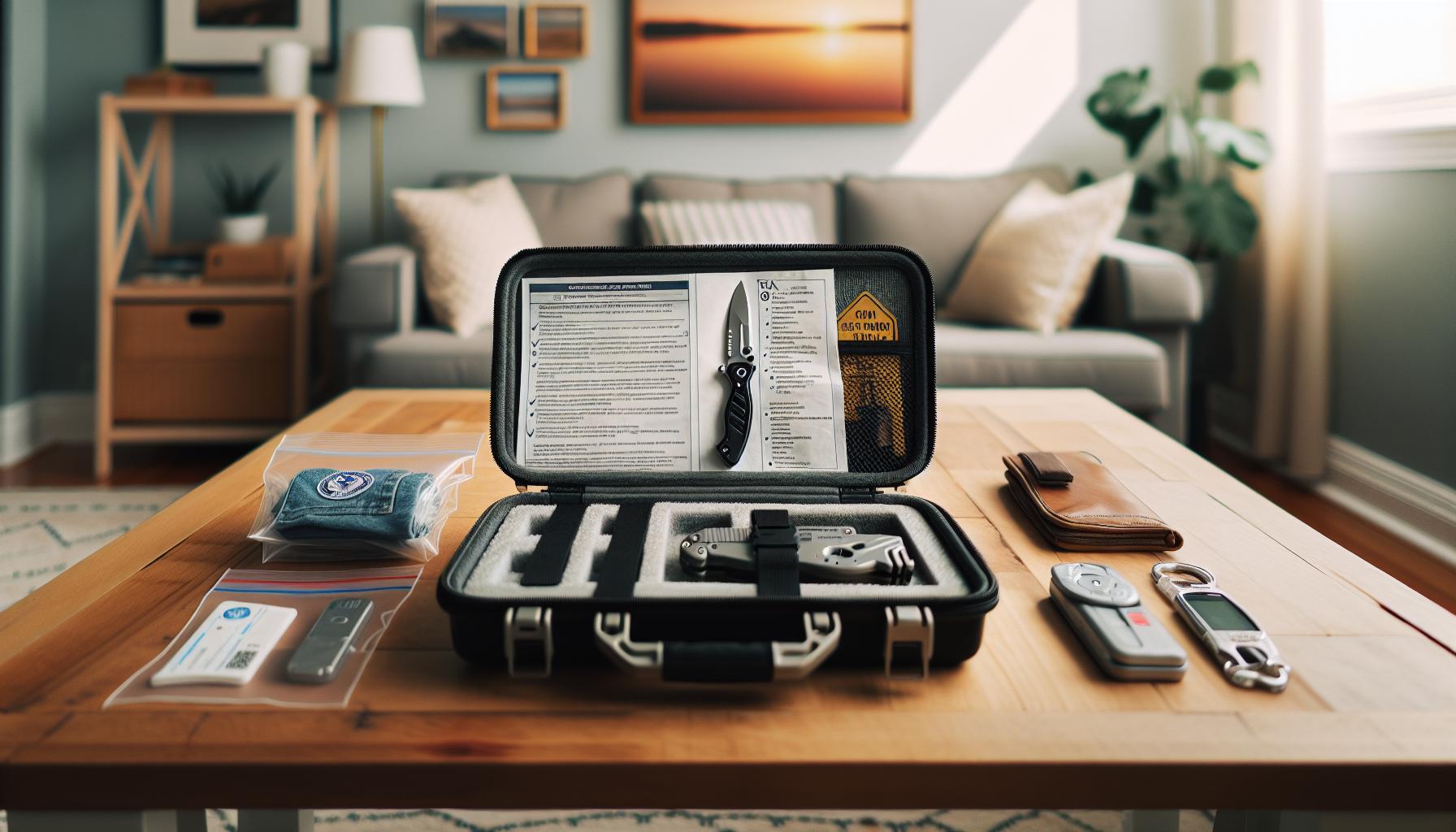
How to Properly Pack a Pocket Knife for Air Travel
Packing a pocket knife for air travel requires careful consideration to ensure compliance with TSA regulations and to avoid confiscation. The first rule of thumb is to understand that any knife, including pocket knives, is prohibited in carry-on luggage. Therefore, the only option for traveling with a pocket knife is to place it in checked baggage. To ensure safe and hassle-free travel, follow these practical steps when packing your knife.
When packing your pocket knife in your checked luggage, always place it in a designated section of your bag to minimize the risk of damage and injury. A good practice is to wrap the knife securely in a cloth or bubble wrap to protect the blade and the edges. Use a sturdy, hard-sided case if possible, which offers added protection and prevents accidental opening during transit. Additionally, make sure to check your knife’s locking mechanism if it has one; a properly functioning lock ensures that the knife will not accidentally open and pose a safety risk.
Another consideration is to take the time to familiarize yourself with your airline’s specific policies regarding packing knives. Some airlines may have additional rules, including restrictions on certain types of blades or dimensions. It can be beneficial to reach out to customer service for clarification or check their guidelines on their website before you travel. This way, you can avoid potential issues at baggage claim and make sure your knife meets the necessary criteria.
Lastly, always remain mindful of the legal considerations surrounding pocket knives at your destination. While it may be permissible to carry a pocket knife in your checked luggage while flying, local laws or regulations may differ once you arrive. Researching the laws of the state or country you’re visiting can save you from legal issues and ensure a smooth travel experience. By following these packing strategies and remaining informed, you can confidently travel with your pocket knife while adhering to safety regulations.
Airline Policies on Knives: What You Need to Know
Traveling with a pocket knife can certainly stir up confusion, particularly with varying policies among different airlines. One crucial point to understand is that while the TSA prohibits knives in carry-on luggage, airline policies might add another layer of complexity regarding what can be checked. Passengers should always check both TSA regulations and specific airline requirements to avoid any unpleasant surprises.
Understanding Airline Specific Rules
Airlines often impose their own rules that can be more restrictive than TSA guidelines. For instance, some airlines may limit the type of pocket knives allowed in checked baggage based on blade length, type, or overall design. It’s not uncommon for an airline to request that blades over a certain length be sheathed or have protective covers. Hence, it’s wise for travelers to familiarize themselves with the policy of the airline they are flying with by visiting their official website or by calling customer service directly.
Another proactive step is to observe how your knife is packaged. Packing your knife in a sturdy case and ensuring it is inaccessible during transit demonstrates responsibility and can lead to smoother interactions with baggage handlers or security personnel. It’s beneficial to check if the airline has specific recommendations regarding how to store knives in checked luggage, as guidelines can vary widely.
Stay Informed & Prepared
Being prepared means staying informed about legal regulations not just at your point of departure, but also at your final destination. Different states and countries can have distinct laws concerning the possession and transport of knives, which may impact what you bring on your travels. Researching local laws can help prevent any legal pitfalls that arise upon arrival.
Ultimately, while navigating the world of airline policies on pocket knives may seem daunting, thorough preparation and awareness of both TSA and airline guidelines can empower travelers to pack with confidence. Keeping these practical tips in mind can ensure a hassle-free journey, allowing you to focus on the adventure ahead rather than the logistics of your gear.
Consequences of Carrying a Knife on a Plane
Carrying a knife onto an airplane can lead to a myriad of unwanted consequences that can disrupt not only your travel plans but also lead to serious legal ramifications. If you attempt to bring a pocket knife through airport security, you risk confiscation at the very least. The Transportation Security Administration (TSA) enforces stringent rules against carrying weapons, including knives, in carry-on luggage. Insisting on carrying a knife can result in missing your flight as you navigate the unexpected process of having items seized and explaining your actions to security personnel.
In addition to being forced to surrender your knife, you could face fines or other penalties. The TSA has the authority to impose civil penalties for violations of its regulations, which may escalate based on the nature of the item and the specifics of the situation. For instance, if you inadvertently carry a larger knife or one deemed particularly dangerous, the consequences can be more severe and may include involvement of law enforcement.
It’s essential to understand how these confiscations escalate into broader issues. Passengers who create disturbances in security lines when their knives are discovered may face further scrutiny and potential travel delays. This can also result in being flagged for secondary security screenings on future flights, making your travel experience more cumbersome. Such situations not only tarnish your current trip but can also impede future travel opportunities.
Lastly, the psychological aspect of carrying a knife on a plane brings a different layer of concern. The perception of knives as tools versus weapons can lead to misunderstandings and heightened tensions within security settings. This can influence your travel experience negatively, resulting in embarrassment or anxiety as you navigate through heightened security measures. Ultimately, adhering to TSA regulations by leaving your knife at home or securing it in checked baggage is crucial for hassle-free travel.
Alternatives to Pocket Knives for Travelers
Traveling often requires a careful reevaluation of what tools are necessary and permissible for your journey, especially when considering alternatives to pocket knives. While there are countless scenarios where a pocket knife may seem essential, innovative tools exist that can replace this staple without the risk of running afoul of TSA regulations.
One standout option is the multi-tool, which can encompass a range of functionalities. Many multi-tools have various features, such as screwdrivers, pliers, and file options while eliminating the knife blade that typically causes issues with airport security. Brands like Leatherman and Gerber offer compact models that can serve well for light repair tasks or crafting needs during your trip.
Another great alternative is the utility knife or box cutter, which usually comes with retractable blades designed for specific tasks. These lightweight options are perfect for cutting packaging or even preparing snacks on the go. Just ensure the blade is stowed into the handle when not in use to keep it safe and compliant with regulations.
Furthermore, consider scissors as viable substitutes for slicing tasks. Many travel-friendly scissors are small and designed specifically for carry-on use. They can efficiently handle paper, cardboard, and other materials without raising security concerns. When choosing scissors, look for safety features that limit the blade length to ensure they pass through TSA checks smoothly.
Finally, if your travel necessitates cutting through tough materials, safety cutters equipped with spring-loaded features allow effective cuts without exposing a blade. They’re increasingly popular in crafts and DIY projects, offering practicality without the baggage of a traditional knife.
The right choice of tools can make your travel experience smoother and keep you in compliance with regulations. By sticking to these alternatives, you can maintain that essential readiness for whatever your journey demands, without the risk associated with carrying a pocket knife.
Real-Life Airport Experiences with Pocket Knives
Navigating airport security can be a nerve-wracking experience, especially for travelers who regularly carry a pocket knife. Countless individuals have memorable stories about their encounters with the TSA, often filled with confusion and frustration over what items are allowed on planes. It’s crucial to be aware of real-life experiences to understand the implications better, particularly when it comes to your beloved pocket knife.
Travelers often come to the checkpoint fully convinced that their compact multi-tool or Swiss Army knife is harmless, only to have it confiscated right before their eyes. For instance, one traveler recounted his frustration when he was forced to part with a prized vintage multi-tool containing a small blade-one that he had assumed would be compliant. He learned the hard way that even small blades are deemed prohibited, and the emotional attachment made the loss even more difficult. This experience serves as a sobering reminder that, while the knife may seem trivial, it can lead to significant inconvenience, both for the traveler and the TSA agents who have to enforce these regulations.
Some travelers have also shared tales of success, showcasing that preparation can make all the difference. One frequent flyer discovered the importance of checking regulations before each trip. By familiarizing herself with TSA guidelines, she invested in a high-quality multi-tool specifically designed for air travel-one that excludes a traditional knife blade. This savvy choice not only spared her from security hassles but also equipped her for various tasks throughout her journey, proving that strategic planning pays off.
Ultimately, these real-life experiences underline the significance of understanding TSA regulations regarding pocket knives. While some may feel equipped to argue their case at security, it’s best to stay informed and arrive prepared. By knowing what’s permissible, travelers can avoid unnecessary stress and focus solely on their journeys. Sharing these stories within the traveling community fosters awareness and supports fellow flyers in making better choices throughout their adventures.
Traveling Internationally with a Pocket Knife
Navigating the complexities of international travel with a pocket knife requires a keen understanding of varying regulations across countries. Many travelers mistakenly believe that if a knife is allowed in the U.S. under TSA guidelines, it will surely be permitted elsewhere. However, this assumption can lead to unexpected dilemmas at foreign airports. For instance, some countries maintain strict prohibitions against any form of knife, regardless of size or intended use, which could result in confiscation or even legal repercussions.
Before you embark on your journey, it’s essential to research the laws specific to each country you’ll be visiting or transiting through. An effective way to do this is to check with the respective country’s embassy or official transportation authorities. In the European Union, for example, regulations can vary significantly from one country to another. Certain states might allow small pocket knives only if they meet specific criteria, such as blade length or whether the knife is blunt-tipped. On the contrary, countries like Japan have stringent rules where even a small foldable knife could face seizure.
When packing your pocket knife for international flights, always consider the local customs policies in addition to TSA rules. Some travelers have encountered issues upon arrival, where knives deemed harmless in the departure country faced immediate confiscation in their destination country. To avoid such incidents, it’s advisable to store any potentially problematic knives in checked baggage rather than carry-on luggage. Moreover, consider investing in travel-friendly alternatives-knives designed for travel often lack blades or feature blades that adhere to international standards.
Key Considerations for International Travel with a Pocket Knife:
- Check Local Laws: Always verify the regulations of the country you are visiting regarding knife carry.
- Pack Carefully: Use checked baggage for packing knives to circumvent airport security complications.
- Consider Alternatives: Look for multi-tools or gadgets designed without blades for similar functionality.
- Stay Informed: Regulatory changes can occur frequently; keep up-to-date with travel advisories.
With proper planning and awareness of the different restrictions, you can travel confidently, ensuring your journey remains hassle-free and enjoyable.
Safety Tips for Carrying a Pocket Knife
Carrying a pocket knife can be an essential part of everyday carry for many, but understanding the safety aspects and regulations surrounding them, particularly in airports, is crucial. Knowledge about knife handling can not only prevent misunderstandings with authorities but also ensure that you’re equipped to use your knife responsibly in various situations. For instance, when navigating crowded places like airports, having awareness of your surroundings and active communication about your tool can foster an environment of safety and compliance.
When selecting a pocket knife for travel, consider models known for their compactness and utility. Knives with features like a locking mechanism and a blade length within TSA regulations (typically under 2.36 inches for carry-on luggage) are ideal. Always ensure your knife is clean and well-maintained to avoid any accidents. A well-maintained knife not only performs better but also prevents potential safety hazards. Additionally, familiarize yourself with how to use your knife effectively to avoid any misuse. Practice handling your knife in a controlled environment until you feel confident.
Packing a pocket knife correctly is equally important. Ideally, keep your knife in checked luggage to bypass security checkpoints entirely. If you must carry it on you, ensure you’re compliant with TSA’s rules about what can be taken on the plane. Remember that the airport is a high-security area; communicating openly with TSA officers about your intentions can often ease the process. If your knife is confiscated, don’t argue; instead, make a mental note of what not to take next time.
Lastly, be aware of the varied state regulations regarding pocket knives once you land. Different locales have unique laws regarding blade length and types of knives allowed. Take into account any potential adjustments you may need to make based on the laws of your destination. Keeping these tips in mind will not only enhance your travel experience but also allow you to enjoy your pocket knife as a versatile tool rather than a source of stress.
Legal Considerations for Pocket Knives in the U.S
Understanding the legal landscape surrounding pocket knives in the United States, particularly in the context of air travel, is essential for ensuring compliance and avoiding potential legal issues. Various laws govern the possession and transport of knives, which can differ significantly from state to state, as well as between federal and state regulations.
First and foremost, the Transportation Security Administration (TSA) has specific guidelines restricting the carrying of knives onto commercial aircraft. According to TSA rules, knives with blades longer than 2.36 inches, as well as those that can be opened with one hand or have a blade that locks, are prohibited in carry-on luggage. Therefore, if you intend to travel with a pocket knife, choosing one that meets these specifications is crucial.
State Regulations
Federal regulations represent just a fraction of the legal considerations. Each state has its own laws that dictate what types of knives are allowed and under what circumstances. For example:
- In some states, switchblades and auto-open knives are illegal, while others allow them under specific conditions.
- Many jurisdictions have laws concerning blade length; for instance, while some may permit up to 4 inches, others may restrict it to 3 inches or less.
- Certain states also have rules regarding the concealed carry of knives, which can vary widely based on local laws.
It’s advisable to familiarize yourself with the regulations of both your departure and destination states. Some regions are more lenient, while others enforce strict penalties for violations.
Transporting Pocket Knives
When transporting a pocket knife, it is generally wise to keep it in checked luggage. This not only helps you avoid potential conflicts with TSA at security checkpoints but also allows for easier transport without running afoul of local laws upon reaching your destination. If you are unsure about the legality of a particular knife, consult local laws or seek legal advice to ensure you’re compliant before you travel.
Conclusion
In summary, the legal considerations regarding pocket knives in the U.S. can be complex, especially for travelers. Understanding TSA regulations alongside state laws is crucial for a hassle-free travel experience. If you remain informed and adhere to the rules, your pocket knife can continue to serve as a useful tool rather than a source of stress during your travels.
Comprehensive Guide to Choosing a Travel-Friendly Knife
Choosing the right knife for travel can be a pivotal decision, especially when you want to ensure compliance with TSA regulations while still having a functional tool at your disposal. The perfect travel-friendly knife balances utility, safety, and convenience. For first-time travelers or experienced adventurers alike, understanding what type of knife is suitable is crucial.
When selecting a pocket knife for air travel, focus on blade length and mechanism. The TSA permits knives with blades shorter than 2.36 inches, which includes a variety of options. Consider compact multi-tools or folding knives that have non-locking blades; these provide functionality without contravening airport security rules. A Swiss Army knife is a popular choice due to its versatility and compact design, offering several tools without exceeding TSA limits. Also, ensure that the knife can be easily stored in your checked luggage to avoid any security issues at the airport.
In addition to size and functionality, think about the intent of use during your travels. If you often find yourself in outdoor settings, a lightweight and easy-to-carry option is essential. Knives with ergonomic grips and textured surfaces can ease handling during tasks and make them safer to use. For those simply needing a handy tool for minor tasks while traveling, a small pocket knife might suffice, but it’s wise to familiarize yourself with the local laws of your destination as well. For instance, while some states allow larger blades, others impose strict limits, so always check before packing.
Ultimately, material and design are significant factors. Choose knives made from durable materials such as stainless steel for longevity and corrosion resistance. A good quality blade, along with a robust handle, ensures your tool will withstand a range of conditions. Remember that while aesthetics may matter, it’s paramount that the knife is lightweight and portable, facilitating easy carry in a travel backpack or pocket.
Selecting the right knife not only enhances your travel experience by providing you with a useful tool but also helps you navigate the complexities of airport security with confidence. Always prioritize safety and local regulations to ensure that your choice serves you well on your adventures.
Faq
Q: Can I bring a Swiss Army knife on a plane?
A: No, Swiss Army knives are considered prohibited items by the TSA when traveling in carry-on luggage. However, you can pack them in your checked baggage. For more details, refer to the section on what types of pocket knives are permitted in your carry-on.
Q: What happens if I accidentally bring a knife to the airport?
A: If you accidentally bring a knife to the airport, TSA may either confiscate it or allow you to return it to your vehicle if time permits. It’s vital to check your bag before arriving at the airport to avoid such situations.
Q: Are there any exceptions for small knives on planes?
A: The TSA has strict rules against any fixed-blade or folding knife with a blade longer than 2.36 inches in carry-on luggage. There are currently no exceptions for small knives. For more information, see the section on common misconceptions about carrying knives.
Q: How should I approach packing a pocket knife for air travel?
A: To comply with TSA regulations, pack your pocket knife securely in your checked baggage only. Ensure it’s within standard size limits, and consider using protective sheaths to prevent accidental injuries. More packing tips can be found in the article.
Q: Can I carry a pocket knife on international flights?
A: Regulations vary by country, but generally, most airlines and countries prohibit carrying knives in the cabin. Always check the specific rules of your departure and destination countries to ensure compliance.
Q: What are the legal restrictions on pocket knives in the U.S.?
A: Legal restrictions vary by state and city. Generally, knives with blades under a certain length (often 3 inches) are permitted, but it’s important to check local laws and regulations. This topic is further discussed in the legal considerations section of the article.
Q: Are multi-tools with knives allowed on planes?
A: Multi-tools that contain a knife component are not allowed in carry-on luggage according to TSA rules. However, you can store them in your checked baggage. For more details, refer to the section on what types of tools are permitted.
Q: What are the consequences of trying to bring a knife on a plane?
A: If you attempt to bring a knife in your carry-on, TSA will confiscate it, and you may face fines or delays. Serious violations could also lead to criminal charges. For more context, see the consequences section of the article.
Key Takeaways
As you navigate the intricate rules surrounding pocket knives on planes, remember that understanding TSA regulations is crucial for hassle-free travel. Now that you’ve decoded the essentials, are you curious about the best pocket knives for your needs? Check out our guides on Swiss Army knives and karambits for insights on selection and care to ensure you’re always prepared. Don’t forget to explore our comprehensive travel safety tips and outdoor gear recommendations to equip yourself for any adventure.
If you found this information valuable, consider signing up for our newsletter for the latest updates on travel tips, gear recommendations, and exclusive content tailored just for you. Have any thoughts or questions? We’d love to hear from you in the comments below-your input drives our community forward! Stay informed and empowered, so you can travel confidently while keeping your essentials in check.