
A well-sharpened pocket knife isn’t just a tool; it’s an essential companion for both everyday tasks and outdoor adventures. Did you know that a dull blade can be more dangerous than a sharp one? When your knife is sharp, it requires less force to cut, reducing the risk of slips and accidents. In this beginner’s success guide, you’ll discover not only the importance of keeping your pocket knife in top condition but also the various methods to achieve a razor-sharp edge effectively. Whether you’re prepping for a camping trip or simply want to tackle at-home projects with ease, learning how to sharpen your knife will empower you to enhance its performance, prolong its lifespan, and ensure safe usage. Join us as we explore practical tips and techniques that will elevate your skills in knife maintenance, making you feel more confident and capable in every cutting task. Get ready to unlock the full potential of your trusty pocket knife!
How Pocket Knife Sharpening Works: Essential Techniques
To achieve a sharp edge on your pocket knife, understanding how sharpening works is key. Sharpening is essentially about reshaping the blade’s edge through the removal of material to create a fine, smooth point capable of cutting efficiently. This process is influenced by several factors, including the angle of the bevel, the type of material used for the blade, and the tools employed in the sharpening process.
Essential Techniques
When sharpening a pocket knife, it’s crucial to maintain the correct angle relative to the sharpening tool. Most knives require an angle between 15 to 20 degrees for optimal sharpness. For traditional pocket knives, a slightly wider angle may be optimal for durability against heavy use. For instance, utilizing a whetstone, you would hold the blade at the desired angle and use a consistent motion-either sweeping from heel to tip or in circular patterns, depending on the tool used.
Another essential technique involves applying consistent pressure. Whether you’re using a whetstone, honing rod, or a pull-through sharpener, the pressure you apply should remain even throughout the sharpening stroke. Overly aggressive sharpening can damage the blade, while too little pressure may not effectively sharpen it at all. Additionally, keeping the sharpening tool clean is vital; accumulated metal filings can affect performance and the sharpness achieved.
Lastly, after sharpening, honing is often recommended to finish the edge. This process realigns the blade’s edge and removes any burrs that may have formed during sharpening. It enhances the sharpness and helps maintain the knife’s performance over time, making it easier for users to achieve the desired sharpness without frequent sharpening sessions. By engaging these essential techniques, users can not only maintain their pocket knives effectively but also ensure a safe and productive cutting experience in everyday tasks or outdoor adventures.
Types of Knife Sharpening Tools: Which One to Choose?
When it comes to sharpening your pocket knife, choosing the right tool is crucial for achieving the best results and prolonging the life of your blade. With an array of options available, each designed for different user preferences and skill levels, understanding the benefits and limitations of each can help you make an informed decision that suits your sharpening needs.
Among the most popular sharpening tools are whetstones. These versatile tools offer a range of grit levels, allowing users to start with a coarse stone to reshape an edge and finish with a fine stone for a razor-sharp result. Whetstones require a bit of technique and patience but ultimately provide a satisfying, hands-on sharpening experience that many knife enthusiasts prefer.
Another option is the honing rod, which is perfect for maintaining the edge between sharpening sessions. While it doesn’t replace the need for a thorough sharpening, using a honing rod can realign the blade’s edge and extend the time between more significant sharpening efforts. These rods are often made of steel, ceramic, or diamond-coated materials, catering to different preferences regarding durability and effectiveness.
For those seeking convenience, pull-through sharpeners and electric sharpeners simplify the process significantly. Pull-through sharpeners are compact, making them ideal for on-the-go sharpening, while electric sharpeners often come equipped with multiple settings for various blade types, providing a quick solution without the need for extensive technique. However, they may be less forgiving on the blade’s edge, potentially leading to an overly aggressive sharpening process if not used carefully.
In summary, whether you choose a whetstone, honing rod, pull-through sharpener, or electric sharpener ultimately depends on your comfort level and how much time you’re willing to invest in maintaining your pocket knife. Each tool has its unique advantages, and experimenting with different types can help you find the best match for your sharpening routine. Remember, the right tool not only makes sharpening easier but also enhances the longevity and effectiveness of your trusted pocket knife.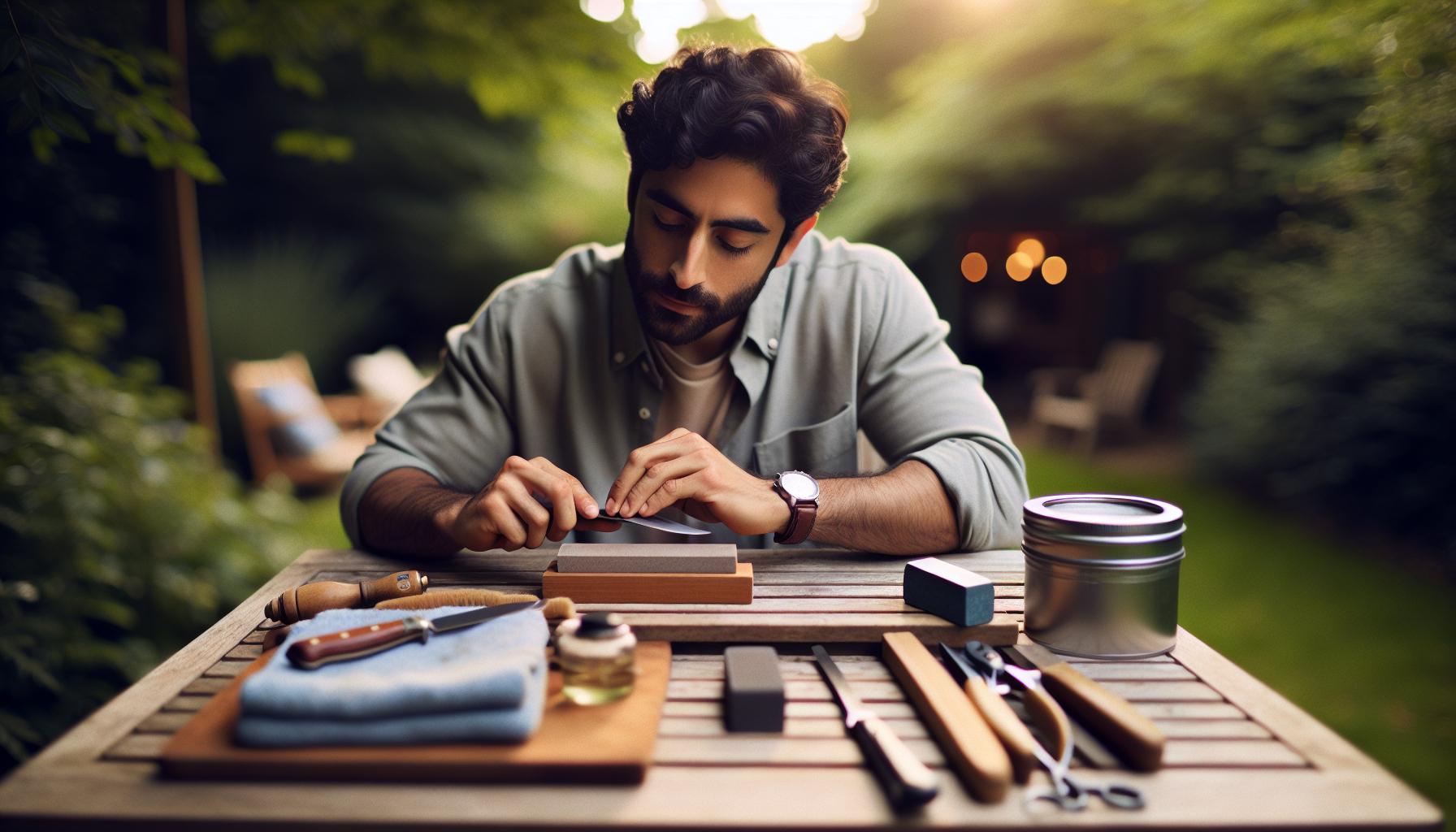
Step-by-Step Guide: How to Sharpen Your Pocket Knife
Sharpening your pocket knife doesn’t have to be a daunting task. In fact, with the right approach, you can master the technique in no time. Having a sharp knife makes all the difference in performance, whether you’re using it for daily tasks or on outdoor adventures. Here’s a straightforward guide to help you elevate your knife sharpening skills.
Gather Your Tools
Before you begin, ensure you have the necessary tools. Common sharpening tools include:
- Whetstone: Provides a traditional sharpening experience.
- Honing Rod: Essential for maintaining your knife’s edge.
- Pull-Through Sharpener: Quick and user-friendly for beginners.
- Electric Sharpener: Great for those who prefer convenience.
Choosing the right tool will depend on your comfort level and the specific sharpening needs of your knife.
Step-by-Step Sharpening Process
Once you’re equipped, follow these steps to sharpen your pocket knife:
- Prepare the Sharpening Surface: If using a whetstone, soak it in water for 10-15 minutes beforehand to create a slurry that aids in sharpening.
- Determine the Correct Angle: Hold the knife at a 20-degree angle relative to the sharpening surface. Maintaining this angle is critical for an effective edge.
- Start Sharpening: If using a whetstone, begin at the base of the blade. Apply light pressure and draw the knife towards you while moving it from heel to tip in a sweeping motion. Repeat this process for 5-10 passes.
- Switch Sides: After you’ve sharpened one side, flip the knife over and repeat the process. Ensure you use the same number of strokes for balance.
- Finishing Touches: If you have a finer grit stone, switch to it and repeat the process to refine the edge, ensuring it’s as sharp as possible.
Honing and Maintenance
After sharpening, it’s vital to maintain your knife. Use a honing rod regularly to realign the edge and prevent dulling. Simply hold the rod vertically and swipe the knife down the length of the rod at a consistent angle.
Sharpening your pocket knife is all about practice and patience. As you become more comfortable with the process, you’ll notice that you’re not only prolonging the life of your blade but also enhancing your overall tool management skills. A well-maintained knife is not just more efficient; it’s also safer to use, making these foundational skills essential for any knife enthusiast.
Common Mistakes to Avoid When Sharpening Knives
Many novice knife sharpeners underestimate the importance of technique, leading to common mistakes that can easily be avoided. Understanding these pitfalls can significantly enhance the sharpening experience and extend the life of your pocket knife. One frequent error is inconsistency in maintaining the sharpening angle. Holding the knife at the correct angle-typically around 20 degrees-is crucial for achieving a sharp edge. Deviating from this angle, whether it’s too steep or shallow, can result in an uneven blade or, worse, damage the knife entirely.
Another common mistake is applying too much pressure when sharpening. It’s a common misconception that more pressure equates to a sharper edge. However, this approach can actually lead to a dull edge or damage the knife’s material. Instead, light, consistent pressure is all that’s needed to grind away the dullness. Additionally, rush jobs can be tempting but ultimately counterproductive. Taking your time allows for a more careful approach, ensuring each stroke is effective while allowing the blade material to respond appropriately to the sharpening tool.
When switching sides during the sharpening process, many beginners neglect to balance their work. It’s essential to use the same number of strokes on both sides of the blade to maintain its symmetry. Overdoing one side can alter the knife’s performance and lead to uneven wear. Lastly, failing to clean the blade and sharpening tool after use can trap metal shavings and debris, which may cause scratches or dull the blade further.
By recognizing and avoiding these common mistakes, you can transform your knife sharpening technique from mediocre to exceptional. Dedication to proper methods not only yields a sharper knife but also fosters a deeper connection with your outdoor gear, ensuring it remains reliable for years to come. Remember, mastering your sharpening skills is as much about patience and practice as it is about the technical aspects.
Advanced Techniques: Honing and Polishing Your Knife’s Edge
Proper care of your pocket knife goes beyond just sharpening; honing and polishing are essential techniques that can significantly enhance the performance and longevity of your blade. Honing involves realigning the edge of the blade, while polishing helps remove any micro-serrations that may have developed during regular use. These processes, when performed correctly, ensure that your knife remains in peak condition for any outdoor or everyday carry tasks.
Honing is typically done with a honing rod or a fine ceramic stone. This technique does not remove material from the blade but rather realigns the edge to its optimal shape. To hone your knife effectively, hold the honing rod vertically and place the knife at a 15 to 20-degree angle against the rod. Draw the blade down its length, applying light pressure and keeping consistent angle and motion. Repeat this process on both sides of the blade, usually about five to ten times for each side, ensuring you maintain the same number of strokes for balance.
Polishing your knife’s edge is a more delicate procedure that can be done with leather strops or high-grit sharpening stones. This step removes finer imperfections left from the sharpening process and enhances the blade’s sharpness. When using a strop, apply a polishing compound to the leather, then hold the blade at the same angle you used for honing. Pull the knife backward along the strop, ensuring you do not push forward, which can dull the blade. This method is particularly important for high-quality steels, as it helps maintain the edge without removing too much material.
Regular honing and polishing can also significantly impact the effectiveness of your knife in the field. A well-maintained blade slices through materials with ease, making tasks like preparing food or performing intricate cuts more efficient. By investing time into these advanced techniques, not only do you extend the lifespan of your pocket knife, but you also enhance your overall knife skills, allowing for a deeper appreciation of the craftsmanship behind your tools.
Understanding Blade Material: Impact on Sharpening
Every pocket knife lover knows that the material of the blade plays a crucial role in how well the knife performs and how often it needs sharpening. For instance, stainless steel is popular for its resistance to corrosion and ease of maintenance, but it may not hold an edge as well as high-carbon steel. Conversely, high-carbon steel can take a sharper edge but requires more diligent care to prevent rusting. Understanding these differences is key to mastering your knife’s maintenance routine.
Different blade materials have varying benefits and drawbacks that impact not only performance but also the sharpening process. Generally, the harder the steel, the sharper the blade can be honed. However, harder blades can be more challenging to sharpen, requiring more specialized tools and techniques. For example, knifes made from SG2 or CPM S30V hold their edge for longer but can be tedious to sharpen if you don’t have the right equipment. Softer steels, like 420HC, are easier to sharpen but may dull faster during use.
When considering sharpening techniques, knowing your blade’s material helps tailor your approach. With high-carbon steels, frequent sharpening may be necessary due to their ability to wear down quicker, while stainless steels can go longer between sharpenings but might require consistent honing to keep the edge aligned. Understanding the blade’s specific requirements will save you time and effort in the long run.
In addition to sharpening frequency, the blade material can influence the choice of sharpening tools. Ceramic stones work wonders on harder steels, while softer materials might respond better to diamond plates. Adhering to the manufacturer’s recommendations will not only ease the sharpening process but also extend the lifespan of the blade. Regardless of the type of knife you own, being informed about blade materials can empower you to make smart decisions that enhance your knife’s performance and durability.
How to Maintain Your Knife Between Sharpening Sessions
Maintaining your pocket knife between sharpening sessions is essential for ensuring longevity and optimal performance. A well-cared-for knife not only functions better but also enhances your overall experience whether you’re using it for everyday tasks or outdoor adventures. One of the easiest yet often overlooked ways to keep your knife in top shape is through regular cleaning. After each use, it’s good practice to wipe down the blade with a soft cloth to remove any dirt, grime, or moisture. This helps prevent corrosion and keeps the blade free from debris that can hinder its sharpness.
Keeping your knife lubricated is another vital aspect of maintenance. Applying a few drops of lubricant to the pivot point and moving parts ensures smooth operation and can significantly extend the life of the locking mechanism, particularly in folding knives. For cleaning, consider using a solution specifically designed for knives, as it will effectively break down oils and residues without damaging the finish. If your knife has a handle made from natural materials like wood, be cautious about using harsh chemicals, as they can lead to drying or damage.
Regularly checking the blade’s edge and seeing how it performs can provide valuable insight into when it might need sharpening. Simple tests, such as slicing through paper or soft materials, can indicate if your knife is still adequately sharp. If you find yourself applying more pressure than usual, it may be time to sharpen. Always be mindful of the alignment; if you notice that the blade is misaligned or the lock mechanism isn’t working smoothly, minor adjustments or professional evaluation might be necessary.
Finally, storing your knife properly plays a crucial role in its maintenance. Use a designated sheath or case to protect the blade from accidental contact with other tools or surfaces that could dull its edge. Avoid leaving it in damp environments or exposed to extreme temperatures, as this can compromise both the blade and handle materials. Being diligent about these practices will help ensure your pocket knife remains in excellent condition, ready for every challenge you encounter.
Safety Tips for Sharpening Pocket Knives at Home
The art of sharpening pocket knives at home not only enhances your blade’s performance but also ensures your safety while doing so. Understanding how to handle your tools properly is essential, as improper techniques can lead to accidents or injuries. A critical first step is to always work in a well-lit area where you can easily see the blade’s edge and your hands. This reduces the risk of misjudging your movements, which can occur in dim lighting.
Before you start sharpening, make sure to use a stable surface. A non-slip mat can be very useful for preventing your sharpening tools from sliding around. As for your knife, hold it securely, ensuring your fingers are positioned far from the blade’s edge and that you have a firm grip on the handle. When using sharpening tools, such as stones or electric sharpeners, be attentive to follow the manufacturer’s instructions to avoid misuse or damage. Additionally, consider wearing cut-resistant gloves for added protection, particularly if you’re new to the sharpening process.
Storing and Handling Tools
Implement a safe storage routine for your sharpening tools. After use, clean them thoroughly to prevent build-up of metal shavings that can cause rust. Place them in a designated area away from where you store your knives to avoid accidental cuts. Understanding that a dull blade can be more dangerous than a sharp one is vital; a dull blade requires more force, increasing the chance of slipping. Always keep your knives well-sharpened to reduce the risk of accidents.
In summary, practicing safety while sharpening your pocket knives at home involves preparation, proper handling, and safe storage. Being mindful of your environment and respecting the tools you use will not only improve your sharpening skills but also keep you safe throughout the process. Remember to take your time and don’t rush; knife sharpening is as much an art as it is a skill.
Troubleshooting: Fixing Common Knife Sharpening Issues
It’s not uncommon for beginners to encounter challenges when sharpening their pocket knives, but with a bit of knowledge and patience, these issues can often be resolved easily. One of the most common problems is creating a dull or uneven edge. If you find that your knife is not cutting effectively after sharpening, it may be due to incorrect angles. A consistent angle is crucial when applying pressure on the blade against the sharpening surface. Ideally, maintain a 15 to 20-degree angle throughout the sharpening process. Using a guide can help, especially for novices who are still developing their technique.
Another frequent issue is the accumulation of metal shavings or debris that can interfere with the sharpening process. Always ensure that both the knife and the sharpening tool are clean before you start. A quick wipe with a cloth can remove any unwanted materials that might scratch the blade or affect the sharpening outcome. If you’re using a whetstone, make sure it’s properly lubricated with water or oil, as recommended, to prevent friction and damage to both the stone and the blade.
Over-sharpening is also a notable concern. If you find that your knife gets overly thin at the edge or blades start to chip, it’s a sign that you need to adjust your sharpening technique. Limit the number of passes you make on each side of the blade, and periodically check the edge for wear. Remember that maintaining a knife’s sharpness isn’t solely about grinding; honing can be just as effective at realigning the blade’s edge without excessive removal of material.
Finally, if after all your efforts the knife still feels dull or ineffective, it may warrant a professional sharpening service. This could provide your blade with a rejuvenation that home methods can sometimes fail to achieve, particularly with high-quality or specialty knives. Knowing when to seek professional help can save you time and preserve the integrity of your knife, especially for those cherished pocket models that might be irreplaceable.
Alternative Methods: Using Stones vs. Electric Sharpeners
Choosing between traditional stones and electric sharpeners can significantly influence your knife maintenance experience. Each method has its unique advantages and considerations, making your choice dependant on your skills, time, and the specific requirements of your pocket knife.
Using a whetstone offers an authentic approach, allowing for greater control over the sharpening angle and pressure. This method is deeply rooted in tradition and, when done correctly, can produce a superior edge. With a whetstone, you can achieve precise sharpening angles-typically between 15 to 20 degrees for pocket knives-giving you a sharpness that is often more customized and suitable for specific cutting tasks. Additionally, whetstones allow you to hone and refine the blade’s edge without removing too much material, which is crucial for maintaining the longevity of your knife. For those who enjoy the art of knife maintenance and want to truly engage in the process, using stones can be immensely satisfying. However, it does require some practice to master the technique, and maintaining a consistent angle can be a challenge for beginners.
On the other hand, electric sharpeners bring a level of convenience that can’t be overlooked. Ideal for those who prioritize efficiency and ease, electric sharpeners often feature built-in guides to help maintain the correct angle, making it easy for novices to achieve a sharp edge with minimal effort. These devices usually involve multiple stages, from grinding to honing, providing a thorough sharpening experience in a fraction of the time it takes with manual methods. While they might not give you the craftsmanship feel of using stones, electric sharpeners are perfect for quick touch-ups or for sharpening a variety of knife types, especially if you have multiple blades to maintain.
Ultimately, the choice between stones and electric sharpeners comes down to personal preference and the level of commitment you are willing to invest. If you like the idea of developing a skill that yields not only a sharp blade but also a sense of accomplishment, stones may be your best bet. Alternatively, if you lead a busy lifestyle or are looking for fast results, an electric sharpener is a practical solution. Regardless of the method you choose, ensure proper maintenance of your equipment to keep your pocket knife performing at its best.
When to Seek Professional Knife Sharpening Services
When your pocket knife starts to show signs of wear despite your best sharpening efforts, knowing when to seek professional help can save you time and frustration. Often, DIY sharpening tools like whetstones and electric sharpeners can only achieve so much; some knives require the expert touch of a professional. If you notice that your knife is taking on an unusually dull edge or has developed nicks and chips, this is a strong indication that it may be time for a pro. Professionals have the right equipment and expertise to restore a knife’s edge to its original sharpness, addressing issues that could be beyond your own skills or tools.
Additionally, consider the material and design of your knife. Fancy pocket knives with intricate blade geometries, like an S30V steel blade, may need specialized skills to sharpen effectively. If you own a rare or expensive knife, seeking professional services can help maintain its value and performance. Professionals understand the delicate balance of edge retention and sharpness that is essential for different types of knives, ensuring that the right approach is taken based on blade material and usage.
Furthermore, if you’re preparing for an important event, hiking trip, or outdoor adventure and don’t have the time to sharpen your knife properly, professional sharpening services can provide a quick turnaround. This is particularly useful if you’re strapped for time but still need a reliable tool. A well-timed trip to your local knife shop can mean the difference between struggling with a dull blade and slicing through tasks with precision.
In summary, while honing your own knife sharpening skills is valuable, there are moments when a professional touch is beneficial. Recognize the signs of a blade that needs more than just a home-grown approach, and don’t hesitate to invest in getting your pocket knife into the hands of an experienced sharper. This proactive approach not only enhances your knife’s performance but also prolongs its lifespan, allowing you to enjoy your favorite everyday carry tool to the fullest.
Frequently Asked Questions
Q: How can I tell if my pocket knife needs sharpening?
A: You can tell your pocket knife needs sharpening if it struggles to cut through materials it typically handles with ease, or if you notice damage to the blade’s edge like nicks. For an effective check, try slicing through paper; if it tears rather than cuts smoothly, it’s time to sharpen.
Q: What is the best angle to sharpen my pocket knife?
A: The best angle to sharpen a pocket knife typically ranges from 15 to 20 degrees per side, depending on the knife type. A 15-degree angle offers a sharper edge ideal for detailed tasks, while a 20-degree angle provides durability for more rugged use.
Q: Can I use a sharpening stone on a serrated knife?
A: Yes, you can use a sharpening stone on a serrated knife but with a different approach. Focus on sharpening the beveled edge of the serration while avoiding the flat side. Use a narrow stone or a round rod to reach the inner curves of the serrations.
Q: What are some signs that I’m sharpening my knife incorrectly?
A: Signs that you’re sharpening incorrectly include uneven edges, visible damage to the blade, or a blurry edge instead of a sharp one. If the knife is still dull after sharpening, review your technique and ensure you maintain the proper angle and pressure.
Q: How often should I sharpen my pocket knife?
A: You should sharpen your pocket knife whenever it feels dull, which can vary based on use. Regular maintenance every few months is ideal for outdoor or heavy use, while light users might need to sharpen only once or twice a year.
Q: Is it safe to sharpen my pocket knife at home?
A: Yes, sharpening your pocket knife at home is safe if you follow proper techniques and use the right tools. Always prioritize safety by ensuring your hands are secure and your workspace is clear. Wearing cut-resistant gloves is also a wise precaution.
Q: What is the difference between honing and sharpening a knife?
A: Honing realigns the edge of a blade without removing material, making it ideal for light touch-ups. Sharpening, however, involves removing material to create a new edge and is necessary when a knife is significantly dull. Use honing for maintenance between sharpenings.
Q: Can I use household items to sharpen my pocket knife?
A: Yes, you can creatively use household items like a ceramic mug’s unglazed bottom or a leather belt for honing your knife’s edge. However, these methods are best for minor touch-ups; for serious sharpening, consider using appropriate tools for better results.
Final Thoughts
Now that you have the essential techniques to sharpen your pocket knife, you’re well on your way to mastering your outdoor gear and ensuring your tools remain effective. Remember, sharpening is not just about maintaining the edge; it’s about enhancing your efficiency and safety in every cutting task. Don’t wait-grab those sharpening stones and start honing your skills today!
If you’re interested in learning more about choosing the right pocket knife or want tips on other everyday carry items, check out our comprehensive guides on Swiss Army knives and karambits. To stay updated with the latest in knife maintenance and outdoor gear basics, subscribe to our newsletter-your ultimate resource for all things related to outdoor preparedness! Share your experiences or questions in the comments below; we love hearing from you! Together, let’s make sure you’re fully equipped for your next adventure.