The Swiss Army knife is a remarkable tool known for its versatility, but many potential owners in the UK often wonder about its legal status. Understanding whether you can carry a Swiss Army knife without running afoul of the law is not just a matter of compliance-it’s vital for your peace of mind and safety. With numerous outdoor enthusiasts and urban adventurers considering adding this iconic knife to their toolkit, clarifying the legal nuances surrounding its use is crucial. This guide will break down the current legislation, helping you navigate the complexities and ensuring that your intended use of the Swiss Army knife aligns with UK law. Read on to empower yourself with the knowledge you need to make informed decisions about your everyday carry gear.
Understanding the Legal Status of Swiss Army Knives in the UK
Owning a Swiss Army Knife in the UK can be both practical and versatile, but it’s essential to understand the legal framework surrounding these popular multi-tools. The UK law on knives is often seen as strict, and the classification of a Swiss Army Knife can lead to confusion. While many people view them as harmless, everyday carrying tools, certain features can render them illegal under various circumstances. In general, a Swiss Army Knife with a blade that is not fixed and is under 3 inches is typically permissible to carry in public without a specific reason, provided it is not intended for use as an offensive weapon.
However, the legal status of a Swiss Army Knife hinges on several factors, including its design and purpose. Knives that include features such as easily concealable or assisted-opening mechanisms, or those that are designed for combat, may fall under stricter regulations. To be compliant with UK law, it’s crucial to familiarize yourself with the concept of a “work tool” versus a weapon. A Swiss Army Knife is more likely to be viewed favorably by law enforcement if it’s carried in a context that clearly relates to work or outdoor activities, such as camping, fishing, or hiking.
Key Considerations for Responsible Ownership
When considering owning or carrying a Swiss Army Knife, take into account the following points:
- Blade Length: Ensure that the blade length is compliant with UK regulations, generally under 3 inches.
- Intended Use: Carry the knife for a legitimate reason, such as work or a specific hobby.
- Awareness: Be ready to explain your reason for carrying the knife, as law enforcement may ask.
- Storage: When not in use, store the knife safely and securely, preferably in a dedicated case.
Understanding these aspects can permit you to enjoy the utility of a Swiss Army Knife while remaining within the bounds of the law. Always stay updated on local regulations, as laws can change, and interpretations may vary between different authorities. Ultimately, responsible use and awareness can help ensure that your Swiss Army Knife remains a useful companion rather than a legal dilemma.
Types of Swiss Army Knives: Legal Considerations
Understanding the nuances of legal classifications surrounding Swiss Army Knives can greatly inform your purchasing and carrying decisions. These multi-functional tools come in various types, each with specific features that may influence their legal status in the UK. The most common variants of Swiss Army Knives include those with basic blade and tool combinations, models with additional features like locking mechanisms, and specialized versions designed for outdoor or survival situations.
In the UK, the law primarily distinguishes between knives based on their blade type, length, and the presence of certain features. A standard Swiss Army Knife, typically equipped with blades under 3 inches and without assisted-opening or concealed blades, is generally permitted for everyday carry. However, models that include features like serrated blades or locking mechanisms may draw additional scrutiny. This is particularly relevant when considering that knives designed for combat or those marketed as tactical tools can easily be classified as weapons under UK law.
When assessing what type of Swiss Army Knife to carry, consider the following legal aspects:
- Blade Length: Ensure the blade length is compliant, generally under 3 inches for public carry.
- Mechanism: Avoid knives with assisted-opening features or those that rapidly deploy-these may be classified differently under the law.
- Design Intention: Opt for models clearly intended for practical tasks, such as camping or repairs, rather than those that may suggest a combat purpose.
- Material and Structure: A Swiss Army Knife made primarily for utilitarian use is more likely to be viewed favorably than one designed with combat attributes.
Ultimately, knowing the specific type of Swiss Army Knife you own and its intended use can help ensure compliance with UK regulations. By understanding these nuances, you can confidently choose and carry your knife while minimizing potential legal issues, allowing you to enjoy the practicality these tools offer without concern.
What Makes a Knife Illegal in the UK?
In the landscape of UK law, the line demarcating legal and illegal knives is heavily influenced by a knife’s design, intended use, and features. Understanding what could classify a Swiss Army knife, or any knife, as illegal is crucial for responsible ownership and carry. The primary factors that lead to a knife being deemed illegal include blade length, type, and specific features that could be interpreted as making the knife a weapon rather than a tool.
The first significant legal concern is the blade length. In the UK, any knife with a blade longer than 3 inches cannot be carried in public without a valid reason. Swiss Army knives often come with various tools, but if the blade stretches too long, it can quickly fall afoul of the law. Additionally, certain blade types, such as those categorized as fixed blades or having serrated edges, may draw additional scrutiny, placing them in the category of weapons, especially if they are perceived to be designed for combat or aggressive use.
Furthermore, the mechanism of the knife plays a pivotal role. Knives that feature assisted opening systems or locking mechanisms can also be deemed illegal under the Offensive Weapons Act, particularly if they can be opened with one hand. This is an important distinction as it shifts the perception from a practical tool to a weapon. For instance, a multi-tool with a spring-assisted mechanism could be classified differently compared to a more straightforward manual blade mechanism.
To help navigate these legal pitfalls, consider the following points:
- Blade Length: Stick to blades under 3 inches for public carry.
- Type of Blade: Avoid knives with serrated or fixed blades.
- Mechanism: Choose manual-opening mechanisms rather than assisted ones.
- Intended Use: Make sure your knife’s purpose is clearly non-combative, such as for camping or everyday tasks.
Understanding these nuanced details can empower users to select and possess their Swiss Army knives responsibly within the bounds of the law, ensuring they remain practical tools rather than potential weapons in the eyes of UK legislation.
Key UK Laws on Knives and Bladed Tools
Navigating the laws surrounding knives in the UK can feel overwhelming, especially for those who wish to carry tools like Swiss Army knives. The UK has strict regulations in place to prevent the misuse of bladed weapons, which means understanding specific legislation is essential for responsible ownership. Key pieces of legislation, such as the Criminal Justice Act 1988 and the Offensive Weapons Act 2019, outline what constitutes legal and illegal knife ownership and carry guidelines.
According to UK law, a person cannot carry a knife in public without a “reasonable excuse.” This means that if you’re taking your Swiss Army knife for a specific purpose-like camping or DIY tasks-you may have a valid reason. However, mere possession in public places such as parks, streets, or transport can lead to police scrutiny. It’s important to note that knives with blades longer than 3 inches cannot be carried unless you can justify your need, which increasingly requires a well-documented explanation.
The blade type and mechanism are also crucial in determining legality. Fixed blades, which do not fold and are generally considered more dangerous, are illegal to carry in public without special permission. Additionally, any Swiss Army knife that features a locking mechanism is subject to further legal constraints. Knives that assist with one-handed opening, such as those equipped with springs, are classified under different provisions and may be deemed illegal under the Offensive Weapons Act.
For those planning to carry a Swiss Army knife, ensure it complies with the following criteria:
- Blade Length: Keep the blade measurements under 3 inches.
- Blade Type: Opt for folding or non-locking blades, avoiding fixed blades entirely.
- Functionality: Choose tools that emphasize utility for everyday tasks, steering clear of any designs that might be interpreted as aggressive or combat-ready.
By adhering to these guidelines, you can enjoy the practical benefits of your Swiss Army knife while remaining compliant with UK laws, ensuring both your safety and that of those around you.
Where to Legally Carry a Swiss Army Knife
Carrying a Swiss Army knife legally in public settings can often feel like navigating a complex maze of regulations, but knowing where it’s permissible can simplify matters significantly. The key is understanding the boundaries of public and private spaces. Public areas such as streets, parks, and transportation systems impose stringent rules on knife carrying, largely intended to ensure safety. Conversely, private properties often have their own regulations, many of which may allow for more leniency.
When you intend to carry your Swiss Army knife, it’s safest to limit its use to environments where you have a clear justification for carrying it. For instance, if you’re heading out for a camping trip, storing the knife in your camping gear rather than on your person is wise. High-traffic areas, including sports venues, concert halls, and shopping centers, are typically less forgiving, and you should avoid bringing your knife entirely. While traveling, it may be more acceptable to keep the knife in your luggage when flying or on public transport, as long as it’s not easily accessible during the journey.
Another vital aspect to ensure compliance is the context in which you use the knife. Carrying it in a manner where it is visible-like clipped to your belt or pocket-can attract unwanted attention and police scrutiny. Instead, consider securing it in a backpack or tool bag. This approach not only helps avoid potential issues but also emphasizes that your intent is practical and utilitarian rather than aggressive.
In summary, while it is possible to carry a Swiss Army knife legally, being mindful about where and how you do so is crucial. Adopting a thoughtful approach-considering both your environment and the visibility of the knife-will help you enjoy the versatility of this classic tool while maintaining adherence to UK laws.
Defining a “Reasonable Excuse” for Carrying Knives
Carrying a Swiss Army knife in the UK can lead to legal complexities, especially when it comes to justifying its presence in your day-to-day routine. In many situations, there are legitimate reasons to carry a knife; however, what constitutes a “reasonable excuse” can vary widely and often hinges on the context in which you’re using it. For instance, if you’re engaged in activities like camping, hiking, or other outdoor pursuits, having a Swiss Army knife readily available is typically seen as justified. Outdoor enthusiasts often rely on these versatile tools for tasks like food preparation, gear maintenance, or completing unexpected repairs.
On the other hand, carrying a Swiss Army knife in urban settings-such as when commuting to work or attending social events-requires more careful consideration. A reasonable excuse in those scenarios may not be as clear-cut, particularly if the knife is easily accessible. Therefore, displaying intent is crucial. Keeping the knife in a tool bag rather than in your pocket or clipped visibly to your belt can help telegraph your intentions as utilitarian rather than provocative. Moreover, it’s wise to be prepared with a valid reason for having the knife-like announcing that you’re heading to a picnic or completing a project-that aligns with its practical use.
It’s important to remain aware of the guidelines surrounding reasonable excuses as they are evaluated on a case-by-case basis. Factors such as the knife’s features, the specific location where you’re carrying it, and the activity you’re engaged in all play a role. Ultimately, the best practice is to ensure that your intent is clear and your use is responsible, aligning with both the letter and the spirit of UK knife laws. This mindset not only keeps you compliant but also reflects a respectful attitude towards the community and its concerns about safety.
Applying for Knife Exemptions: What You Need to Know
Carrying a Swiss Army knife can be a practical addition to your everyday carry items, but understanding how to apply for exemptions is vital for compliance with UK laws. While UK law generally prohibits the carrying of knives in public without an adequate reason, exemptions can be sought depending on circumstances. This often applies to particular activities or professions where the use of a knife is necessary.
To apply for a knife exemption, it’s important to clarify your situation. You’ll need to gather documentation that justifies your need for carrying a knife. For instance, if you work in a trade where cutting tools are essential, such as landscaping or construction, having letters from your employer can bolster your case. Similarly, if you’re involved in outdoor activities, providing evidence of planned trips or a schedule of events can support your request.
When preparing your application, be thorough. Clearly state why the Swiss Army knife is necessary for your activities. Make mention of the specific tools within the knife that are essential for your purposes and how you intend to use them legally. It’s equally important to demonstrate how you will carry the knife responsibly, such as keeping it in a bag rather than on your person, which aligns with the spirit of having a “reasonable excuse.”
Finally, always be aware of the legal framework surrounding knife carrying. Familiarize yourself with local laws and regulations, as they can vary. Engaging with community forums or seeking advice from legal experts can provide additional insights into navigating exemptions effectively. By preparing adequately and demonstrating a clear need, you can enhance your chances of successfully applying for a knife exemption while promoting safety and compliance.
Safety Tips for Carrying a Swiss Army Knife
Carrying a Swiss Army Knife can be a handy addition to your everyday carry, but doing so comes with certain responsibilities and safety considerations. Whether you’re an outdoor enthusiast, a handyman, or just someone who appreciates practical tools, understanding how to handle your Swiss Army Knife safely can enhance both your experience and your compliance with the law.
Firstly, always ensure that your knife is suitable for the situation. While most Swiss Army Knives are multi-functional, some of their blades and tools may be seen as offensive in specific contexts. It’s vital to be aware of the specific laws regarding knife carrying in your area, as even harmless tools can attract attention if misused or brandished improperly. For example, engaging in activities such as barbecuing or camping where a knife is necessary is generally perceived as a reasonable excuse, but carrying one without justification in a public area may lead to problems with law enforcement.
Storing and Transporting your Swiss Army Knife is another essential safety tip. When not in use, keep it securely in a bag or a designated compartment rather than on your person. This not only minimizes the risk of accidental injury but also aligns with legal expectations surrounding “reasonable excuse.” When traveling, be particularly cautious as regulations may vary greatly from one location to another. Always check local laws to understand whether a swiss army knife is allowed in public transport, airports, or buildings.
Lastly, maintaining a mindset of responsible use is crucial. This means only using the knife for its intended purposes and employing it in safe environments. For example, if you’re using the scissors to open a package, do so in a controlled manner, away from your body and others. Additionally, consider how you present your knife in public. If others perceive a knife as a threat, it could result in unwanted confrontations. Being mindful of your surroundings and the ways others may react is a part of responsible tool ownership.
By following these guidelines and adopting a safety-first approach, you can enjoy the benefits of your Swiss Army Knife while respectfully adhering to the laws and expectations of your community.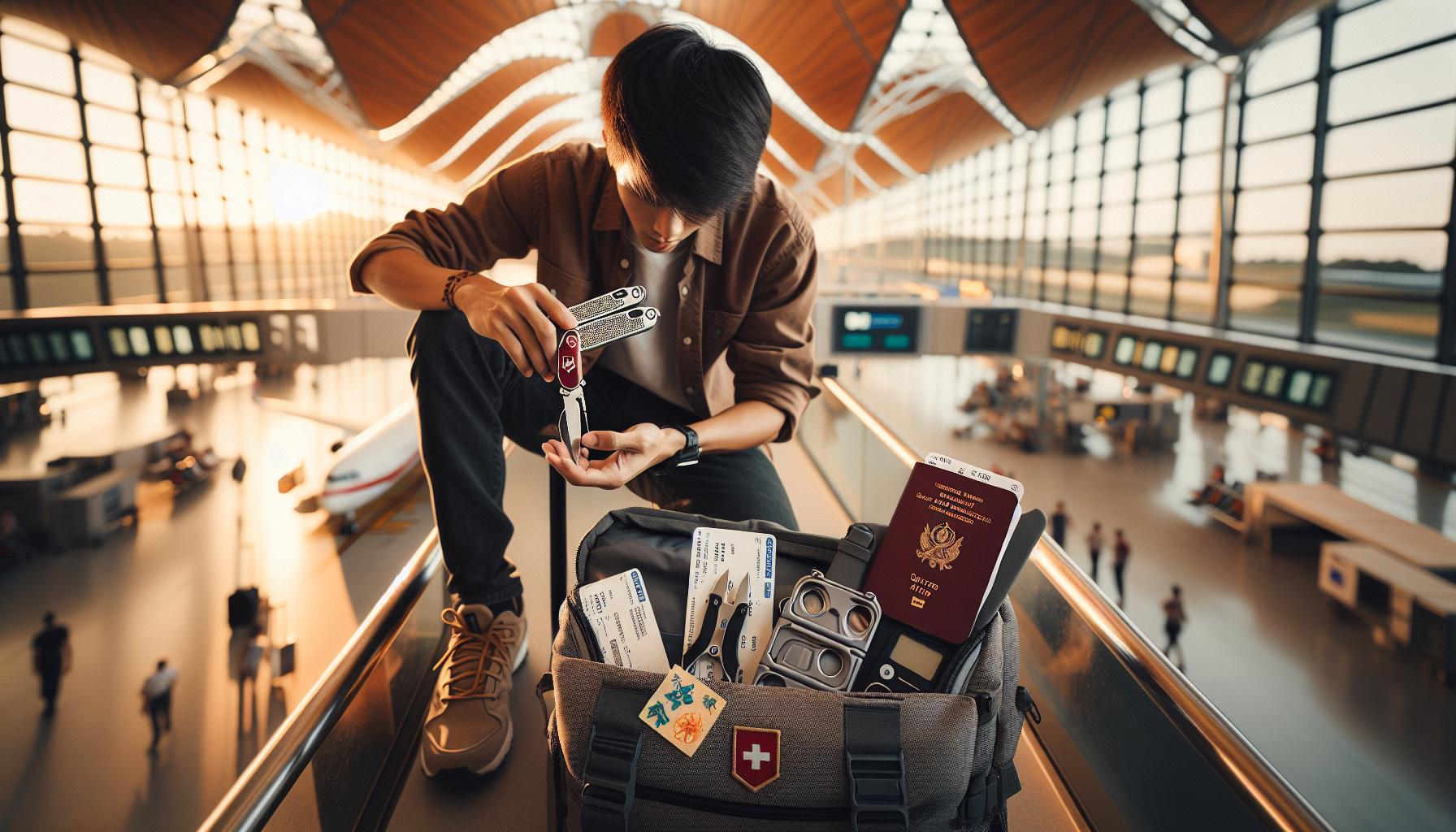
Traveling with a Swiss Army Knife: What to Consider
Carrying a Swiss Army Knife while traveling can be both practical and necessary, but understanding the specific regulations and nuances surrounding its legality is essential. Different modes of transport and locations have varying rules that you must familiarize yourself with to avoid legal complications. Remember, while these versatile tools can serve many genuine purposes, careless actions or misunderstandings can swiftly transform a handy companion into a potential liability.
When traveling within the UK, one of the first considerations is the context in which you carry your Swiss Army Knife. It is legal to own and carry certain types of knives, but the law mandates a “reasonable excuse” for possessing a knife outside your home. Activities like camping or hiking may justify carrying such a tool, whereas simply carrying it for convenience in urban settings may not suffice. It’s vital to be aware of local customs and law enforcement attitudes towards knife carrying. Some areas may have stricter interpretations, and being cautious helps in avoiding unwanted confrontations.
Airport and Public Transport Regulations
Traveling by air or using public transportation adds another layer of complexity. Most airlines prohibit carrying knives in hand luggage, including Swiss Army Knives, due to security regulations. Always check with your airline’s guidelines before packing your knife, and plan to store it safely in checked luggage if traveling by air. For public transport systems, rules may vary by region, but many major UK cities generally adhere to strict guidelines against carrying bladed instruments openly. Keeping your knife out of sight, safely stored in your bag, increases your chances of complying with these regulations.
In addition to understanding where a Swiss Army Knife can be carried, consider how to transport it. Use a sturdy case or pouch designed for blade protection. This not only makes your tool safer for you and those around you but also helps present it in a less provocative manner. Be mindful of your surroundings when unrolling or accessing your knife. Maintaining a low profile while being respectful of private spaces-like shops or restaurants-demonstrates responsible ownership and reduces the chance of escalating tensions.
In summary, traveling with a Swiss Army Knife requires careful consideration of laws and situational context. Always educate yourself on local regulations and respect the environments in which you find yourself. By taking these precautions, you can confidently enjoy the utility of your Swiss Army Knife while navigating the complexities of legal compliance.
Maintaining Your Swiss Army Knife Within the Law
When it comes to keeping your Swiss Army Knife compliant with UK law, understanding the nuances of ownership and use is crucial. Many people appreciate the versatility and practicality of these multi-tools, but being informed about their legal status prevents unintentional breakage of laws that can lead to serious consequences. One of the best practices is familiarizing yourself with the type of knife you own and its specific features, as this influences legality.
First and foremost, it’s essential to know that while owning a Swiss Army Knife is generally legal, the specific characteristics of the knife can dictate its usability in public spaces. Knives with blades that exceed three inches or those that are designed to be easily opened with one hand-often referred to as ‘flick knives’-are strictly prohibited. Thus, choosing models that adhere to these restrictions helps you stay within the boundaries of the law. Always check the manufacturer’s specifications and confirm that your knife meets legal dimensions before carrying it outside your home.
Transporting Your Knife Safely
A vital aspect of maintaining legal compliance is how you transport your Swiss Army Knife. Carrying the knife in a secure case when not in use helps convey that you’re a responsible owner. Keeping it out of sight during transit can mitigate encounters with law enforcement. Whenever possible, place your knife in a locked compartment of your bag or a similar location to prevent it from being easily accessible. Additionally, if you plan to use your knife in a setting such as a picnic or camping trip, transport it directly to that site instead of keeping it on your person during casual outings.
Understanding what constitutes a ‘reasonable excuse’ for carrying a knife also plays into legality. Activities such as hiking, camping, or participating in outdoor events are generally accepted as valid reasons for knife carry. However, if you’re in an urban area without a specific purpose, you may find your reasoning scrutinized. Always be prepared to explain the necessity of having your knife and its intended use. Educating yourself about local regulations, as they can vary by region, further equips you to navigate legal complexities.
Proper care not only maintains your Swiss Army Knife but also serves as an integral part of responsible ownership. Regular cleaning and maintenance ensure your tool remains functional and safe. This includes ensuring that blades lock securely and that there are no defects that could accidentally injure you or others. A well-maintained knife is not just a tool; it’s a demonstration of your commitment to safe and respectful use, reflecting positively on you as its owner. By following these guidelines, you can confidently wield your Swiss Army Knife while adhering to the legal framework in the UK.
Responsible Use: Balancing Utility and Legal Compliance
Using a Swiss Army Knife is not just about the practical versatility it offers-it’s also about understanding the delicate balance between utility and the legal implications of carrying such a tool in the UK. Swiss Army Knives boast multiple features that make them ideal for various tasks, from camping to everyday tasks, but the moment you step outside your home, the legal landscape comes into play. Knowing how to responsibly use and carry these knives ensures that you remain compliant with the law while enjoying their benefits.
One crucial aspect of responsible usage is recognizing and adhering to the specific legal restrictions surrounding the types of knives permitted in the UK. For instance, the legal limit for blade length stands at three inches, and knives that can be opened with one hand (such as ‘flick knives’) are altogether prohibited. Selecting a Swiss Army Knife that fits these legal parameters not only keeps you within the law but also reinforces your role as a responsible owner. Checking for features like locking mechanisms can also enhance your safety and the knife’s legal status.
When it comes to everyday carry, understanding the circumstances under which you can carry your knife is paramount. Activities such as hiking or engaging in outdoor sports generally provide a clear rationale for carrying a Swiss Army Knife. However, urban environments may present a grey area, particularly if you cannot articulate a specific need for having the knife on hand. It’s wise to maintain awareness of your surroundings and potential encounters with law enforcement. For instance, should you be stopped, having a plausible explanation readily available-like mentioning a planned picnic or camping trip-can prove invaluable.
In addition to knowing the legalities, practicing safe transport methods reinforces your commitment to responsible knife ownership. Consider using a protective sheath or keeping the knife in a secure pocket of your bag when not in active use. This not only helps prevent accidental injuries but also reduces suspicion if you’re stopped by law enforcement. Engaging in regular maintenance, such as cleaning the knife and ensuring all mechanisms work smoothly, reveals a dedication to safe use, strengthening your position as a responsible knife owner.
Ultimately, responsible use is about respecting both the tool and the regulations that govern it. By equipping yourself with knowledge and exercising caution, you can enjoy the myriad functions of your Swiss Army Knife while confidently navigating the legal intricacies in the UK. This balance allows you to utilize your knife effectively, ensuring that it serves as a handy companion in your daily adventures without posing legal risks.
Comparing Swiss Army Knives with Other Tools: Legal Insights
Although many tools can be used in similar ways, understanding the legal distinctions among them is crucial for responsible ownership, particularly when it comes to knives. Swiss Army Knives, with their multifunctional capabilities, often present a favorable option for outdoor enthusiasts and everyday carry advocates. However, unlike other tools, such as multi-tools or regular pocket knives, Swiss Army Knives fall into a specific legal category in the UK that warrants closer inspection.
While Swiss Army Knives are praised for their versatility, other bladed tools often have different legal standings. For instance, a multi-tool that lacks a locking mechanism and features blades shorter than three inches generally adheres to UK regulations, making it a safer choice for everyday carry. In contrast, one-handed opening knives-defined as any knife that can be opened with the flick of a wrist-are prohibited. A classic Swiss Army Knife, when adhering to the legal blade length and mechanism requirements, can offer similar functionality without falling afoul of the law.
When considering tools like karambits or tactical folding knives, the legal landscape can shift dramatically. These tools are typically designed for combat or self-defense, making them legally contentious. In contrast, a Swiss Army Knife, designed primarily for utility, remains more acceptable in public settings, provided there is a reasonable excuse for its presence. On the other hand, if you were to carry a karambit, justifying its presence becomes more complex and can lead to legal issues, especially in an urban environment.
Ultimately, balancing the need for a versatile tool with the demands of legal compliance underscores the importance of informed tool selection. Knowing the specific capabilities and restrictions associated with Swiss Army Knives compared to other tools can be pivotal in ensuring both utility and adherence to the law. Whether you’re an outdoor enthusiast or a city dweller, understanding these distinctions empowers you to make responsible choices regarding your bladed tools, ensuring they enhance rather than complicate your experiences.
Frequently Asked Questions
Q: Are Swiss Army Knives considered a weapon in the UK?
A: Swiss Army Knives can be considered weapons if they meet certain criteria, such as having a blade longer than three inches or being used as a weapon. Generally, they are legal if used for practical purposes, but context matters. Refer to the section on what makes a knife illegal for more details.
Q: What types of Swiss Army Knives are legal to carry in the UK?
A: Knives with blades shorter than three inches and that are not classified as locking knives are generally legal to carry. Always ensure they are kept safely and are for legitimate use, as noted in our guide on legal consideration.
Q: Can you carry a Swiss Army Knife in your car in the UK?
A: Yes, you can carry a Swiss Army Knife in your car, provided it’s not being used or prepared for use as a weapon. It’s advisable to store it properly to avoid any implications. Check the section on where to legally carry a Swiss Army Knife for comprehensive guidelines.
Q: When is it illegal to carry a Swiss Army Knife in the UK?
A: It is illegal to carry a Swiss Army Knife in public without a valid reason or if the blade is over three inches. Law enforcement may interpret “reasonable excuse” strictly, so be aware of circumstances under which you are carrying the knife.
Q: What are the consequences of carrying an illegal Swiss Army Knife in the UK?
A: Carrying an illegal Swiss Army Knife can lead to arrest, fines, and a potential criminal record. It’s crucial to understand key UK laws on knives to avoid such consequences. Our article addresses this in more detail.
Q: Do I need a permit to own a Swiss Army Knife in the UK?
A: No permit is required for owning a Swiss Army Knife in the UK as long as it complies with local laws regarding blade size and functionality. Familiarize yourself with the law breakdown for further insights.
Q: Can I travel with a Swiss Army Knife in the UK?
A: Traveling with a Swiss Army Knife is generally acceptable, but specific rules apply if traveling by air. Always check airline regulations and keep the knife securely stored. Consult our section on traveling with a Swiss Army Knife for more information.
Q: What should I do if stopped by police while carrying a Swiss Army Knife?
A: Always remain calm and be honest. Explain your reason for carrying it and ensure it’s for legitimate use. Familiarize yourself with the section on defining a “reasonable excuse” to prepare for such interactions properly.
In Retrospect
In conclusion, understanding the legality of Swiss Army knives in the UK is crucial for responsible ownership and use. With the right knowledge, you can confidently carry your multi-tool where permitted, ensuring you’re following the law while enjoying its countless benefits. If you have any questions left or want to explore related topics, don’t hesitate to check out our comprehensive guide on the legalities of pocket knives or our maintenance tips for outdoor gear.
Ready to dive deeper? Explore our extensive resources on gear selection and safety tips for everyday carry, all designed to empower your toolkit choices. Join our community by signing up for our newsletter for ongoing insights and updates. Remember, knowledge is your best tool-equip yourself wisely!