Drawing a pocket knife can be both a rewarding and essential skill for artists and outdoor enthusiasts alike. Did you know that understanding the intricacies of this everyday tool not only enhances your drawing abilities but also deepens your appreciation for its design? Whether you’re aiming to illustrate a tactical gear concept or simply wish to capture the elegance of a Swiss Army knife, mastering this technique is crucial. This guide will walk you through practical tactical drawing techniques, helping you create realistic representations that reflect the craftsmanship of various knives. By the end, you’ll gain confidence in your skills while discovering tips that can elevate your artwork and enrich your understanding of this versatile tool. So, grab your pencils and dive into the fascinating world of pocket knife illustration!
Understanding the Anatomy of a Pocket Knife
To truly appreciate the art of drawing a pocket knife, one must first understand its anatomy. Pocket knives are more than mere blades; they are intricate tools, each part serving a distinct purpose. At the core of a pocket knife lies the blade, which comes in various shapes, including drop point, tanto, and spear point, each designed for specific tasks. The blade’s length and material-often stainless steel or carbon steel-affect its performance and durability.
The handle of the knife not only provides a grip but also reflects the knife’s style and usability. Materials like nylon, aluminum, or wood contribute to the overall aesthetic and functionality. A good handle features texturing or contouring for enhanced grip, ensuring that it feels comfortable and secure in hand, particularly in tactical situations.
Additionally, a pivot point allows the blade to rotate smoothly within the handle, serving as the fulcrum for opening and closing mechanisms, which can vary from traditional slip joints to modern spring-assisted designs. Other crucial components include the liner lock or frame lock, which secure the blade in place when deployed, and scales, which are the outer covers that protect the internal mechanisms while adding to the knife’s visual appeal.
Understanding these components not only informs your drawing technique but also elevates your artistic representation of the knife. When sketching, take the time to highlight these features, emphasizing the contrast between the blade and handle materials, the blade’s sharp edge, and the functional elements such as screws or logos. This level of detail will help bring your illustrations to life, accurately reflecting the functionality and craftsmanship of pocket knives.
Essential Tools for Tactical Drawing
Drawing pocket knives with tactical precision requires not only keen observation but also the right set of tools. A well-equipped artist can better capture the unique characteristics and functionalities of these versatile tools, elevating their sketches from ordinary to extraordinary. Here’s a breakdown of essential tools that can enhance your tactical drawing experience and ensure your illustrations not only look good but also convey the intricacies of pocket knives.
First and foremost, a good set of drawing pencils is crucial. Varying hardness grades-from 2H for fine lines to 6B for deep shading-allow you to create detailed contours and rich textures. Complementing pencils with a quality sketchbook ensures that your drawings remain crisp and free from smudges. Opt for recycled paper that can withstand various mediums and allows for smooth sketching.
Another indispensable tool is the fine-tipped mechanical pencil, which offers precision for capturing the minute details of a pocket knife, such as the screws, textures, and logos. For enhancing your sketches further, blending stumps or tortillons can smooth out your lines and create realistic shading effects. These tools help to add depth and dimension, essential for illustrating the curvature of blades and the ergonomic design of handles.
For those looking to convey color and vibrancy, having a selection of colored pencils or markers won’t go amiss. These tools can be used to depict various materials-metallic hues for blades, vibrant colors for handles, and subtle gradients for shading. Coupled with a quality set of erasers, you can refine your work continuously, ensuring that any mistakes are easily corrected while also offering opportunities to enhance the highlights in your drawings.
To wrap it up, having the right mix of precision tools, quality surfaces, and artistic accessories empowers both beginner and seasoned artists to draw pocket knives with authenticity. Whether you’re practicing on a sketchpad or working toward more polished pieces, these essential tools will support your journey in mastering tactical drawing techniques. A well-equipped artist can not only improve their drawing skills but also deepen their appreciation for the craftsmanship behind pocket knives.
Step-by-Step Guide to Sketching Pocket Knives
Sketching a pocket knife can be an exciting endeavor, especially when you consider all the intricate details and functionalities these tools possess. Whether you’re an aspiring artist or a seasoned sketcher looking to refine your skills, a clear, methodical approach can help elevate your drawings from basic outlines to lifelike renditions. Here’s a step-by-step guide designed to assist you in capturing the essence of pocket knives effectively.
To begin, select a reference pocket knife that intrigues you. Observe its unique features, such as the blade shape, handle design, and mechanism. Take a moment to understand its proportions and how all the parts relate to each other. Start with light pencil lines to outline the basic shape of the knife; focus on creating a rough sketch that includes the contours of the blade, the handle, and any prominent details like screws or logos.
Defining Shapes and Details
Once you have the basic outline, it’s time to define the major shapes more crisply. Use slightly darker lines to enhance the edges of the blade and handle. At this stage, incorporate specific details, ensuring everything is proportionate-reference the original knife closely for accuracy. Pay particular attention as you add elements like the thumb stud or pivot point, which are crucial for understanding how the knife functions. Use a fine-tipped mechanical pencil for this stage, as this will allow you to capture minute details effectively.
Shading and Texturing
Next, focus on adding dimension to your drawing through shading. Identify where light falls on the knife and where shadows form, especially around the contours of the blade and handle. Blend your shades using blending stumps or a soft tissue paper to achieve smoother transitions between light and dark areas. This provides depth and realism that can make your sketch truly lifelike. Experiment with varying pencil pressures to create a range of tones that can depict different materials, such as the metallic sheen of the blade versus the texture of the handle.
Final Touches
Finally, once you’re satisfied with the shading, step back and assess your work. Make any necessary adjustments, refining the details and enhancing the highlights with a white pencil or eraser where appropriate. Consider adding color if you want to take your drawing to the next level, using colored pencils to emphasize different components like a wooden handle or a vibrant blade finish. This meticulous attention to detail will result in a more compelling and aesthetic illustration of the pocket knife, capturing both its form and function.
By following these steps, you’ll not only improve your technical drawing skills but also gain a deeper appreciation for the craftsmanship involved in pocket knives. Enjoy the process and let your creativity flow as you sketch!
Realistic Shading Techniques for Knife Illustrations
Capturing the intricate beauty of a pocket knife through shading can dramatically enhance your drawings, making them more dynamic and lifelike. Understanding how light interacts with surfaces is the key to achieving realistic shading. Start by observing your reference knife closely; note how light reflects off the blade and handle, creating highlights and shadows that define its form. This will help you replicate the three-dimensional quality in your illustrations.
A wise technique is to use a blending stump or a soft tissue to smooth out your pencil lines, allowing you to create subtle transitions between light and dark areas. For instance, when shading the metallic blade, consider employing a mix of hard and soft pencils to achieve varying degrees of darkness and ensure a realistic sheen. Layering your shades gradually instead of pressing hard with a single pencil can prevent harsh lines and produce softer gradients, reflecting how light would naturally diffuse across the knife’s surface.
- Highlight areas: Always leave the brightest parts of the blade untouched or lightly shaded to mimic the reflective quality of metal.
- Shadowing: Pay close attention to areas that are shielded from light, such as under the handle or near the pivot point, which will naturally appear darker.
- Texture representation: For textured surfaces-like a wood or rubberized handle-utilize short strokes or dots to create the illusion of texture, building up layers slowly to represent the material’s tactile quality.
It’s also crucial to understand the source of your light. Whether you choose to simulate a bright overhead light or a lower light angle will affect how you shade your drawing. Position your light source and decide where the shadows will fall: generally, the opposite side of the light. Using this approach will empower you to depict pocket knives not just as flat objects, but as items with form and substance.
By mastering these shading techniques and regularly practicing with different materials, your pocket knife illustrations will evolve from simple sketches to compelling representations full of depth and character, drawing the viewer’s eye and showcasing the artistry of knife design.
Tips for Drawing Different Pocket Knife Styles
When it comes to representing the myriad of styles found in pocket knives, understanding their distinct characteristics is essential for capturing their essence in your illustrations. Each type of pocket knife boasts unique features that can greatly influence your drawing approach, and a keen eye for detail can elevate your artwork significantly.
For instance, the iconic Swiss Army knife is notable for its multi-functionality and robust design. When drawing this style, emphasize its unique tools and features, like the curved blade and assorted attachments. Start with basic shapes, sketching outlines for the main body and tools before adding complexity. Consider using bold lines for the handle and softer lines for the blades, reflecting their utilitarian nature.
Karambits, with their distinctive curved blades and ergonomic grips, require a different technique. To draw this style, focus on the fluidity of the lines and the dramatic angles that define the knife’s personality. Highlight the grip by illustrating how the handle contours to the hand. Make sure to capture the blade’s curvature and sharp tip by relying on perspective; drawing with a slight upward tilt can create a sense of dynamic movement.
For traditional pocket knives, which often feature a more straightforward, utilitarian design, consider detailing the intricate mechanisms and materials. When illustrating, take note of the juxtaposition between polished and matte finishes on blades and handles. Utilize techniques like cross-hatching to create depth, particularly in wooden handles, which benefit from a textured appearance.
Additionally, experimenting with different angles can enhance the depiction of pocket knives. Drawing from an angled viewpoint can emphasize their sleek profiles and unique features. Practice sketching the knives closed and open to get familiar with the entire anatomy.
In summary, focusing on each knife’s distinctive features coupled with various techniques can help bring your pocket knife drawings to life, showcasing their functionality and aesthetic beauty. With practice and the right approach, artists can convey the rich history and design variations inherent in these essential tools.
Exploring Functionality in Knife Design
The design of a pocket knife serves not just aesthetic appeal but also a vital function that resonates with users’ needs for practicality and efficiency. Each component is meticulously crafted to enhance usability, making a pocket knife an essential tool in everyday carry and outdoor gear collections. Understanding how these functional elements influence design can significantly impact your illustration techniques, as the goal is to depict not just an object but its intended purpose.
Elements of Design
Pocket knives feature various elements that contribute to their functionality. The blade type, for instance, is crucial, as it determines the knife’s primary use. Common blade shapes include drop point, clip point, and tanto, each serving specific tasks-be it slicing, piercing, or precision cutting. When drawing, it’s essential to represent these characteristics accurately, as they inform the user’s interaction with the knife. Thinner blades might suggest delicate cutting tasks, while thicker blades indicate robustness for heavy-duty tasks.
The handle design also plays a significant role in functionality. Materials range from durable polymers to classic woods, often reflecting the knife’s intended environment-be it urban, tactical, or wilderness. Ergonomics is a key factor; many handles are formed to fit properly in the hand, aiding grip and control. Illustrating these features adds depth to your drawing; it captures the essence of usability that defines each knife style. Pay close attention to the contours and textures, as they provide context about the knife’s application.
Articulating Moving Parts
Another vital aspect is the mechanism of the folding action. Pocket knives often employ different deployment styles, such as thumb studs, flippers, or assisted opening systems. These mechanisms not only add to the knife’s appeal but also impart functionality that can dramatically enhance user experience. When sketching these elements, consider showing the knife in various positions-open, closed, and halfway-allowing a full appreciation of its functional design. Conveying motion in your drawings can help illustrate how these features work together seamlessly.
By considering these functional aspects during your artistic process, you can create illustrations that resonate with both novice and experienced knife enthusiasts. Your ability to highlight the practical elements of pocket knife design will not only enhance the realism of your drawings but also engage your audience in appreciating the intricacies of these remarkable tools.
Incorporating Blade Types in Your Drawings
Incorporating various blade types into your knife drawings not only enhances the visual appeal but also portrays the distinct functionalities that each design serves. Pocket knives, adored for their versatility, feature blade shapes like drop point, clip point, and tanto, each catering to specific tasks. Understanding these differences equips you to depict them accurately, making your illustrations resonate more with both collectors and everyday users.
Start by familiarizing yourself with the characteristics of each blade type. A drop point blade has a convex curve that extends from the spine to the tip, making it ideal for tasks requiring control, such as slicing or skinning. When drawing, emphasize the rounded tip and the pronounced curve, which can be rendered with smoother, flowing lines. In contrast, the clip point blade features a concave cutaway along the spine, offering a sharp point that excels in piercing tasks. Capture the edgy silhouette by accentuating the slope down to the tip while maintaining a sense of balance in your composition.
Tips for Accurate Representation
- Dynamic Angles: Experiment with angles to showcase the blade’s profile effectively. A slight tilt can enhance the perception of depth, making the blade appear more dynamic.
- Surface Details: Incorporate textural details that reflect the blade’s material-whether it’s stainless steel or Damascus. Subtle shading can convey light reflecting off the blade, adding a realistic touch.
- Functionality Context: Show the blade in action, whether it’s slicing through materials or interacting with everyday environments. Contextual illustrations help to convey the intended use of each knife, enhancing your audience’s understanding.
Incorporating these techniques into your drawings allows you to create not just an artistic representation of a pocket knife but also showcases its functional identity. By capturing the nuances of different blade types, you effectively educate your viewers on their unique uses while engaging them with your artistic interpretation. As you progress, consider blending your styles with other knife elements, such as the handle and mechanism, to create a comprehensive depiction that tells a story about the tool and its design philosophy.
Mastering Perspective and Angles in Knife Art
To breathe life into your pocket knife illustrations, mastering perspective and angles is essential. The way you position and represent your knife can drastically alter its impact and realism. Incorporating effective perspective allows viewers to appreciate the intricacies of the design while also showcasing the functional aspects that make each knife unique. A well-angled illustration not only demonstrates your artistic skill but also serves to inform the audience about the knife’s capabilities and construction.
Consider using a three-dimensional perspective when illustrating your pocket knife. This involves selecting a viewpoint that highlights the knife’s profile while maintaining visible details like the blade shape and handle design. For instance, drawing the knife in an angled view, rather than a flat or head-on perspective, introduces depth and volume, allowing observers to connect more with the object. Using techniques like foreshortening-where the blade appears shorter when viewed from a distance-can add a sense of realism that captivates your audience. Experimenting with varying perspectives, such as a high angle looking down or a low angle looking up, can also evoke different moods and emphasize certain features, such as the sleekness of the blade or the ergonomic design of the handle.
To ensure your drawings are proportionate and accurate, employing grid techniques can be highly beneficial. Create a reference grid for symmetrical elements of the knife, such as the pivot point and the blade’s edge. This method helps maintain correct scales and relationships between different components, such as the blade length relative to the handle. Utilizing this technique while adjusting for perspective can enhance the overall composition and make your drawing look professional. Furthermore, consider the interplay of light and shadow as this will add depth and dimension, making elements like blade sharpness and handle materials stand out.
Additionally, illustrating movement-such as a knife being drawn from its sheath or mid-action-can convey function and purpose. Capturing the dynamic aspect of the knife not only educates viewers about its use but also engages them on an emotional level. By varying the angle and movement in your drawings, you create a narrative around the pocket knife, showcasing its versatility. In summary, mastering perspective and angles involves a blend of technical skill, artistic creativity, and an understanding of the knife’s functionality, all of which contribute to striking and immersive illustrations that resonate with enthusiasts and potential users alike.
Common Mistakes to Avoid in Knife Drawing
Creating illustrations of pocket knives can be an exciting venture, allowing artists to blend function and form into captivating visuals. However, several common mistakes can hinder the quality of your art, making it essential to be aware of potential pitfalls. One prevalent issue is neglecting to study the actual anatomy and mechanics of a pocket knife. Without a solid understanding of how different components interact-such as the locking mechanisms, blade pivot joint, and handle design-your drawings may lack accuracy and authenticity.
Another frequent error is overlooking proportionality and scale. Pocket knives come in various sizes and styles, yet many artists either exaggerate or diminish certain features without considering how they relate to one another. For example, the blade should never appear disproportionately large compared to the handle. Utilizing a reference grid or comparative measurement techniques can help you maintain correct proportions and avoid awkward compositions. Additionally, consider the knife’s overall balance; this includes not just the physical features but also how light and shadow interact across the surface.
Failing to incorporate perspective can lead to flat and lifeless images. While mastering perspective can be challenging, it’s crucial for creating depth in your drawings. Avoid drawing your knife head-on or in rigid positions; experiment with dynamic angles that showcase the knife’s design and usability. For instance, a slight tilt or angled view can accentuate the blade’s sharpness and the curvature of the handle, making the illustration more engaging.
Lastly, don’t forget about the finishing touches that truly bring your art to life. Commonly, artists overlook the importance of details like reflections, textures, and even wear and tear that accumulate with use. Adding intricate details such as finger grips, screws, and the variation in materials can enhance realism and give your drawing character. Focusing on these aspects will ensure that your illustrations not only look professional but also resonate with viewers who appreciate the art of knife design.
Resources for Perfecting Your Pocket Knife Art
Drawing pocket knives not only allows artists to express their creativity, but it also requires a thorough understanding of the tools and techniques that enhance the quality of their illustrations. As you embark on this artistic journey, exploring various resources can provide valuable insights and inspiration. Online platforms have burgeoned with tutorials, workshops, and forums dedicated to knife art, allowing artists to connect and learn from each other.
One of the best starting points is to dive into drawing communities on social media platforms like Instagram, Pinterest, and Reddit. These platforms are rich with content, showcasing a wide variety of styles and techniques from both amateur and professional artists. Engaging with posts that feature pocket knives can give you a visual reference for your drawings, as well as tips shared by other artists in the comments. You may even consider joining dedicated groups or forums where you can ask questions, share your progress, and receive constructive feedback.
Tutorial websites such as YouTube and Skillshare offer extensive video instructions that cater to varying skill levels. Look for specific channels or classes focused on technical drawing, shading techniques, or knife anatomy. Video content can be particularly helpful for visual learners, as you get step-by-step guidance and live demonstrations. For instance, tutorials that showcase the use of light and shadow can greatly improve how you depict the intricate details of a pocket knife’s handle or blade.
Additionally, consider investing in books that focus on knife design and drawing techniques. Many artists have found that reference books not only provide detailed illustrations but also contain discussions on the historical context of various knife styles, which can inspire your artwork. Books like “The Pen and Ink Book” or “Drawing Realistic Textures in Pencil” cover techniques that can be applied to knife drawings, enabling you to portray different materials and finishes more accurately.
Lastly, experimenting with various tools and materials can enhance your drawing experience. From traditional pencils and inks to digital drawing tablets, find what works best for your style. Joining workshops that teach how to use these tools effectively can further refine your skills and expand your artistic repertoire.
- Social Media Platforms: Engage with knife art communities for inspiration and feedback.
- Video Tutorials: Explore YouTube and Skillshare for drawing techniques and tips.
- Books: Invest in reference books focused on knife design and drawing techniques.
- Workshops: Attend sessions to experiment with various drawing tools and materials.
Utilizing these resources can transform your approach to drawing pocket knives, helping you capture the intricacies and beauty of these functional art forms.
Advanced Techniques: Adding Texture and Detail
To truly elevate your pocket knife drawings, mastering the art of adding texture and detail is essential. Texture not only breathes life into your illustrations but also emphasizes the unique attributes of different knife materials, such as metal, wood, and synthetic grips. By thoughtfully depicting these features, you create depth and realism that engages viewers and showcases your artistic skill.
One effective technique to simulate texture is the use of cross-hatching. This method involves drawing parallel lines close together, then adding more lines at varying angles to create shading and simulate the feel of surfaces. For instance, when illustrating a stainless steel blade, use finer, closer lines to suggest a polished surface, while broader, spaced-out strokes might represent a matte finish or weathered texture. Additionally, consider using stippling-tiny dots placed in clusters-to convey rough or gritty surfaces, particularly useful when depicting materials like carbon fiber or textured rubber handles.
It’s vital to pay attention to the directional light source in your artwork. Shadows and highlights will inform how textures are perceived. When light reflects off a polished knife blade, it creates bright highlights that can be rendered with a lighter pencil or digital brush. Conversely, the areas in shadow require darker tones to create contrast. Exploring this interplay between light and shadow adds not just depth but also a tactile quality to your art.
Lastly, always observe real pocket knives or detailed photographs for inspiration. Each knife has its unique characteristics, and closely studying these details can inform how to replicate them in your drawings. Make notes on the textures and details you observe, whether it’s the slight wear on a handle or the fine grooves on a blade. This practice will make your artwork not only more realistic but also imbued with personality and context.
- Cross-hatching: Use this technique to illustrate different surface finishes.
- Stippling: Employ tiny dots for a gritty or rough texture.
- Light and Shadow: Keep the light source in mind to create contrast and depth.
- Study Real Knives: Observe and analyze textures on actual knives for authenticity.
By embracing these techniques, your pocket knife illustrations will reflect a greater level of detail and sophistication, impressing viewers and enhancing your portfolio.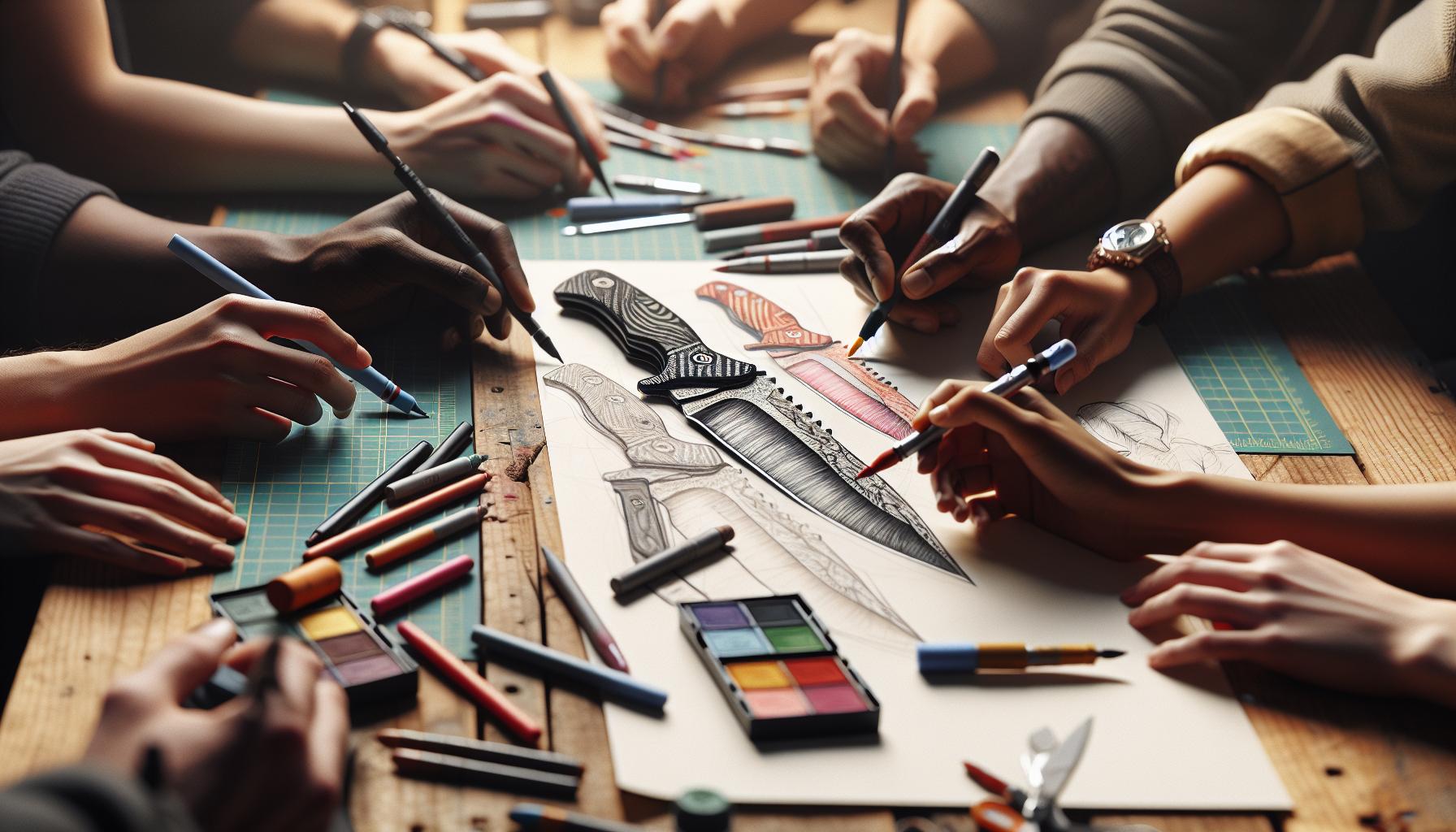
Bringing Your Knife Drawings to Life with Color
To truly captivate your audience with your pocket knife illustrations, color plays a crucial role in bringing depth and vibrancy to your artwork. A well-executed color scheme can enhance the realistic qualities of your drawings and evoke emotions, drawing viewers into the intricate details of your design. When selecting colors, it’s essential to consider not just the aesthetic appeal but also the material qualities and lighting conditions that affect how colors are perceived in reality.
Begin by analyzing the colors found in the materials of real knives. For example, stainless steel blades often have subtle shades of gray and hints of blue or green due to light reflection, while wooden handles may feature rich browns with varying tones of amber or dark mahogany. Useing a color wheel can help you understand which colors complement each other and create harmony within your drawing. Picking a dominant color for your knife’s main body and using analogous or complementary colors for accents can create a striking visual impact.
When applying color, think about layering techniques. Start with lighter base layers and gradually build up darker tones. This allows you to create gradients that add volume and character to surfaces. For shading, utilize a slightly darker hue than your base color, paying careful attention to the light source in your composition, as this will dictate where the shadows fall. Additionally, adding white or a lighter tone to specific areas will mimic highlights, showcasing reflective surfaces expertly.
- Observe Real Knives: Study the interplay of colors in actual knives to enhance authenticity.
- Use a Color Wheel: Choose harmonious color schemes for appealing visuals.
- Layering Techniques: Start with light base colors and gradually apply darker shades.
- Focus on Light Sources: Adjust colors based on where light and shadow naturally occur.
Ultimately, as you explore combining the right colors with your shading and texturing techniques, your pocket knife illustrations will gain a lifelike quality that appeals to both enthusiasts and art admirers alike. Engaging with color not only enhances your work but also reflects your personal artistic style, allowing your creativity to shine through each piece.
Q&A
Q: What are the best techniques for sketching a pocket knife?
A: Effective techniques for sketching a pocket knife include starting with basic shapes to outline the knife’s structure, using light pencil strokes for initial sketches, and gradually refining details. Incorporate perspective by visualizing the knife’s angles, and utilize shading to add depth, making the illustration realistic.
Q: How do I choose the right reference image for pocket knife drawings?
A: When selecting a reference image for drawing a pocket knife, look for clear, high-resolution images that showcase the knife from various angles. Choose images with good lighting and focus on the anatomy of the knife. This will aid in understanding the proportions and details necessary for a realistic depiction.
Q: What are common mistakes to avoid when drawing pocket knives?
A: Common mistakes in drawing pocket knives include neglecting proportions, underestimating the importance of perspective, and skipping the preliminary sketch phase. Also, avoid excessive detail early on; instead, focus on getting the shapes right first before refining your drawing with details and shading.
Q: How can I improve my shading techniques for knife illustrations?
A: To enhance your shading techniques in knife illustrations, practice using different pencil grades for varying darkness. Blend your strokes smoothly for a more realistic look, and pay attention to light sources to ensure shadows are placed accurately. Gradually build up layers of graphite to create depth.
Q: What tools are essential for drawing pocket knives?
A: Essential tools for drawing pocket knives include a good-quality sketchbook, a range of pencils (H to 6B), erasers, blending stumps for shading, and fine liners for outlining. Optional tools like colored pencils or markers can be added for those wishing to incorporate color into their illustrations.
Q: How does the functionality of a pocket knife influence its design in drawings?
A: The functionality of a pocket knife directly influences its design, as each feature serves a specific purpose. Highlight elements like blade shape, handle ergonomics, and locking mechanisms to reflect practical use. Understanding these features can enhance your illustrations by adding realism and accuracy.
Q: What is the importance of learning knife anatomy for artists?
A: Learning knife anatomy is crucial for artists as it helps in accurately depicting shapes, proportions, and functionalities. Understanding the various components, such as blades, handles, and pivot points, allows for more realistic illustrations and improves an artist’s ability to communicate design elements effectively.
Q: Can studying different pocket knife styles improve my drawing skills?
A: Yes, studying various pocket knife styles can significantly improve drawing skills. It exposes you to diverse designs, techniques, and features, helping you understand how to replicate different forms. This knowledge enhances creativity and allows for more dynamic and interesting knife illustrations.
To Wrap It Up
Thank you for exploring our guide on tactical drawing techniques for pocket knives. You’ve gained valuable insights into the nuances of drawing and utilizing pocket knives safely and effectively. Remember, mastering these skills will not only enhance your confidence but also elevate your overall tactical proficiency. If you have any questions or need further clarification, don’t hesitate to drop a comment below!
For those keen on expanding their skills, check out our in-depth articles on Swiss Army knives and karambits for more comprehensive maintenance tips and gear selection advice. Don’t forget to subscribe to our newsletter for exclusive tips and updates straight to your inbox! Dive deeper into the world of everyday carry and outdoor gear-it’s just a click away. Keep sharpening those skills, and we look forward to seeing you again soon!