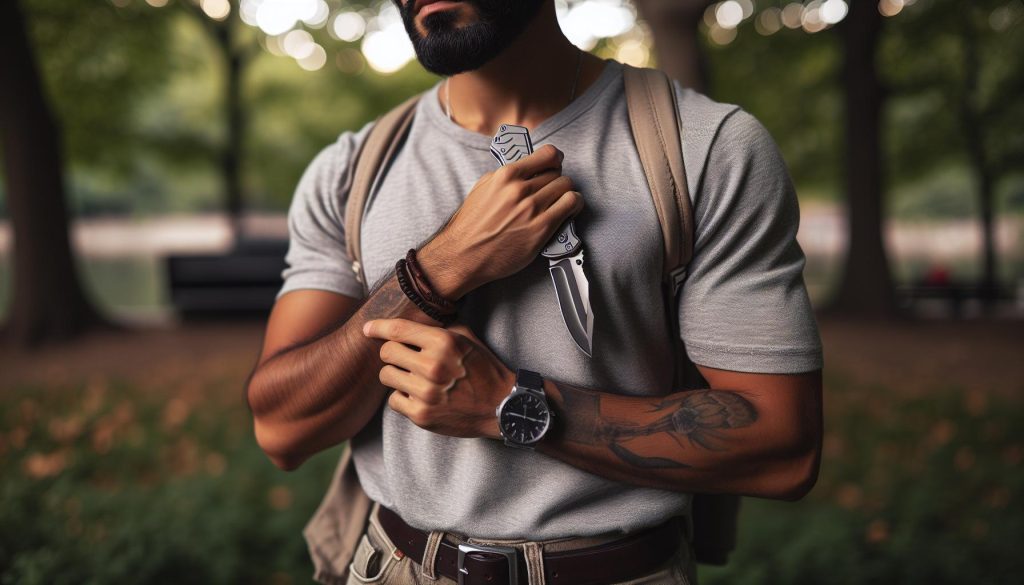
In New Jersey, the rules around carrying a pocket knife can be both confusing and crucial to understand for anyone who values practical tools in their everyday life. Did you know that, unlike many states, NJ has specific regulations that could make the difference between safe and legal carry versus a potential legal issue? Whether you’re a seasoned outdoor enthusiast or someone who simply appreciates the utility of a good pocket knife, knowing the legalities can help you make informed decisions. This guide aims to clarify what you need to know about pocket knife laws in the Garden State, ensuring you feel empowered and secure while enjoying your favorite gear. Dive in to uncover the essential information on what types of knives are permissible, potential restrictions, and tips for responsible carrying, all tailored to meet your needs and safeguard your interests.
Can I Legally Carry a Pocket Knife in NJ?
In New Jersey, the legality of carrying a pocket knife hinges on various factors, including the type of knife, blade length, and the context in which it is carried. New Jersey law is quite strict compared to many other states, imposing serious restrictions on the possession and carry of knives. Generally speaking, it is illegal to carry any knife with a blade longer than three inches unless there are special circumstances justifying the carry.
Understanding what qualifies as a pocket knife can help clarify the regulations. A pocket knife is typically defined as a folding knife that can be closed and easily carried in a pocket. However, the law draws a distinction between knives intended for utility and those that may be seen as weapons. Knives that can be opened with a flick of the wrist or with one hand, commonly referred to as “gravity knives” or “switchblades,” are classified differently under state law and carry stricter legal penalties.
Moreover, while the law outlines general restrictions, there are certain exceptions worth noting. For instance, if you are carrying a pocket knife for legitimate purposes such as camping, hiking, or fishing, you may argue for an exception. However, it’s crucial to ensure that you’re not using the knife in a way that can be construed as unlawful, such as in confrontational scenarios or in areas where the legal restrictions are stringent, such as schools or government buildings.
In terms of best practices for responsible ownership, always keep your knife neatly stored when not in use and be mindful of blade length and type when considering your carry options. A well-maintained knife not only serves its practical use but also reflects your respect for the law and community safety. Understanding and adhering to these regulations will equip you to enjoy the practical benefits of carrying a pocket knife without running afoul of legal restrictions.
Understanding New Jersey Knife Laws and Regulations
In New Jersey, understanding the legal landscape surrounding pocket knives is crucial for anyone looking to carry one. The state has stringent regulations regarding the possession and transportation of knives, which can vary significantly from those in neighboring regions. New Jersey law explicitly defines various types of knives, and pocket knives are no exception. A folding knife that can be closed and carried in a pocket is generally accepted; however, the legal status hinges on blade length and the knife’s intended use.
The law makes a clear distinction between various types of knives, particularly those that can be easily opened with one hand or by flicking the wrist, categorized as “gravity knives” or “switchblades.” Such knives face stricter legal limitations and harsher penalties if misused. As a practical guideline, you should avoid carrying any knife with a blade longer than three inches unless you can demonstrate a legitimate purpose for its use. This highlights the importance of familiarity with local laws, as ignorance can lead to serious consequences.
When considering transporting a pocket knife, it’s essential to recognize environments where restrictions might be even tighter, such as schools, airports, and government buildings. Carrying for everyday utility, such as camping or DIY projects, may justify possession, but context matters significantly. For responsible ownership, it’s advisable to keep your knife safely stored when not in use and to be mindful of visible carry, especially in urban areas where carrying a visible tool might lead to misunderstandings or confrontations. By maintaining awareness of the laws and practicing responsible carrying habits, you can enjoy the functionality of a pocket knife while avoiding legal pitfalls.
Types of Pocket Knives Allowed in New Jersey
In New Jersey, the laws governing pocket knives can be quite specific, making it essential for enthusiasts and everyday users to be informed about what types of knives are permitted. Generally, pocket knives are categorized based on their design and the mechanism used to open the blade. The most commonly accepted types are traditional folding knives, including those that can be opened manually or with a thumb stud. These knives are typically legal to carry as long as they conform to certain size and functionality parameters.
- Folding Knives: Standard folding knives that require two hands to open or have a thumb stud mechanism are permitted. These are often used for everyday tasks such as cutting rope or opening packages.
- Swiss Army Knives: A popular choice for both functionality and portability, Swiss Army knives combine various tools in one compact design. As long as the blade length does not exceed three inches, these multifunctional tools are legal to carry.
- Fixed-Blade Knives: While fixed blades can be used in outdoor activities, they are generally not classified as pocket knives. Carrying such a knife in public is typically subject to stricter regulations, and it’s important to be cautious about the intended use and length.
It’s crucial to note that certain knives, particularly those that can be opened with one hand and are equipped with mechanisms like springs or heft that allow them to deploy quickly, fall into categories with more stringent restrictions. These are often classified as switchblades or gravity knives and are banned outright in many circumstances. Therefore, understanding the distinctions among different types of knives is key to making informed choices about what to carry.
As an important safety measure, always consider the context in which you will be using or transporting your pocket knife. Regulations can be notably stricter in areas such as schools, airports, and public events. By following these guidelines and being aware of New Jersey’s laws, knife owners can enjoy their tools responsibly and legally.
Defining a Pocket Knife: What Counts and What Doesn’t
In New Jersey, the classification of what constitutes a pocket knife is crucial for anyone considering carrying one. The term “pocket knife” generally describes a type of knife characterized by a folding blade that can be safely stored in a pocket. However, not all folding knives fall into this category when it comes to legal regulations. Understanding these distinctions can prevent potential legal issues for enthusiasts and everyday users alike.
The fundamental characteristic of a pocket knife is its folding mechanism. This includes traditional designs that require two hands to open, such as those with no spring-assisted features. For example, classic folding knives that necessitate a deliberate action to deploy the blade are generally accepted as pocket knives. Swiss Army knives also fit within this definition, provided their blade length does not exceed the allowable limits. These versatile tools highlight the functional nature of pocket knives as both practical tools for daily tasks and recreational equipment.
On the other hand, switchblades and knives that can be opened with one hand using a spring mechanism are typically not considered pocket knives under New Jersey law; instead, they fall into categories with stricter restrictions. Additionally, fixed-blade knives, while useful for outdoor activities, do not count as pocket knives since they do not fold and are viewed differently under the law. To successfully navigate New Jersey’s regulations, it’s essential for knife owners to clearly differentiate between these various types based on their design and intended use.
When in doubt, always verify the specific features of your knife before carrying it in public. The understanding of what legitimately counts as a pocket knife goes beyond merely recognizing folding and fixed blades; it also encompasses their intended functionality and legal classifications. Being informed not only enhances your knowledge of your tools but plays a significant role in ensuring responsible and lawful ownership.
Permitted Blade Length and Features in NJ
In New Jersey, understanding the regulations surrounding pocket knives can save you from potential legal troubles and enhance your outdoor adventures or daily tasks. The blade length is a critical factor, as New Jersey law explicitly restricts the maximum allowable length for the majority of folding knives, including pocket knives. As a general guideline, blades that are under four inches are typically accepted without needing a special permit or justification for carrying. This parameter reflects a balance between practicality and safety, catering to everyday users who rely on pocket knives for various functions such as opening packages, repairs, or preparing food.
Blade Features: Apart from length, specific features of the knife can also impact its legality. For instance, pocket knives that can be opened with one hand, especially those equipped with a spring-assisted mechanism, are classified separately and often fall under stricter regulations. It’s essential to distinguish features like blade types and mechanisms; traditional designs that require two hands for deployment are more likely to qualify as legal pocket knives in New Jersey.
- Allowed Blade Length: Less than 4 inches.
- Types of Knives Generally Permitted: Traditional folding knives, Swiss Army knives.
- Restricted Knives: Switchblades, assisted-opening knives (one-handed opening).
Consequences of Ignoring Regulations
Carrying a knife that exceeds the legal blade length or falls into a prohibited category can lead to serious legal repercussions, including fines and criminal charges. Therefore, it’s not only important to know the rules but also to regularly assess your carry knife’s compliance with these stipulations. When in doubt, consult local regulations or seek legal advice to ensure you’re making informed decisions about your knife choices. Proper understanding and adherence to the permitted blade lengths and features will contribute to responsible and confident pocket knife ownership in New Jersey.
Exceptions to the Rules: When Carrying is Allowed
In New Jersey, while the regulations surrounding the carrying of pocket knives are strict, there are certain exceptions that allow individuals to carry them under specific conditions. For instance, pocket knives are generally permitted in situations where they are used for work-related tasks or during recreational activities such as camping, hiking, or fishing. As long as the individual can demonstrate that the knife is being used for a legitimate purpose, law enforcement may be more lenient in assessing whether it’s appropriate to carry.
A common exception arises when a pocket knife is used for lawful purposes in a specific setting. For example, if you are engaged in a job that requires the use of a folding knife, such as construction or landscaping, having a pocket knife on hand is not only practical but also aligns with your work requirements. Similarly, during outdoor activities, where the utility of a pocket knife can significantly enhance your experience-like preparing food or making repairs-a reasonable explanation for carrying the knife typically suffices.
Moreover, knives that are under the four-inch blade length, particularly traditional folding models, are generally acceptable even if they are used in public spaces, provided they are not brandished or used in a threatening manner. On the other hand, exceptions may also apply to individuals who have a valid reason based on a specific need, such as those with particular occupations or hobbies that necessitate having a knife readily available.
Understanding these exceptions can empower individuals with knowledge about when and how to responsibly carry a pocket knife in New Jersey, allowing for its use in everyday situations without fear of legal trouble. However, it’s crucial to remain aware of the context in which the knife is carried, ensuring it aligns with the purpose to avoid any potential legal misinterpretations.
Transporting Pocket Knives: Key Guidelines to Follow
Transporting a pocket knife in New Jersey requires careful attention to the state’s laws and regulations, as missteps can lead to legal complications. Whether you’re an outdoor enthusiast or a professional who relies on such tools daily, understanding how to transport your knife safely can enhance your overall experience and ensure compliance with local laws.
When carrying a pocket knife, always ensure it is stored correctly. For instance, keeping it securely in your bag or a dedicated knife case rather than on view helps to avoid unnecessary confrontations with law enforcement. Pocket knives should ideally remain closed and clipped to the inside of a bag when not in use. If you are traveling in a vehicle, it’s advisable to keep the knife in the trunk or glove compartment, rather than on the passenger seat, to further reduce the chances of being perceived as carrying it unlawfully.
- Blade Length: As a rule of thumb, keep your knife’s blade under four inches for added peace of mind. Knives beyond this length can attract unwanted legal scrutiny.
- Purpose of Carry: Always be prepared to explain why you have a pocket knife. Demonstrating a legit reason, such as using it for work, camping, or other practical tasks can be an effective defense if questioned.
- Educate Yourself: Stay updated on local laws, as regulations can change. It’s wise to know not just the state laws but also any municipal ordinances regarding knife possession and transportation.
In addition, consider carefully the type of knife you choose to transport. Some models may be perceived as weapons more than tools, particularly tactical knives or those designed for combat. A traditional folding pocket knife or a Swiss Army knife is generally viewed more favorably in terms of legality and public perception. It’s essential to adopt a mindset of responsible ownership. By following these guidelines, you can confidently transport your pocket knife while enjoying your outdoor activities and remaining compliant with New Jersey law.
Outdoor Activities and Pocket Knife Regulations
Engaging in outdoor activities often requires practical tools, and a pocket knife is a favored companion for many enthusiasts. However, it’s crucial to navigate New Jersey’s specific regulations regarding pocket knives to avoid any legal mishaps while enjoying your favorite activities. In the Garden State, the acceptable use of pocket knives is particularly relevant to how they are carried, the type of knife, and situations where they might be deemed necessary.
When embarking on outdoor adventures-be it hiking, camping, or fishing-take a moment to consider the purpose behind the knife. New Jersey law tends to view the context of the carry as a significant factor. For instance, using a knife to assist with tasks like food preparation or camping projects can make your carry seem legitimate and practical. It might be wise to select knives that are clearly tools, such as a Swiss Army knife, rather than tactical knives, which may draw scrutiny or be seen as weapons.
Proper storage during outdoor activities also can’t be overlooked. For example, while trekking, keep your knife secured in a backpack or a dedicated tool pouch rather than clipped to your belt. This not only complies with the norms surrounding public perception but also prevents accidental encounters with law enforcement. If you plan to move between areas or travel in a vehicle, stow your pocket knife in the trunk or under a seat, ensuring it’s not in immediate reach of passengers for added discretion.
Adopting a responsible attitude towards knife ownership enhances your outdoor experience. Familiarizing yourself with local regulations helps in distinguishing between what is legal and permissible versus what could lead to complications. With these mindful practices in place, your pocket knife can serve as a valuable aid in your outdoor escapades while aligning with New Jersey’s legal framework.
Misconceptions About Knife Carrying Laws in NJ
Many individuals harbor misconceptions about the legality of carrying pocket knives in New Jersey, often leading to unnecessary confusion or anxiety. One common misunderstanding is that all types of knives are treated equally under the law. However, New Jersey law differentiates between knives based on their design, function, and intended use. For instance, carrying a Swiss Army knife-which is clearly a tool-can be seen as acceptable for practical purposes, while tactical or combat-style knives may trigger legal concerns due to their potential weapon classification.
Another prevalent myth is that carrying a pocket knife is entirely prohibited in public spaces. In reality, New Jersey does allow the possession of pocket knives, provided they are carried appropriately. Many individuals believe they can carry any knife as long as it’s concealed, which isn’t entirely true. The legality hinges on the blade length and the knife’s classification. It’s important to recognize that knives with blades longer than four inches may be deemed illegal to carry without a lawful purpose. Therefore, understanding what counts as a “legitimate purpose”-whether for work, hobbies, or emergency situations-can help allay fears regarding everyday carry practices.
Moreover, the assumption that displaying a pocket knife in public automatically results in legal issues is misleading. Context matters incredibly in New Jersey’s legal landscape. If the knife is being used for its intended purpose-such as cutting rope while fishing or preparing food during a picnic-then it supports the justification for carrying it. However, engaging in activities that could be perceived as threatening with a knife can prompt law enforcement inquiries, emphasizing the necessity of being mindful about context.
Here are some key points to clarify these misconceptions:
- Type Matters: Not all knives are viewed the same; tool-like designs are often more accepted.
- Purpose is Key: Carrying a knife for practical uses can be defensible legally.
- Blade Length Restrictions: Knives over four inches are typically subject to stricter regulations.
- Context of Carry: How and where you use your knife plays a major role in legality.
By educating oneself on these nuances, individuals can navigate New Jersey’s knife laws more confidently and responsibly, ultimately promoting a safer environment for all. Understanding these details not only empowers knife owners but also aids in demystifying the regulations surrounding pocket knives in the Garden State.
Traveling with Pocket Knives: State and Federal Considerations
Traveling with a pocket knife can seem daunting, especially when you consider the various laws that can differ not only by state but also by mode of transport. For those based in New Jersey, understanding these regulations becomes crucial, particularly when you’re transitioning from local roads to other states or different jurisdictions. When traveling, whether by car, train, or plane, you’ll want to be fully aware of the rules to avoid any potential legal issues.
When transporting a pocket knife through New Jersey, remember that the general rule regarding blade length applies: knives over four inches may be illegal to carry without a legitimate purpose. However, during travel, particularly when your knife is stored within your luggage or a vehicle, the enforcement of these laws may differ. For instance, while a pocket knife that folds and is deemed a tool is usually permissible, displaying it publicly or carrying it on your person in specific restricted areas-like schools or government buildings-could lead to complications.
State Considerations
Every state has its own laws concerning concealed and open carry of knives. When crossing state borders, it’s essential to research the knife laws in the states you will be traveling through. Some states might allow longer blades or different types of knives that New Jersey does not. Additionally, be cautious when entering areas with heightened security, such as airports or federal buildings, where even small pocket knives can be prohibited.
Federal Regulations
For travelers using air transport, federal regulations impose strict bans on carrying knives in the cabin of an aircraft. The Transportation Security Administration (TSA) lists all forms of knives, including pocket knives and multi-tools, as prohibited items. If you must travel with a knife, it must be stowed in checked baggage. Always check the latest TSA guidelines before your trip to ensure compliance, as regulations can frequently change.
When preparing for outdoor excursions, such as camping or hiking, it’s worth noting that different parks and recreational areas may have their own specific restrictions regarding knife carry. Thus, it’s best to familiarize yourself with local regulations which often dictate not only whether you can carry a knife but also specify blade length limits and allowed types.
By being informed and cautious, you can travel with your pocket knife without running into legal hurdles. Always ensure the knife is packed away correctly, engaging in responsible carrying behaviors whether you’re hiking in the wilderness or driving across state lines.
Tips for Responsible Pocket Knife Ownership in NJ
Owning and responsibly carrying a pocket knife can be a rewarding experience, especially for those in New Jersey, where understanding the legal landscape is crucial. Knowing local knife laws is not just about compliance; it’s about ensuring safe, responsible usage that respects both legal boundaries and community standards. A pocket knife can be an invaluable tool for everyday tasks, but misuse or ignorance of the law can lead to unintended legal consequences.
To ensure responsible pocket knife ownership, it’s essential to have clarity on the type of knife you’re carrying and its intended use. Always opt for knives that fit within New Jersey’s legal framework-like folding knives with blades shorter than four inches unless you can justify the need. When carrying your knife, make sure it remains concealed and is used only as a tool-public display can lead to misunderstandings or confrontations.
Another key aspect of responsible ownership is maintaining your knife in good condition. Regular cleaning and maintenance not only prolong the life of your tool but also ensure safe operation. A dull or damaged blade can be hazardous. Consider practicing basic knife skills in a safe environment to familiarize yourself with its operation before using it in more challenging settings, such as outdoors.
Lastly, when engaging in outdoor activities, remember that specific locations may have additional restrictions on knife use. Always research local regulations and guidelines for parks or recreational areas where you plan to visit. By being aware of your surroundings and respectful of the laws, you foster a culture of safety and responsibility that benefits everyone in your community. Taking these precautions will empower you to enjoy your pocket knife while adhering to New Jersey’s regulations.
Best Practices for Safe and Legal Carrying of Pocket Knives
Carrying a pocket knife responsibly in New Jersey requires awareness of both legal guidelines and practical considerations. Understanding how to navigate these waters not only helps you avoid legal pitfalls but also enhances your confidence in using your knife as a reliable tool. To start, always choose folding pocket knives with a blade length of fewer than four inches, as these are typically acceptable for everyday carry. This applies to various types of knives including Swiss Army knives, utility knives, and camping tools. Furthermore, make sure your knife is concealed when not in use; public display can easily lead to misunderstandings.
Regular maintenance is another crucial aspect of responsible pocket knife ownership. A dull blade is more than just inefficient; it can be a safety hazard. Regularly sharpening your knife and ensuring all mechanisms are in good working order will bolster safety and functionality. Additionally, consider practicing basic knife skills to become proficient with your tool. Familiarity with your knife will increase your confidence, whether you are using it for simple tasks around the house or engaging in outdoor activities.
When transporting your knife, keep it secured and out of reach during travel. Using a dedicated pocket or sheath can prevent accidental openings. Be mindful of the specific regulations in locations you may visit; certain parks or recreational areas may have stricter rules regarding knife usage. A quick look-up of these regulations can save you from potential fines or legal trouble.
Lastly, engaging with local knife communities-for instance, online forums or local clubs-can provide valuable insights into best practices and experiences from fellow enthusiasts. These connections can prove invaluable for sharing knowledge on safety tips, legal updates, and responsible ownership. By following these guidelines, you can enjoy all the benefits of pocket knife ownership while staying within the boundaries of New Jersey’s regulations.
Frequently Asked Questions
Q: What is the legal blade length for carrying a pocket knife in New Jersey?
A: In New Jersey, the legal blade length for carrying a pocket knife is typically limited to 4 inches. Knives exceeding this length may be classified as illegal weapons. Always check your local laws for any specific regulations regarding blade length.
Q: Can I carry a pocket knife on school property in New Jersey?
A: No, carrying a pocket knife on school property in New Jersey is strictly prohibited. This rule is in place to ensure safety and can result in severe legal consequences. For more detailed information, refer to school safety regulations.
Q: Are there any exceptions for carrying a pocket knife in New Jersey?
A: Yes, exceptions exist for carrying a pocket knife in specific contexts, such as while engaged in outdoor activities like camping or fishing. In these cases, the knife must be necessary for those activities. Review the ‘Exceptions to the Rules’ section for more insights.
Q: What should I do if stopped by police while carrying a pocket knife in NJ?
A: If stopped by police while carrying a pocket knife in New Jersey, be compliant and inform the officer about the knife. It’s helpful to have a valid reason for carrying it, such as for work or recreational purposes, to avoid misunderstandings.
Q: Can I transport a pocket knife in my car in New Jersey?
A: Yes, you can transport a pocket knife in your car in New Jersey, but it should be securely stored and not easily accessible, such as in the glove compartment or trunk. Make sure to follow the guidelines outlined in the ‘Transporting Pocket Knives’ section.
Q: Is it legal to carry a pocket knife for self-defense in NJ?
A: No, carrying a pocket knife for self-defense in New Jersey is not considered a valid legal justification. Knives should be carried for utility purposes only. Always be aware of self-defense laws in your state.
Q: Are tactical knives considered pocket knives under NJ law?
A: Tactical knives can be considered pocket knives, but their legality depends on their features, such as blade length and locking mechanisms. It’s important to check regulations to determine if a tactical knife meets the legal criteria in New Jersey.
Q: What are the consequences of illegally carrying a pocket knife in NJ?
A: Illegally carrying a pocket knife in New Jersey can result in felony charges, fines, or imprisonment, depending on the severity of the violation. It is crucial to familiarize yourself with the knife laws to avoid legal repercussions.
Closing Remarks
As you navigate the regulations surrounding pocket knives in New Jersey, it’s essential to stay informed and prepared. Understanding the state’s laws can prevent legal hassles and ensure that you’re carrying your favorite tools responsibly. Don’t forget to explore our in-depth guides on selecting the best Swiss Army knives, learning about karambits, and mastering everyday carry essentials.
If you have any remaining questions or need advice tailored to your specific situation, reach out through our comments section or subscribe to our newsletter for updates. By staying connected, you’ll gain access to exclusive content that keeps you at the forefront of gear knowledge and legal insights. Remember, your safe and informed use of pocket knives not only enhances your outdoor experience but also empowers you as a responsible user.
Join our community today to share your thoughts and experiences, and let’s make informed choices together!