Have you ever found yourself locked out of your home or vehicle with no spare key in sight? The ability to pick a lock using a Swiss Army knife can be a valuable skill, especially in emergencies. This engaging guide will explore how this versatile tool can assist in simple lock-picking techniques, providing you with practical solutions when faced with unexpected situations. Whether you’re an outdoor enthusiast or simply someone looking to boost your everyday carry skills, mastering these techniques not only enhances your resourcefulness but also prepares you for those tricky moments when every second counts. Dive in to discover step-by-step methods and tips that ensure your use of this handy tool remains safe and responsible.
Choosing the Right Swiss Army Knife for Lock Picking
Choosing an appropriate Swiss Army Knife can significantly enhance your lock-picking endeavors, especially in unexpected situations. With its compact design and multi-functional tools, a Swiss Army Knife can become a valuable ally when trying to gain entry without a key. Selecting the right model goes beyond just picking any knife off the shelf; it requires understanding which tools are most effective for lock picking.
When considering which Swiss Army Knife to choose, prioritize models that include features like small blades, awls, and precision tools. The blade types typically found in Swiss Army Knives can often be repurposed for tension and pick tools. For instance, a small, sturdy blade can act as a tension wrench, while a delicate, pointed blade may serve as a rudimentary lock pick. Additionally, the size and portability of the knife are essential-opt for a medium-sized knife that is easy to carry but still offers versatile tools.
Moreover, look for knives with a good grip and ergonomic design. This feature not only increases comfort during use but also provides better control when maneuvering within the lock mechanism. With brands like Victorinox, you can find knives specifically tailored for rugged use, combining style with functionality. While shopping, compare the specifics of different models-some may offer specialized tools that can be particularly beneficial for lock-picking tasks.
Lastly, always consider the legal implications of carrying a Swiss Army Knife, especially one used for lock picking, as laws can vary significantly by location. Choosing the right Swiss Army Knife with these considerations in mind will not only equip you for emergency scenarios but also empower you to engage in responsible and skillful tool use. Remember that practice and understanding the mechanics behind locks are just as critical as the tool you select.
Understanding Lock Mechanisms for Effective Entry

Understanding lock mechanisms is crucial for anyone looking to enter a space without a key, whether in emergency situations or as part of a tool-based hobby. Each lock functions based on a specific mechanism, and having a fundamental grasp of how these work can significantly enhance your ability to pick them. Most commonly, locks fall into a few categories: pin tumbler, wafer, and disc detainer locks, each presenting unique challenges and requiring specific techniques for manipulation.
The pin tumbler lock is the most prevalent type encountered in residential doors. It consists of a series of pins that must be aligned to a specific height to allow the lock to turn. By inserting a tension wrench to apply rotational force while using a small, pointed blade from your Swiss Army Knife as a picking tool, you can gently push each pin up until it reaches the shear line. It’s beneficial to understand the feel of the pins as they set-once you practice, you’ll be able to detect when a pin is held at the correct height.
Wafer locks, often seen in automotive applications, operate similarly but utilize flat wafers instead of pins. These can be particularly tricky due to the variance in wafer sizes; a thin, flat tool, such as a small blade from a Swiss Army Knife, can often maneuver through the keyway to slide each wafer into the unlocked position. By using the tension wrench to control a slight rotation, you can more effectively push the wafers into place.
In some scenarios, disc detainer locks become relevant, particularly in bicycle locks or high-security systems. These rely on rotating discs within the lock mechanism and require a more specialized skill set. If you find yourself facing this type of lock, a traditional Swiss Army Knife may not suffice due to the need for precision tools specifically designed for such locks.
Regardless of the mechanism, the secret to effective entry lies in understanding the lock’s components and employing the right technique with your tools. Familiarizing yourself with how locks work not only improves your skill set but also empowers you to approach emergencies with confidence and a clear strategy. With practice and patience, the knowledge gained in lock mechanisms can turn your Swiss Army Knife into a vital resource for effective entry in pressing situations.
Step-by-Step Guide: Using Your Knife to Pick Locks
When faced with a locked door and no key in sight, the ability to pick a lock can be a game-changer, particularly when using a versatile tool like a Swiss Army Knife. Known for their portability and functionality, these knives can aid in situations that require quick and effective entry. Below is a step-by-step guide to utilizing your Swiss Army Knife for this purpose, ensuring you approach the task safely and effectively.
Start by gathering your tools. You will need a Swiss Army Knife, ideally one with a straight or pointed blade, and a thin, sturdy object to use as a tension wrench, which can be the knife’s handle or another tool that is part of the knife set. With these tools in hand, assess the lock type you are dealing with to determine your approach.
Step 1: Insert the Tension Wrench
Begin by inserting the tension wrench into the lower part of the keyhole. This tool is crucial as it provides the necessary tension to turn the lock once the pins or wafers are aligned correctly. Apply light rotational pressure in the direction the lock turns-usually clockwise-but avoid excessive force to prevent breaking the lock.
Step 2: Insert the Picking Tool
Next, take the pointed blade from your Swiss Army Knife and gently insert it into the upper part of the keyhole. This is where you’ll manipulate the internal pins or wafers. Gently probe around to locate the pins; you might feel them push back against the blade. It’s crucial to be patient and light-handed at this stage.
Step 3: Feel for the Pins
Using the blade, you’ll want to feel for the individual pins inside the lock. Lift each pin gently until you hear a faint click-this indicates that the pin is set at the shear line. Occasionally, you might need to apply more tension with the wrench as you manipulate the pins. If done correctly, the lock should begin to turn.
Step 4: Turn the Lock
Once all pins are set, slowly and steadily turn the tension wrench to unlock the door. If resistance is met, it might indicate that not all pins are properly set, so return to the previous step, and ensure each pin is lifted before attempting to turn the lock again.
Practicing these steps will improve your skill and confidence in lock picking. Consider using locks that you own or get permission to practice on, ensuring you respect both legal and ethical boundaries. Although using a Swiss Army Knife for lock picking can be effective in emergencies, always carry out this skill responsibly.
Essential Tools and Techniques for Successful Lock Picking
When it comes to unlocking doors with a Swiss Army Knife, having the right mindset and technique is crucial. While these multi-functional tools are often associated with outdoor survival and general utility, they can be surprisingly effective for lock picking in emergencies. However, effective lock picking requires a blend of the right tools and techniques.
To begin, your Swiss Army Knife should ideally include a straight or pointed blade. This blade acts as your primary picking tool. Alongside it, you will need a tension wrench, which can also be improvised from parts of the knife itself, such as the handle or another flat tool. The tension wrench is essential for applying the correct amount of pressure to the lock cylinder, thus allowing you to manipulate the internal pins or wafers within the lock.
Mastering the technique involves understanding the interaction between these tools. Begin by inserting the tension wrench into the bottom part of the lock-this step sets the foundation for your lock picking efforts. Apply slight rotational pressure in the direction the lock turns. With the blade, gently probe above the tension wrench into the lock’s keyhole, feeling for pins. It’s vital to be patient and light-handed; the goal is to lift each pin until it clicks into place, aligning with the shear line. Properly managing the balance between tension application and pin manipulation is key for successful lock picking.
Additionally, investing time in practice is indispensable. Many locksmiths recommend starting with dummy locks to hone your skills without the pressure of an urgent situation. Practice will not only enhance your dexterity but also build your confidence in using your Swiss Army Knife for lock picking when you truly need it. Remember, efficiency comes with experience; thus, it’s worth spending time understanding your Swiss Army Knife’s capabilities beyond its conventional roles.
Common Lock Types: Which Can Be Picked?
When it comes to lock picking, understanding different types of locks is essential for determining which can be easily manipulated. Some locks are inherently more flexible than others, allowing for effective entry with tools like a Swiss Army Knife, especially during emergencies. Here’s a breakdown of common lock types that you may encounter and their pickability.
- Pin Tumbler Locks – This is the most common type found in residential doors. They consist of several pins that must be lifted to the correct height to unlock the mechanism. Because of their design, pin tumbler locks can often be picked using basic lock picking techniques and tools, making them suitable candidates for your Swiss Army Knife.
- Wafer Locks – Similar to pin tumblers but typically found in less secure situations, such as cabinet locks. Wafer locks have flat wafers that need to be lifted and turned. They are generally easier to pick than pin tumbler locks, requiring less finesse and skill.
- Lever Locks – Often seen in older doors, these locks operate using a flat lever mechanism. While they can be tricky, if you understand the mechanism, you can pick them using a combination of your Swiss Army Knife’s blade and a makeshift tool.
- Disc Detainer Locks – These locks utilize rotating discs to block access. They are notably more challenging to pick due to their complexity. Specialized tools are often required, and a Swiss Army Knife is typically insufficient without additional aids.
- Smart Locks – Incorporating electronic mechanisms, these locks often bypass traditional picking methods entirely. Instead, accessing them generally requires hacking skills or specific tools rather than manual manipulation.
While the above lock types vary in their resistance to picking, the combination of your Swiss Army Knife’s tools allows for creative solutions in dire situations. Pin tumbler and wafer locks provide the best opportunities for successful picking, especially for beginners. Understanding these common categories not only enhances your confidence but also reinforces the importance of responsible and knowledgeable tool use when facing lock-related challenges.
Tips for Practicing Lock Picking Safely
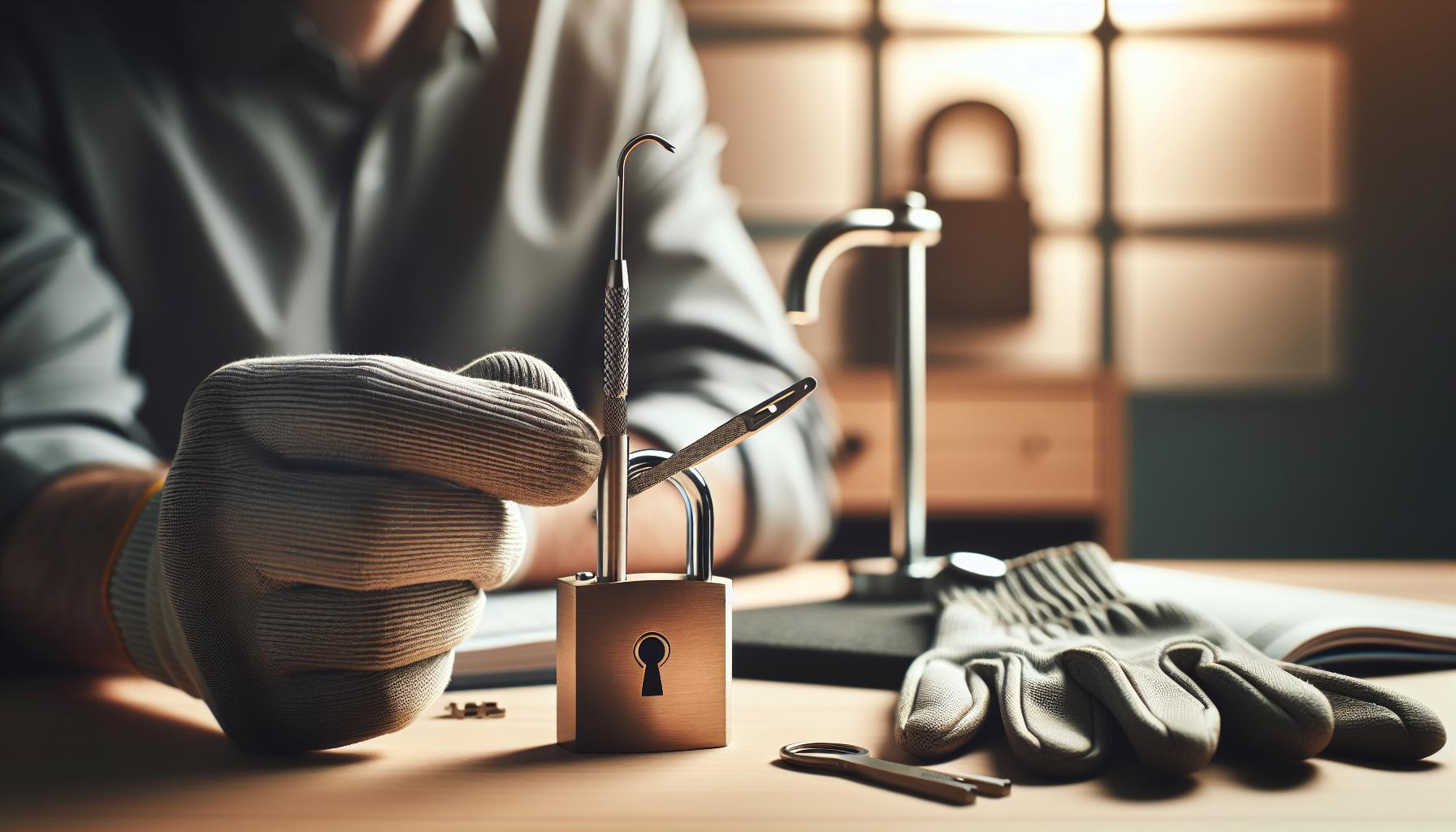
Practicing lock picking requires not just skill and knowledge, but also a strong commitment to safety and legality. Engaging in this activity can be both intriguing and useful; however, it’s essential to approach it with caution. Here are some practical tips to ensure that your practice remains safe and responsible.
Start by creating a controlled environment for your practice. This could be as simple as setting aside a specific time and place where you have permission to try out your lock-picking skills. Using old locks in a designated area can help mitigate any risk of accidentally accessing a lock you shouldn’t. Consider investing in practice locks designed for learning; these often include transparent designs that let you visualize the inner workings as you pick.
Another crucial aspect is to stay informed about the laws regarding lock picking in your area. In some jurisdictions, possessing lock-picking tools without authorization can lead to legal consequences. Therefore, familiarize yourself with local laws to ensure that you remain compliant and avoid potential misunderstandings. If you’re in doubt, consult legal professionals or local law enforcement to get a clear understanding of what’s allowed.
In addition to legal considerations, practice good etiquette. If you’re learning in a group or community setting, respect the guidelines set by your peers and mentors. This respectful behavior not only fosters a positive learning environment but also ensures that everyone involved is operating with the same understanding of safety and legality. Lastly, maintain your tools regularly; a well-maintained Swiss Army Knife or any other lock-picking tool not only performs better but also promotes safety during use. Regularly check for any wear that could compromise its effectiveness, and clean it after use to prevent dirt build-up that might affect functionality.
By following these guidelines, you can enhance your lock-picking practice while prioritizing safety and legality, enabling you to develop your skills responsibly and effectively.
Legal Considerations for Lock Picking with Knives
Engaging in lock picking, especially with tools like a Swiss Army Knife, can be an intriguing skill to master. However, before delving into this practice, it’s vital to understand the legal landscape surrounding lock picking. Laws vary significantly from one jurisdiction to another, so what might be permissible in one area could lead to legal complications in another.
Many regions have specific laws regarding the possession of lock-picking tools, which may include anything from simple picks to multi-tools like Swiss Army Knives. In some places, owning these tools is completely legal as long as they are intended for lawful purposes; however, the intent can often be scrutinized by law enforcement. To avoid misunderstandings, it’s advisable to:
- Research local laws: Familiarize yourself with the regulations in your state or country concerning lock picking.
- Consult legal authorities: When in doubt, seek advice from legal professionals or law enforcement to gain a clearer understanding of your rights and restrictions.
- Maintain documentation: If feasible, keep records that indicate the lawful purpose of your tool possession, especially if it’s for legitimate situations like lockouts.
Additionally, it’s important to consider ethical implications. Even if local laws permit possessing lock-picking tools, using them without explicit permission from the lock owner can be deemed illegal or unethical. This includes both residential and commercial properties. Respecting privacy and property rights not only aligns with the law but also fosters trust within your community.
Understanding these legal nuances and ethical considerations equips you to practice lock picking responsibly. Embracing safe and legal practices not only enhances your skills but ensures that your experiences remain positive and problem-free.
Emergency Situations: When Lock Picking is Necessary
In moments of crisis, the ability to pick a lock can mean the difference between safety and distress. Whether you’ve locked yourself out of your home with your belongings inside or find yourself in an emergency where quick access is crucial, knowing how to utilize a Swiss Army Knife can be an invaluable skill. These versatile multi-tools often come with a range of useful implements, and when you find yourself in a situation where traditional keys are inaccessible, understanding how to engage these tools to pick locks can come to your rescue.
Consider a scenario where a child accidentally locks themselves in a room with a closed door. In such an urgent moment, the ability to manipulate that lock with a Swiss Army Knife could ease tensions and ensure safety. The knife’s flathead screwdriver or small blade can assist in the initial steps of accessing the locking mechanism. Similarly, if you’re on a camping trip and find yourself locked out of your vehicle, swiftly gaining entry can prevent the loss of essential supplies, and using your knife effectively can save the day.
When facing these kinds of emergencies, it’s essential to remain calm and assess the situation. Familiarize yourself with the various locks your environment may present, as different mechanisms will require different approaches. Understanding the basics of how locks operate will enhance your chances of success. Moreover, always keep in mind that while quick access might be needed, it’s essential to respect the property’s ownership and make sure you have the legal right to intervene.
Successful lock picking in emergencies relies on skilled manipulation combined with the right tools found in your Swiss Army Knife. Practice your techniques safely and legally before you find yourself in an actual crisis. This preparation will not only increase your confidence but also enhance your ability to act decisively when the situation calls for it.
Maintenance Tips for Your Swiss Army Knife
Every seasoned outdoor enthusiast knows that a well-maintained Swiss Army Knife can be a lifesaver in unexpected situations, including emergencies where lock picking becomes necessary. Proper maintenance not only extends the life of your tool but also ensures that every implement, including those used for lock picking, is functioning optimally when you need them most. By taking proactive steps to care for your Swiss Army Knife, you can ensure it remains a reliable companion for any challenge that arises.
Regular cleaning is paramount to maintain your Swiss Army Knife’s functionality. After using your knife for various tasks, especially those involving dirt or debris, be sure to wipe everything down with a clean, dry cloth. For stubborn grime, a soft brush can help remove particles from the crevices of the blades. Avoid submerging the knife in water, as this can lead to rusting or damage to internal mechanisms. Instead, use a damp cloth for the external surfaces and clean the blades separately to maintain their sharpness.
Lubrication is another crucial aspect of maintenance. Applying a few drops of high-quality lubricant to the pivot points of the blades will keep the mechanisms working smoothly. This practice will also prevent metal from wearing down too quickly, ensuring that the tools, including those you might use for lock picking, remain effective. Remember to wipe away any excess lubricant to avoid attracting dirt.
Lastly, consider the storage of your Swiss Army Knife. Keeping it in a moisture-free environment will reduce the risk of rust. A dedicated pouch or sheath can offer protection from physical damage while making it easily accessible. In a pinch, having a reliable tool that is well-maintained will make all the difference when every second counts during an emergency lock-picking scenario. Investing a little time into maintenance today can pay off significantly when you find yourself in dire need tomorrow.
Exploring Advanced Lock Picking Techniques
Mastering advanced lock picking techniques can turn your Swiss Army Knife into a powerful tool for emergency situations. To truly utilize your knife for this purpose, understanding the art of lock picking goes beyond basic concepts. It involves a mix of skill, finesse, and sometimes a bit of creativity. While popular media may portray lock picking as a quick and flashy task, the reality is that it requires practice, patience, and knowledge of various techniques.
One of the most effective advanced techniques is the rake method, where you use a tension wrench and a rake tool from your knife to manipulate the pins within the lock. To start, insert the tension wrench into the bottom of the keyhole to apply slight pressure while you insert a rake tool. By swiftly moving the rake in and out, you can align the pins to unlock the mechanism. This method is particularly useful on simple pin tumbler locks, often found in residential settings.
Another critical technique is single pin picking, which provides greater control over each pin in the lock. For this, a very fine tool from your Swiss Army Knife can be used to feel the pins’ resistance and set them individually. Apply tension from the wrench and gently push each pin until you feel a click, indicating it has reached the shear line. This method requires good touch sensitivity and is ideal for tricky locks but can be time-consuming.
You should familiarize yourself with your knife’s tools. The precision screwdrivers or tweezers can be particularly useful for manipulating pins and applying the necessary tension. It’s essential to develop a feel for how much pressure is needed without overdoing it, as excessive force can break the tool or damage the lock.
Finally, enhance your skills by practicing with locks designed for training, which provide a forgiving environment for learning. Test various techniques on these locks before applying your skills in real situations. By integrating these advanced techniques into your lock picking practice, you can elevate your proficiency, making your Swiss Army Knife an invaluable asset in emergencies where traditional entry is not an option. Remember, though, to always remain aware of the legal implications of lock picking and ensure your actions are justified and responsible.
Safety Precautions for Lock Picking Activities
Engaging in lock picking, even with a reliable tool like a Swiss Army Knife, requires careful consideration of safety precautions to ensure a responsible and effective approach. When attempting any form of lock manipulation, it is paramount that you are aware of your surroundings and the potential consequences of your actions. Practicing lock picking in public spaces or on locks that you do not own can lead to misunderstandings and legal repercussions.
First and foremost, always confirm that you have legitimate permission to pick a lock. This may seem obvious, but it’s crucial to understand the legalities involved. Only attempt to pick locks on property that belongs to you or on locks for which you have explicit permission from the owner. Familiarize yourself with local laws regarding lock picking; understanding what is allowed can save you from legal trouble.
Before diving into lock picking practices, prepare your workspace. Always choose a controlled environment, preferably indoors, where you can practice without distractions. Ensure that you have a well-lit area to easily see the mechanisms you’re working with. Having a clean and organized workspace reduces the risk of losing tools or making careless mistakes that could damage your Swiss Army Knife or the lock itself.
Moreover, it is wise to wear protective eyewear when practicing, especially in the early stages when you may be manipulating tools forcefully. This small precaution can prevent potential injuries if a tool slips or breaks. Additionally, keep a first aid kit handy when practicing, just in case an accident occurs. Even with the best tools, remember that mishaps can happen, so being prepared is always beneficial.
Lastly, maintain a mindset of responsibility. Practicing lock picking should never be about circumventing security for malicious purposes. Instead, cultivate the skill as part of emergency preparedness or a hobby-one that respects the boundaries of legality and ethics. By staying within these guidelines, you can ensure your practice of lock picking with a Swiss Army Knife remains safe and constructive.
Alternatives to Lock Picking: When to Use Them
Finding yourself locked out can be a frustrating experience, but there are alternatives to lock picking that you may want to consider before resorting to your Swiss Army Knife. Sometimes, these alternatives can save you time and prevent potential damage to your locks or tools, not to mention ensuring you stay within legal boundaries.
One effective alternative is to use a bump key, which is a specially crafted key that can open many conventional locks when struck. It requires no technical skill, making it a simpler option for those without lock picking experience. However, keep in mind that bump keys should only be used on your own locks or with explicit permission from the lock owner.
If a physical entry using tools is not an option, consider reaching out to a professional locksmith. This may be the most secure choice, as they can provide an efficient solution without risking damage to your lock or door. Additionally, many locksmiths offer emergency services, which means you can find help quickly, even outside of normal business hours.
In situations where you have an electronic or smart lock, sometimes a simple reset can do the trick. Most smart locks have a backdoor entry method, such as a keypad or mobile app, which can allow you to regain access without needing to physically engage with the lock mechanism.
Finally, it’s essential to remember that good prevention is key. Keeping a spare key in a secure location, using keyless entry options, or ensuring you have access to trusted neighbors or family members can help avoid lockouts in the first place.
By considering these alternatives, you can handle lockout situations more effectively and responsibly. Whether it’s through using bump keys, calling a locksmith, leveraging technology, or enhancing preventative measures, you can navigate the challenges of being locked out without resorting to picking locks.
Frequently Asked Questions
Q: Can I use any Swiss Army Knife to pick locks?
A: While not all Swiss Army Knives are designed for lock picking, some models come with tools that can be effective, like a small flathead screwdriver or a pointed blade. Always choose a knife with features suited for manipulation of lock mechanisms. Refer to the section on “Choosing the Right Swiss Army Knife for Lock Picking” for more details.
Q: What types of locks can I pick with a Swiss Army Knife?
A: You can pick simpler lock types, such as pin tumbler locks or wafer locks, using a Swiss Army Knife. However, more complex locks like high-security systems may require specialized tools. Check the “Common Lock Types: Which Can Be Picked?” section for further information.
Q: Is it safe to practice lock picking with a Swiss Army Knife?
A: Practicing lock picking with a Swiss Army Knife can be safe if done responsibly. Ensure you only practice on locks you own and follow safety precautions outlined in “Tips for Practicing Lock Picking Safely.”
Q: What are the legal considerations for lock picking with a Swiss Army Knife?
A: Legalities vary by location, but generally, possessing lock picking tools is legal if not used for illegal entry. Always check local laws to avoid complications, as discussed in the “Legal Considerations for Lock Picking with Knives” section.
Q: How do I maintain my Swiss Army Knife for lock picking?
A: Regular maintenance includes cleaning and lubricating the tools to ensure smooth operation. Refer to the “Maintenance Tips for Your Swiss Army Knife” section for specific advice on keeping your knife in top condition.
Q: What if my Swiss Army Knife doesn’t work for lock picking?
A: If your knife isn’t effective, consider using dedicated lock picking tools. These are designed for the nuances of different lock types. Explore “Alternatives to Lock Picking: When to Use Them” for more options.
Q: When is it necessary to pick a lock with a Swiss Army Knife?
A: Picking a lock should be a last resort for emergencies, such as being locked out of your home. Review the “Emergency Situations: When Lock Picking is Necessary” section for guidance on appropriate scenarios.
Q: Are there situations where lock picking is discouraged?
A: Yes, picking locks is discouraged in non-emergency situations or when you lack proper authorization. Always consider ethical considerations and local laws before attempting to pick a lock, as noted in relevant sections of the article.
The Conclusion
Now that you’re equipped with essential techniques for picking a lock using a Swiss Army Knife, remember that practice makes perfect. Don’t hesitate to explore our detailed guides on Swiss Army knife maintenance and the best emergency tools for outdoor enthusiasts-these resources can further enhance your skills. If you found this guide helpful, consider signing up for our newsletter, where we share exclusive tips and new content tailored for both beginners and seasoned pros.
Your safety and confidence are paramount, so ensure you’re aware of the legalities of lock picking in your area. Share your experiences or questions in the comments below; your insights could help others in the community. Ready for more? Explore our articles on everyday carry essentials and the best gear for outdoor adventures to continue your journey toward mastery. Happy tool crafting!