Karambits, with their distinctive curved blades and practical applications, have gained popularity in recent years among martial artists and outdoor enthusiasts alike. However, their legal status can be a confusing topic, especially in a state like New York, where regulations surrounding knife ownership are quite specific. Understanding whether karambits are legal in NY is crucial for collectors, self-defense advocates, and anyone looking to carry one responsibly. In this guide, we’ll delve into the legal landscape for karambits in New York, addressing your concerns and helping you make informed decisions. Stay with us to ensure your passion for these unique tools doesn’t lead to unintended legal troubles.
Are Karambits Legal in New York? Understanding the Law
In New York, the legality of karambits-exotic knives with a curved blade, primarily used in martial arts-can be a complex topic intertwined with the state’s stringent knife laws. Understanding these laws is crucial for collectors, martial artists, and enthusiasts alike to ensure compliance and avoid legal repercussions. The core issue revolves around how the law defines and categorizes knives, particularly those deemed as “gravity knives,” “switchblades,” or weapons intended for harm.
New York law does not explicitly mention karambits; however, it generally classifies knives as either permissible or illegal based on their design and intended use. According to state regulations, knives that can be opened with a flick of the wrist (gravity knives) are illegal to possess in public. While many karambits do not fall strictly under this category, their tactical and potentially aggressive appearance might draw scrutiny from law enforcement. Therefore, it is advisable for users to carry them in a manner that does not promote their use as offensive weapons.
Moreover, the legality also hinges on local laws, which can vary significantly across New York City and surrounding areas. For example, specific districts may have more restrictive rules, making it essential to understand and adhere to both state and local regulations. To navigate this legal landscape, ensuring that a karambit’s blade is deemed “not easily deployed” by law could serve as a guideline for legal possession and usage.
In summary, while karambits are not outright illegal in New York, their classification may subject them to specific conditions under the law. Responsible ownership involves not only understanding the regulations but also adhering to them by choosing designs that align with legal standards and by carrying them appropriately. As always, staying informed and cautious will offer the best protection against any legal issues related to these unique knives.
Key Regulations Surrounding Karambits in New York
In navigating the intricate landscape of knife laws in New York, particularly concerning karambits, it’s vital to understand how regulations classify these unique tools. Known for their distinctive curved blades, karambits can evoke both curiosity and caution in legal contexts. While the law does not explicitly mention karambits, the definitions surrounding knife types create a framework influencing their legality. New York law focuses on the functionality and design of knives, categorizing them based on factors such as how they are deployed and their intended use.
Under New York state law, knives that can be flicked open with a quick motion are often categorized as “gravity knives,” which are illegal for public possession. Although many karambits are not classified in this way, their design often invites scrutiny from law enforcement due to their tactical nature. To avoid potential legal issues, it is wise to carry karambits in a manner that does not suggest they are intended for offensive use. For example, using a karambit with a thumb-stud or other opening mechanism that requires a deliberate action can help reinforce its status as a tool rather than a weapon.
Local regulations also play a significant role in the legality of owning and carrying karambits. Different jurisdictions in New York City may impose stricter laws than those at the state level. Therefore, understanding local guidelines is crucial; for instance, certain neighborhoods may have specific restrictions on blade length or design characteristics. Familiarizing oneself with these local statutes can serve as an essential preventative measure against legal trouble.
For those considering the purchase or carry of a karambit, being informed about the specific regulations can enhance responsible ownership. While they are not broadly prohibited, selecting a model that aligns with legal possession standards-such as avoiding designs that might be interpreted as switchblade-like-is prudent. Ultimately, staying educated on both state and local laws is the best approach for enthusiasts and practitioners alike.
Types of Karambits: Legal vs. Illegal Designs
Karambits are unique knives with a rich history stemming from Southeast Asia, but their legality often hinges on specific design elements and mechanisms. In New York, the distinction between legal and illegal karambits can be nuanced and varies based on how the knife is classified under state law. To ensure responsible ownership and usage, it’s important for potential owners to understand these design differences clearly.
- Legal Designs: Karambits that operate with a manual opening mechanism, such as thumb studs or a flipper, are generally considered legal. These designs typically require a deliberate action to open the knife, which further supports their classification as tools. Additionally, blade lengths under specific limits-commonly 4 inches-can also fall under protective legal categories. A karambit with a non-tactical appearance (avoiding overly aggressive styling) is always advisable to reduce scrutiny from law enforcement.
- Illegal Designs: Conversely, karambits that feature automatic or spring-assisted opening mechanisms can quickly land in the illegal category. These models might be interpreted as switchblades, especially if they can be deployed with one hand. Also, if a karambit can be opened through a flick or other rapid motion, it may be classified as a gravity knife, which is illegal for public carry in New York. Accessories such as clips that allow for rapid deployment should also be avoided to minimize misunderstandings about the knife’s intended use.
- Customization Risks: Modifying a legal karambit can inadvertently transform it into an illegal design. For instance, adding features that allow for faster or one-handed opening could reclassify the knife’s legal status. It’s best to consult local laws before considering any modifications to ensure continued compliance.
Being aware of these factors not only helps potential owners make informed decisions but also encourages responsible knife use and ownership. When in doubt, always opt for designs that prioritize safety and comply with New York state regulations to navigate the complexities of local and state knife laws effectively.
Carrying Karambits: What You Need to Know
Carrying a karambit in New York requires a nuanced understanding of the state’s laws and regulations. Many knife owners may find themselves drawn to the unique design and functionality of karambits, but to avoid legal complications, it’s crucial to know the rules regarding their public carry. A common misconception is that any knife carried openly is permissible; however, this is far from the truth, especially in a state known for its strict knife laws.
First and foremost, consideration of the knife’s design is essential when carrying a karambit. As mentioned previously, manual opening mechanisms are generally acceptable, but if the knife can be opened quickly or with one hand-classifying it potentially as a switchblade or gravity knife-it could lead to legal repercussions. For everyday carry, opt for a karambit that adheres to legal specifications. A blade length of under four inches and a discreet, non-aggressive appearance can further reduce the likelihood of attracting unwanted attention from law enforcement.
When selecting how to carry your karambit, consider using a secure holster or sheath that allows for easy access without drawing attention. Keeping the knife concealed is often advisable, especially in urban settings where carry laws can be strictly enforced. Discretion is key; avoid displaying the knife in public areas where its appearance might spark alarm or concern among the general public.
Lastly, being informed about the locations where carrying knives is prohibited will help you navigate your environment safely. Areas such as schools, government buildings, and certain events may have bans on carrying any knife, including your karambit. Always stay updated with local laws and be prepared to make decisions based on your surroundings. Engaging with online forums or local knife communities can provide further insights into best practices for carrying karambits responsibly in New York.
By prioritizing safety and legal compliance, you can confidently carry a karambit as a tool or collectible while avoiding legal entanglements. Remember, when in doubt, it’s better to err on the side of caution-your knowledge of the law is your best defense.
Purchasing Karambits in New York: Legal Considerations
Purchasing a karambit in New York requires careful consideration of local laws and regulations to ensure compliance while acquiring this unique knife design. Many enthusiasts are drawn to karambits for their historical significance and practical utility, but not all designs are created equal in the eyes of the law. Understanding the legal framework surrounding knife purchases can help you make informed buying decisions and avoid potential pitfalls.
When looking to purchase a karambit, it’s important to focus on the knife’s specifications. New York has specific laws regarding blade length and opening mechanisms. Generally, blades shorter than four inches are less likely to raise legal concerns. Opting for models that feature manual opening mechanisms instead of assisted or switchblade designs is crucial, as the latter may classify the knife as illegal under state law. Ensure that you research retailers thoroughly; purchasing from reputable vendors who are knowledgeable about local laws can provide peace of mind.
Additionally, consider the materials and overall design. Not only should the blade length and opening style fall within legal thresholds, but the knife’s aesthetic can also play a role. A karambit with a less aggressive appearance might attract less attention in public spaces, promoting safer carry while remaining within legal boundaries. Trade shows and knife shops that emphasize community safety and education can be excellent places to find legal knives, as vendors often have extensive knowledge of what is acceptable in New York.
Lastly, always keep your purchase receipts and understand your rights as a buyer in New York. Regulations can change, and staying informed through local legal resources or community groups will ensure that you remain compliant. Engaging in discussions with fellow knife enthusiasts or local law enforcement can offer additional insights into maintaining best practices for both purchase and ownership. By focusing on legal compliance and reputable sources, you can confidently add a karambit to your collection while adhering to New York’s regulatory landscape.
Karambits for Self-Defense: Legal Boundaries
The self-defense capabilities of a karambit make it a popular choice among enthusiasts, but their usage in New York comes with critical legal boundaries that must be understood. In most self-defense scenarios, the law emphasizes the necessity of immediate threat before force can be used. This means that carrying a karambit for self-defense is legally acceptable only if you can demonstrate you were in imminent danger, which is often a nuanced subject in legal terms. Simply owning or carrying a karambit for the purpose of self-defense can lead to legal challenges if not done cautiously.
Understanding the law regarding the use of force is vital. New York follows a model of proportional response-you can only use as much force as is necessary to prevent harm. If you deploy a karambit in a situation deemed excessive or not directly warranted by the circumstances, you risk facing severe legal repercussions. Therefore, it’s advisable to consider whether a karambit is the best self-defense option, given its design and the potential for serious injury, especially if alternatives like pepper spray or personal alarms could suffice in various situations.
When it comes to carrying a karambit, you should ensure it complies with local laws, such as blade length restrictions and mechanisms of deployment. For example, a manually operated karambit with a blade under four inches may be less likely to raise legal concerns compared to other types. Moreover, responsible carrying practices-such as securing your karambit in a bag rather than in your pocket-can also serve as a preventive measure against unnecessary legal scrutiny.
Finally, enhancing your self-defense readiness involves not just understanding the laws but also considering training and education. Martial arts classes or self-defense workshops can provide insights into best practices for both carrying and using a karambit responsibly. Such training not only strengthens your skills but also reinforces your awareness of legal limitations, helping you make well-informed decisions about your safety without crossing legal boundaries.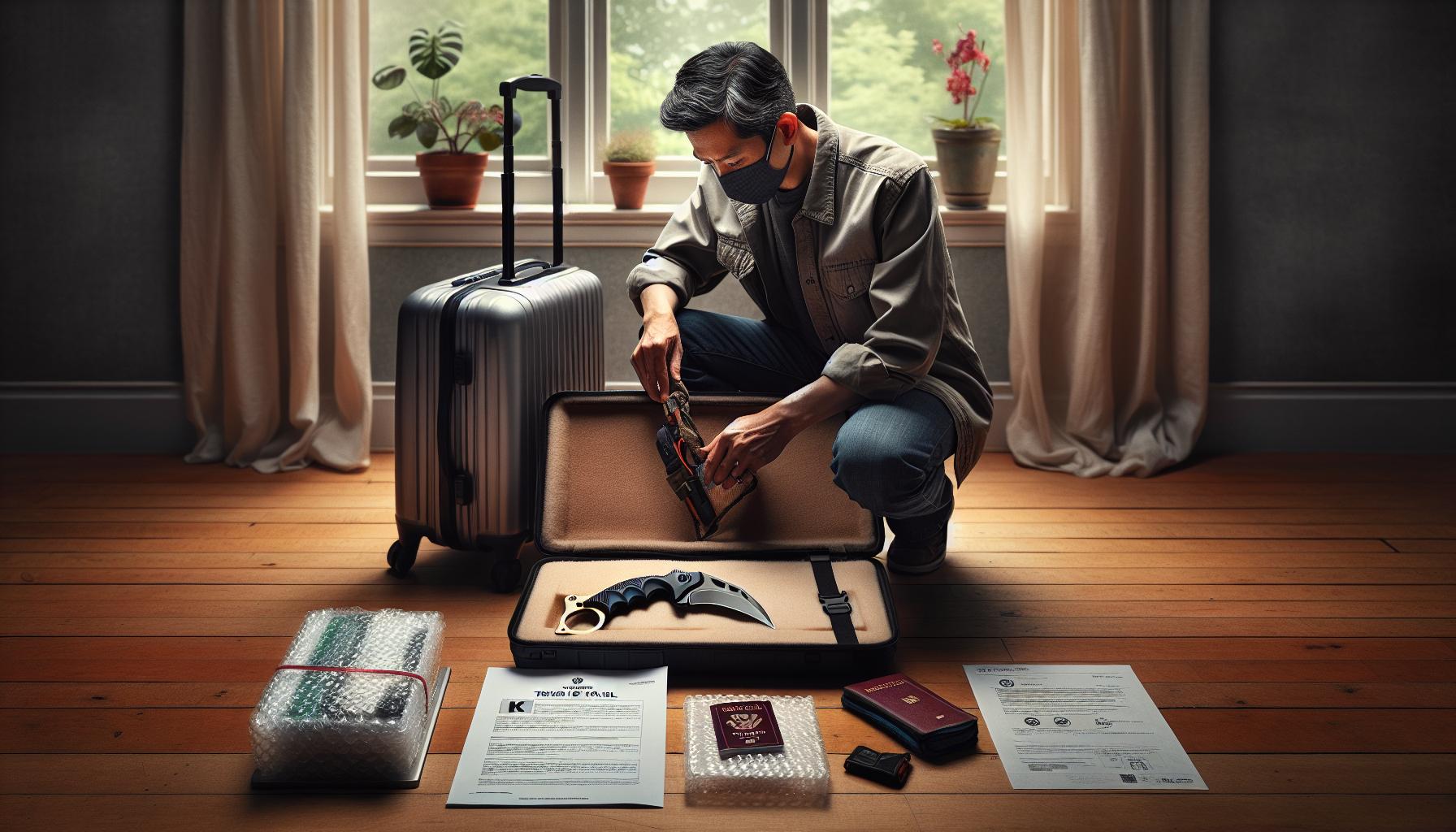
Transporting Karambits: Rules for Travel
Transporting a karambit, whether for personal use or travel, requires understanding both legal nuances and practical considerations. In New York, the regulations surrounding the transport of knives, including karambits, can be a gray area, making it crucial to be well-informed before you decide to take your blade on the go. Unlike some other states, New York has stringent laws regarding the visibility and accessibility of knives in public spaces, aiming to prevent the illegal carry of weapons.
While transporting a karambit in your vehicle, it’s advisable to keep it securely stored. Keeping the blade in your trunk rather than within reach in the passenger compartment can help to demonstrate that you are not carrying it for immediate use. If you plan to carry it within your vehicle, ensure that it is sheathed or in a bag, which can provide a layer of protection as well as reduce the risk of drawing unnecessary attention. Here are some key points to consider:
- Blade Length: Ensure that the blade complies with New York’s restrictions. Generally, knives with blades longer than four inches can cause complications.
- Visibility: Avoid having the karambit in plain sight, especially if it’s a fixed-blade model, as this may raise suspicion.
- Intent: Be ready to articulate your purpose for carrying a karambit, especially if confronted by law enforcement.
Should you choose to transport your karambit via air travel, it’s essential to comply with TSA regulations, which explicitly prohibit carrying knives of any kind in your carry-on luggage. Instead, pack it in your checked baggage, securely sheath it, and ensure it’s not easily accessible during transit. Additionally, familiarize yourself with the knife laws of your destination, as they may differ from New York’s.
Understanding these rules not only helps you to travel confidently but also promotes responsible ownership. Educating yourself about local laws and carrying your karambit properly is key to avoiding legal troubles and ensuring that your passion for this unique blade does not become a liability.
Alternatives to Karambits: Legal Knives to Consider
Finding a legal alternative to a karambit can provide peace of mind for those navigating New York’s strict knife laws. While karambits offer unique utility, their legality can be complicated based on design and intent. Fortunately, numerous blade options are readily available that strike a balance between functionality and compliance with local regulations.
One of the most popular alternatives is the folding pocket knife. These knives are generally more acceptable under New York law, especially those with blade lengths under four inches. Choose reputable brands like Victorinox (known for their Swiss Army knives) or Benchmade, which offer a variety of designs suitable for everyday carry and outdoor use. Folding knives typically have the added benefit of being easily concealed, which can help in avoiding any unwanted attention.
Multi-tools are another excellent choice, combining practicality with legal safety. These tools often include various implements alongside a blade, which may grant them different legal status as they can be classified as tools rather than weapons. For instance, the Leatherman Wave is a versatile option that offers multiple functions, making it a suitable companion for everyday tasks, camping, or emergencies.
If you’re interested in knives for self-defense but want to stay within legal boundaries, consider a tactical pen. These self-defense tools double as a writing instrument while being robust enough to serve as a personal protection item in critical situations. Additionally, check out specialized self-defense tools like kubotans or cat keychains, which are designed for safety and personal security without the complications surrounding traditional knife carry laws.
Selecting the right alternative not only ensures that you remain compliant with the law but also empowers you to confidently carry a useful tool that suits your lifestyle. Always remember to familiarize yourself with the specific laws and regulations in your area regarding knives and personal defense tools to avoid potential issues.
Historical Context: Karambits and Their Evolution
The karambit, a distinctive knife characterized by its curved blade and finger ring, boasts a rich cultural heritage that traces back to its origins in Southeast Asia, particularly Indonesia. Traditionally used by farmers for harvesting crops, its design was later adapted for self-defense and martial arts, making it a versatile tool that transcended mere functionality. As martial arts gained popularity, the karambit became a symbol of skill and prowess, incorporated into various combat techniques, notably in Filipino martial arts and Silat.
In its evolution, the karambit has seen various adaptations and influences from different cultures, resulting in a wide range of designs. While some modern variations focus on tactical features suitable for self-defense and everyday carry, others retain the traditional craftsmanship of hand-forged blades. This adaptability allows the karambit to appeal not only to knife enthusiasts but also to collectors who appreciate its unique aesthetics.
Understanding the historical context of the karambit is crucial, especially when evaluating its legality and appropriateness for carry in areas like New York. The knife’s intended use significantly influences its perception under the law; while some designs might be deemed tactical weapons, others can be viewed as harmless utility tools. Knowledge of this history can aid individuals in making informed decisions regarding their choice of the karambit, aligning with both personal values and legal boundaries.
As you consider owning a karambit, it’s valuable to engage with the knife’s background and the way its legacy influences modern designs. Familiarizing oneself with the history of tool use and self-defense aids in responsible ownership, allowing you not only to appreciate the art of knife-making but also to understand the implications of carrying such tools in various settings.
Expert Tips for Responsible Karambit Use
Using a karambit effectively requires not only skill but also an understanding of responsible ownership. This distinctive knife, celebrated for its unique design and tactical advantages, can be a valuable tool if used with respect and care. Here are some essential tips for responsible use that every owner should consider.
Firstly, familiarize yourself with local laws. In New York, the legality of carrying a karambit can be nuanced, hinged on its classification. Always ensure you are aware of regulations surrounding blade lengths and mechanisms; familiarize yourself with whether your specific karambit design is classified as a weapon or a utility tool. Engaging in lawful use significantly decreases potential legal issues and empowers you as an informed owner.
Safe Handling Practices
When utilizing your karambit, always prioritize safety. Here are some guidelines to follow:
- Keep the blade clean and sharp: A well-maintained blade enhances performance and minimizes the risk of accidents.
- Practice proper grip techniques: The finger ring design allows for various grips, but ensure you are controlling the knife confidently during practice or use.
- Train regularly: Engage in formal training if you plan on using your karambit for self-defense. This ensures that you not only use the knife effectively but safely.
Understanding the intricacies of your karambit, including its intended use, is also fundamental for responsible ownership. Whether you use it for self-defense, martial arts practice, or utility tasks, clarify its role in your life. If using it for self-defense, be conscious of the ethical implications and the need for de-escalation techniques where possible.
Lastly, consider alternatives when necessary. While a karambit can be an excellent self-defense tool, evaluating situations where it may not be the most suitable choice is essential. In environments where legality is questionable or if you’re in a setting that prohibits knives entirely, exploring non-threatening alternatives can be prudent. By acknowledging these various factors, you not only enhance your skills and awareness but also contribute to a culture of responsible knife ownership.
Frequently Asked Questions About Karambits in NY
In New York, the legality surrounding karambits can often lead to confusion among potential owners. A common question is: “Are karambits considered illegal weapons?” The answer isn’t straightforward, as it largely depends on the specific design of the knife and its intended use. Generally, any blade that is concealed or has a locking mechanism may fall under stricter regulations. It’s critical for users to familiarize themselves with local laws to ensure compliance and avoid legal repercussions.
Many enthusiasts also wonder about the sizes and styles of karambits that are permissible. In New York, knives like the karambit are often subject to regulations based on blade length and design features. For example, one-handed opening mechanisms and certain blade shapes may classify a knife as a weapon rather than a tool, impacting its legality when carried in public. Therefore, understanding these distinctions is essential for any user contemplating carrying a karambit.
Another frequent concern involves how to legally transport a karambit. Since New York law prohibits the carrying of dangerous weapons, transporting your karambit in a locked case or a designated tool pouch is advisable. It ensures that the knife is not readily accessible during travel, aligning with regulations. Users should also be mindful of their destination; different areas may have varying laws regarding knife carrying, especially if entering establishments that may have strict security policies.
Lastly, potential karambit owners are curious about alternatives that offer legal carry without the complications of blade regulations. Options such as folding pocket knives or multi-tools that comply with New York’s laws can provide the utility without the legal risks associated with a karambit. By considering these alternatives, users maintain functionality while adhering to local legislation, allowing for responsible ownership and usage of cutting tools.
FAQ
Q: Are there specific types of karambits that are legal to own in New York?
A: Yes, in New York, only non-switchblade karambits that are not deemed illegal weapons are legal to own. Ensure your karambit does not have automatic-opening mechanisms, as these are typically restricted. For more details on what constitutes a legal design, refer to the section on “Types of Karambits: Legal vs. Illegal Designs.”
Q: What is the legal limit for the blade length of a karambit in New York?
A: In New York, there is no specific blade length restriction for knives, including karambits. However, carrying a knife of any length concealed without a permit can lead to legal issues. It’s best to be familiar with local laws to avoid complications.
Q: Can I carry a karambit for self-defense in New York?
A: Carrying a karambit for self-defense is allowed, but the intent behind its use and how it’s carried can affect legality. It’s crucial to have a valid reason for carrying a knife and to comply with local concealed carry laws. Check the section on “Karambits for Self-Defense: Legal Boundaries” for more insights.
Q: How should I transport a karambit within New York?
A: When transporting a karambit in New York, it should be stored in a secure place, such as a sheath or in your vehicle’s trunk, if not being carried. Avoid carrying it in a way that suggests intent to use it unlawfully. For full transport rules, refer to “Transporting Karambits: Rules for Travel.”
Q: Are there any age restrictions for purchasing a karambit in New York?
A: Yes, purchasers of knives, including karambits, must be at least 18 years old. Retailers may ask for identification to verify age. Always check specific store policies to ensure compliance with local regulations.
Q: What should I know about using a karambit responsibly in New York?
A: Responsible use of a karambit involves understanding and adhering to New York’s knife laws, ensuring it is used safely and appropriately. Practicing safe handling and storage is essential. For expert tips, see the section on “Expert Tips for Responsible Karambit Use.”
Q: Is it legal to buy a karambit online and have it shipped to New York?
A: Yes, it is generally legal to purchase a karambit online as long as it complies with New York laws. Ensure the seller adheres to state regulations regarding shipping knives. Check local laws to avoid potential issues upon delivery.
Q: What are some legal alternatives to karambits in New York?
A: Legal alternatives include folding knives and fixed-blade knives that do not have features that classify them as illegal weapons. Options like Swiss Army knives offer multifunctionality while being compliant with local laws. For more alternatives, refer to “Alternatives to Karambits: Legal Knives to Consider.”
Future Outlook
Now that you’re equipped with the essential information about the legality of karambits in New York, don’t let uncertainties hold you back! Understanding local regulations not only empowers you but also enhances your confidence in handling these unique tools responsibly. If you’re curious about other practical gear, check out our detailed guides on pocket knives and Swiss Army knives for insights into selection, maintenance, and safe carrying practices.
We encourage you to explore our resources on everyday carry essentials and outdoor gear tips. Sign up for our newsletter to stay updated with the latest insights and legal developments regarding knives and personal safety gear. Your journey into the world of tools shouldn’t stop here; engage with us by leaving comments or sharing your experiences. Together, let’s foster a community that values knowledge and responsible usage!